•
•
•
•
•
•
•
•
•
•
•
•
•
•
•
•
•
•
•
•
•
•
•
•
•
•
•
•
•
•
•
•
•


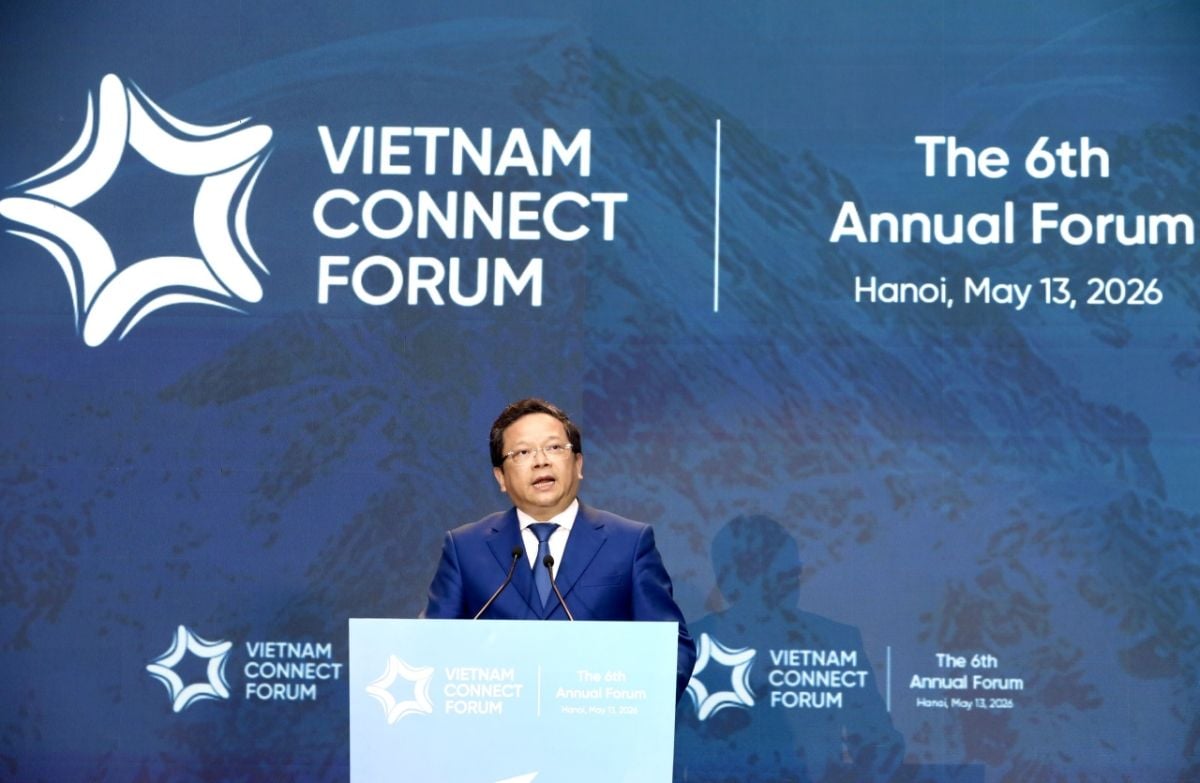
On May 13, 2026, the Vietnam Economics Institute and Vietnam Economy/VnEconomy magazine held the “Vietnam Development Bridge Forum 2026: An economy with foreign-direct investment capital and a domestic economy linked to boost sustainable growth in the new phase.” The event was organized under the professional guidance of the Central Policy and Strategy Department.
In his keynote remarks, Dr. Nguyễn Đức Hiển, Deputy Head of the Central Policy and Strategy Department, said the forum is closely aligned with the department’s ongoing work with ministries to review and assess the implementation of Conclusion 18-KL/TW from the 14th Party Central Committee on socio-economic development, national finance, public investment, debt, and debt servicing for 2026–2030. He also linked the forum to the development project “Reform of the national development model based on science and technology and innovation,” expected to be presented at the upcoming Third Party Congress.
In the draft materials discussed at the forum, the committee assessed the roles of different economic sectors and concluded that, to achieve Vietnam’s 2045 target, the country will still require the active participation of foreign direct investment (FDI) firms within the overall socio-economic development structure. However, Dr. Hiển said Vietnam must change its mindset toward the FDI sector to strengthen linkages with domestic enterprises and build an economy that is independent, self-reliant, and strategically autonomous while still attracting international capital inflows.
Dr. Hiển highlighted three major issues the Central Policy and Strategy Department hopes experts, business leaders, and associations will debate.
Dr. Hiển said Vietnam needs to refine institutional and policy frameworks to attract “next-generation FDI,” not only capital inflows but also indirect investment. He cited capital requirements tied to achieving two-digit growth: Vietnam would need total mobilized capital of about 38.5 million trillion dong, of which the state sector accounts for roughly 8.3–8.5 million trillion dong. The remainder, he said, must come from the private sector, foreign investment funds, and foreign enterprises.
He noted that the Party Committee of the Ministry of Finance is guiding the issuance of a new Politburo resolution soon. In the meantime, he said policy institutionalization should focus on restructuring input incentives—particularly tax incentives—and then implementing output-based and performance-based incentives tied to commitments to ensure Vietnam attracts next-generation FDI.
Dr. Hiển also called for policies that nurture existing FDI, upgrade current FDI, and simultaneously attract new FDI. He asked what reforms are needed in policy, ranging from creating a business-friendly investment environment to implementing supporting mechanisms, sandbox initiatives, and “breakthrough mechanisms” to attract more effective investment.
Dr. Hiển said Vietnam has issued multiple documents identifying strategic technologies and products, including Resolution 29-NQ/TW on industrialization and other resolutions such as 57-NQ/TW and 52-NQ/TW, along with related energy resolutions. However, he argued there is a need to clearly define which sectors should be prioritized going forward to meet development goals while matching absorption capacity and enabling effective FDI inflows.
Dr. Hiển emphasized that linkage-building is directly connected to the forum’s theme: how to create linkages and synergies between the FDI sector and the domestic economy, avoiding a “two economies” situation referenced by Deputy Prime Minister Nguyễn Văn Thắng.
He said the department wants policy proposals that enable Vietnamese enterprises to participate in the linkage chain and grow. As an example, he pointed to the need to revise the Small and Medium Enterprise Support Law, noting that although the law was issued in 2017, implementation remains limited. He also referenced resolutions such as 10-NQ/TW and, more recently, 68-NQ/TW on the private economy, while stating that the gap between policy and implementation persists for SME support, innovation, and digital transformation.
Dr. Hiển said the forum also seeks input on whether ministries should directly execute policy support or whether markets, associations, and universities should play a stronger role. He further asked how FDI firms can contribute to sharing, synergy, and cooperation with domestic enterprises, and what state mechanisms are needed to support investment in technology copyrights, accelerate technology transfer to domestic firms, or promote linked collaboration.
Dr. Hiển said that in the near future, Nguyễn Thanh Nghị, head of the Central Policy and Strategy Department, will visit Samsung’s R&D center and several enterprises to assess how current policies can be improved to be more substantive. The committee also aims to involve experts, ambassadors, and former ambassadors to discuss directions and attract investment for Vietnam, now that it has joined 17 FTAs and has many strategic and comprehensive strategic partners.
“The question is how to innovate in leveraging FTAs and partnerships to reach substantive and effective outcomes, in line with the directions of the General Secretary, President To Lam,” Dr. Hiển said.
The forum also referenced the broader trend in which both the FDI sector and domestic-leading enterprises are increasingly integrating ESG standards, circular economy approaches, and digitalization into long-term development strategies. Vietnam is described as a strategic destination for restructuring production chains toward sustainability across the region.
Premium gym chains are entering a “golden era” that is ending or already in decline, as rising operating costs collide with shifting consumer preferences toward more flexible, community-based ways to exercise. Long-term memberships are shrinking, margins are pressured by higher rents and facility expenses, and competition from smaller, more personalized…