•
•
•
•
•
•
•
•
•
•
•
•
•
•
•
•
•
•
•
•
•
•
•
•
•
•
•
•
•
•
•
•
•


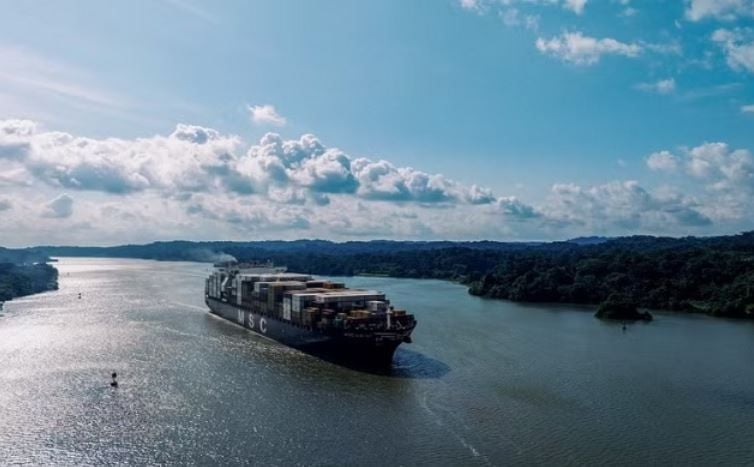
LNG carriers are paying as much as nearly $4 million to secure priority passage through the Panama Canal, a practice that has intensified since US and Israel-led attacks on Iran began on February 28 and coincided with a blockade of the Hormuz Strait. The payments, described as “skip the queue” fees, are rising as demand for moving essential commodities through the canal increases amid the Middle East conflict and disruptions to key shipping routes.
Official reports say queue-jumping payments have climbed sharply since February 28, when the Hormuz chokepoint—used for about one-fifth of global oil and natural gas flows—was blocked. With Hormuz disrupted, Asian refineries have shifted toward purchasing oil and gas from the United States and transporting it via the Panama route rather than relying on Gulf supplies.
One LNG carrier reportedly paid nearly $4 million to gain priority and avoid potential wait times of up to five days. While vessels typically schedule transit in advance, those that do not wait about five days on average. The canal’s bidding system allows last-minute slot purchases, and prices have surged recently.
The average bid price for October through February was about $130,000. It rose to $385,000 in March and April. The reports also note that two oil tankers recently paid over $3 million each to gain priority passage.
The Panama Canal Authority says traffic remains elevated, averaging 34 ships per day in January and 37 per day in March, with some days exceeding 40. Canal officials attribute the pattern to shifts in global trade flows and market conditions, including geopolitical factors affecting major shipping routes.
In the first half of fiscal year 2026 (October to March), the route recorded 6,288 vessel passages, up 3.7% year-on-year. The canal accounts for about 5% of global maritime trade, with the United States and China among major customers, linking the US East Coast with China, Korea and Japan.
The lack of an extended ceasefire between the US and Iran is heightening concerns about further attacks on Middle East energy infrastructure. Several facilities have already been damaged and may require tens of billions of dollars to repair.
Based on ACLED data, since the conflict escalated in late February there have been more than 150 attacks on energy facilities in the region, including at least 44 oil and gas facilities damaged and about 12 energy transport sites.
Rystad Energy estimates repair costs could range from $34 billion to $58 billion. In a severe damage scenario, oil and gas facilities could cost up to $50 billion to restore.
Experts warn that if the ceasefire is not extended, the long-term consequences could worsen—particularly for LNG supply and petroleum products such as jet fuel and diesel. Restoring full production depends heavily on reopening Hormuz.
Even if the route is resumed, supply may not rebound immediately. The process could take months or longer due to disrupted supply chains and displaced positions of oil tankers. Output can rise again only when Gulf stockpiles are released significantly.
Over the past seven weeks, the world has lost more than 500 million barrels of production, while strategic reserves need replenishment. These factors are forecast to keep oil prices around $80–85 per barrel, above pre-conflict levels of about $70.
If production resumes, about 70–80% of supply could recover within a few weeks, with the remainder taking longer depending on differences among producing countries. Analysts expect Saudi Arabia and the UAE to recover quickly within weeks, while Iraq and Kuwait may take months due to heavier crude characteristics. Full capacity restoration at Iran and Qatar could take years.
Iran is seen as the most affected, with repair costs potentially reaching $19 billion. In Qatar, gas infrastructure has also been hit: QatarEnergy said 17% of export capacity has been lost, and full restoration could take up to five years after missile strikes on Ras Laffan, the world’s largest LNG complex.
— Hoang Chau, VietnamPlus.






Premium gym chains are entering a “golden era” that is ending or already in decline, as rising operating costs collide with shifting consumer preferences toward more flexible, community-based ways to exercise. Long-term memberships are shrinking, margins are pressured by higher rents and facility expenses, and competition from smaller, more personalized…