•
•
•
•
•
•
•
•
•
•
•
•
•
•
•
•
•
•
•
•
•
•
•
•
•
•
•
•
•
•
•
•
•


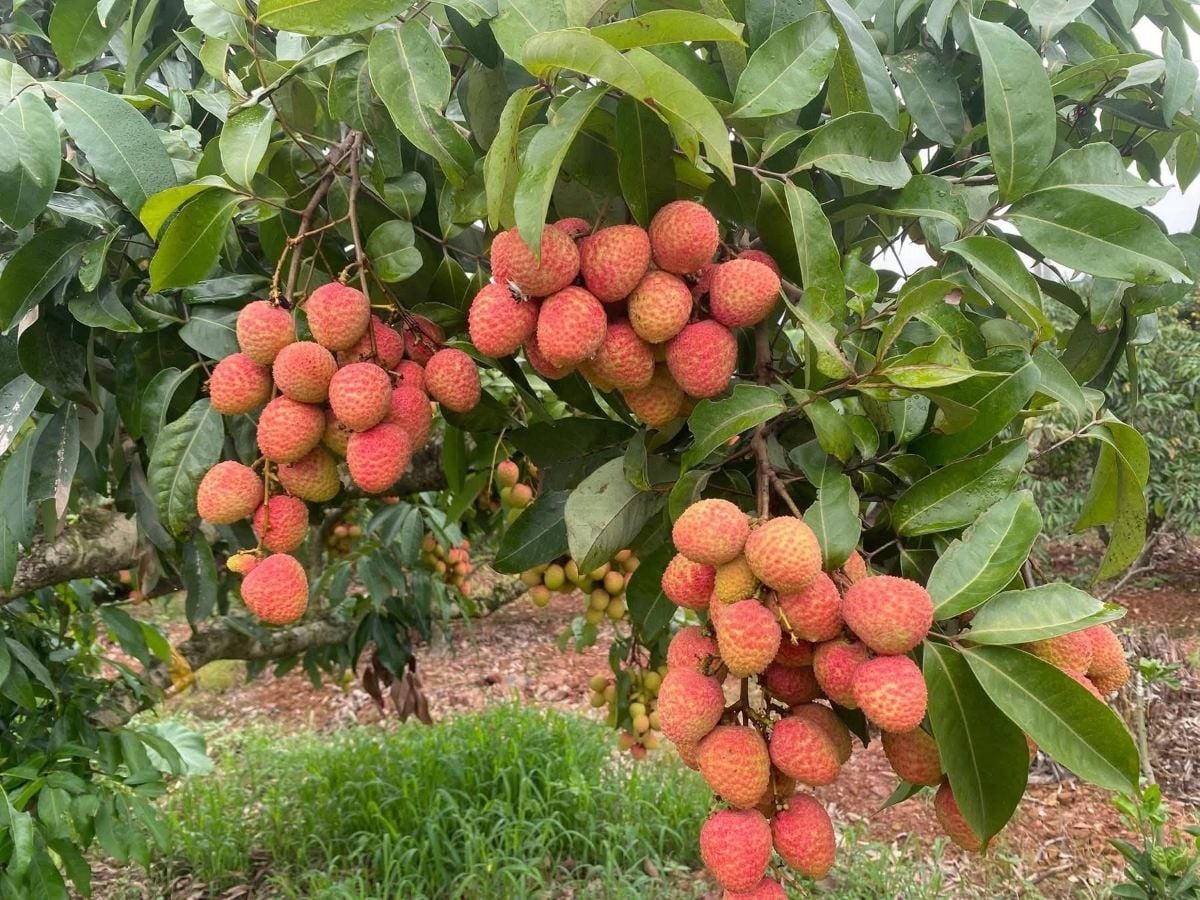
Information from the Department of Cultivation and Plant Protection (Ministry of Agriculture and Environment) indicates that lychee production in 2026 is expected to decline significantly due to unfavourable weather conditions, which are affecting flowering and fruit set. After a bumper year in 2025, lychee trees have entered a natural cycle of yield decline, contributing to higher market prices.
Towards the end of May, early-season lychees in Bac Ninh and Hai Phong began harvesting. In these early-season orchards, fruits are ripening sporadically and output is limited because the main season has not yet started.
Growers report that early lychee varieties have a crisp texture and a mildly tart taste, and are popular with consumers. In traditional markets, supermarkets, and online marketplaces, early-season lychees are priced at 60,000–180,000 dong per kilogram, depending on variety and quality.
In clean-fruit stores, prices include 135,000 dong/kg for white-skinned lychees from Hung Yen and 105,000 dong/kg for red-skinned lychees from Bac Giang.
Despite high prices, demand remains strong, and traders report that stock has been sold out. Across both traditional and modern channels, premium-quality fruit—especially with large sizes and red-ripe codes—tends to fetch 120,000–180,000 dong per kg, while lower-grade fruit trades for less.
Because of the high cost, traders are cautious about stocking, which reduces visible retail abundance of lychees.
Currently, Vietnam has about 55,000 hectares of lychee cultivation, concentrated in northern provinces. This year’s supply is expected to decline sharply versus previous years. Early-ripening lychee production is estimated at about 85,000–90,000 tonnes, down 35–50% year on year. This is an initial estimate and could change depending on late-stage care.
The reduced supply is pushing lychee prices higher from early in the season. On the farm, buying prices range from 50,000 to 95,000 dong per kg, described as the highest level in many years.
For high-quality lots or airfreighted shipments intended to preserve freshness, prices can reach 195,000–210,000 dong per kilogram.
Similar dynamics are reported in China’s lychee market. In major producing regions such as Guangdong and Hainan, an unusually warm winter and late-season rainfall caused irregular flowering. After a bumper year in 2025, lychee trees entered a natural cycle of yield decline, contributing to higher regional prices.
With tighter supply and continued strong demand, lychee prices this year are forecast to remain elevated, particularly during the upcoming peak harvest period.
Premium gym chains are entering a “golden era” that is ending or already in decline, as rising operating costs collide with shifting consumer preferences toward more flexible, community-based ways to exercise. Long-term memberships are shrinking, margins are pressured by higher rents and facility expenses, and competition from smaller, more personalized…