•
•
•
•
•
•
•
•
•
•
•
•
•
•
•
•
•
•
•
•
•
•
•
•
•
•
•
•
•
•
•
•
•


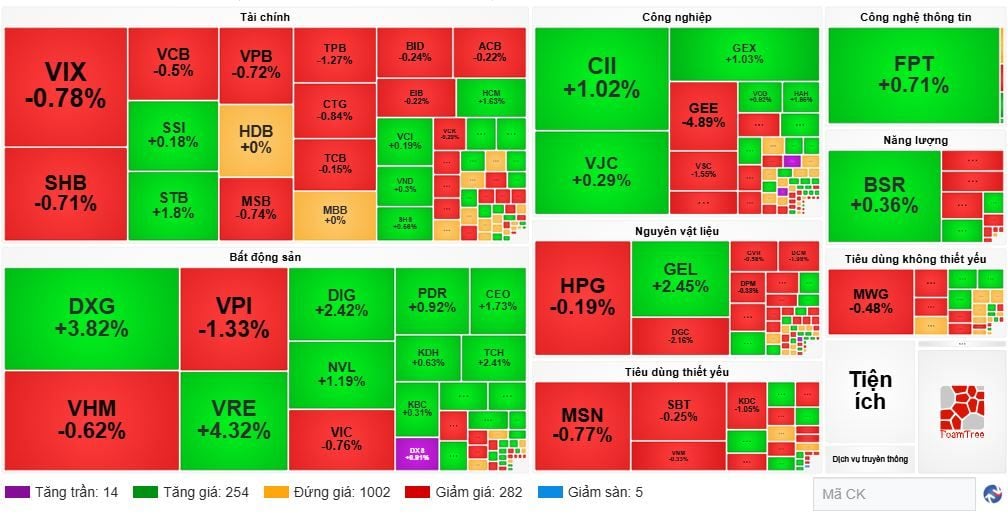
The selling pressure eased as the market recovered after a sharp intraday drop in VIC. By the close on May 12, 2026, the VN-Index finished at 1,901.1 points, while the HNX-Index posted a positive session, rising by more than 5 points (about 2%). Selling pressure cooled by the end of the session, and buyers regained the upper hand.
Market breadth stood at about 370 advancers to 330 decliners. Liquidity totaled around 22.3 trillion dong, significantly below the previous session. Green returned to many sectors, and blue chips led gains.
The energy group performed best, with BSR up nearly 5%. Other advancing names included PVS, PLX, PVD, OIL and PVP.
In contrast, real estate weighed on the index, with VIC, VHM and NVL among the decliners. The top contributors to the VN-Index came from banks and leading names, including STB, LPB, HDB and BID.
Foreign investors closed the session with net selling of about 830 billion dong. Despite the overall net selling, VIC and VRE attracted net buying.
In the morning, the market reflected a tug-of-war. VIC was down about 3% while VHM supported the index. Some property stocks such as DIG, DXG and DXS rallied, while others in the sector declined. The financial group generally remained soft, with many banks lower by around 0.5% to 1%.
By 10:40, sector rotation became more visible, with real estate and industrials providing support while financials remained mixed. Early trading saw the VN-Index hovering near 1,900; by 9:30, it had slipped about 2.5 points to around 1,890 as VIC and VPL weighed on sentiment, with VHM supporting the upside.
Trading activity was modest, with turnover near 9.8 trillion dong in the morning. The overall market mood remained cautious as investors assessed shifting signals from major sectors, including real estate, energy and financials.
Premium gym chains are entering a “golden era” that is ending or already in decline, as rising operating costs collide with shifting consumer preferences toward more flexible, community-based ways to exercise. Long-term memberships are shrinking, margins are pressured by higher rents and facility expenses, and competition from smaller, more personalized…