•
•
•
•
•
•
•
•
•
•
•
•
•
•
•
•
•
•
•
•
•
•
•
•
•
•
•
•
•
•
•
•
•


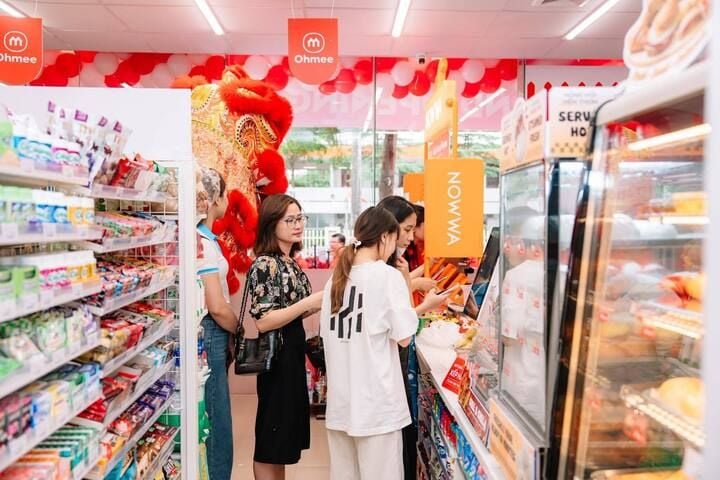
Meiyijia, China’s largest convenience-store chain, is expanding into Southeast Asia, with Vietnam and Malaysia set as its initial markets. In the region, operations will be carried out under a new brand, Ohmee, developed with local partners.
Meiyijia’s Southeast Asia rollout will begin in Vietnam and Malaysia. The company will operate under the Ohmee brand, which was developed in collaboration with local partners.
Meiyijia was established in 1997 as the retail arm of a state-owned trading company. It began rapid expansion in the mid-2010s. By 2020, the chain had passed 20,000 stores, and it accelerated to 40,000 stores in less than five years, reaching 40,000 stores by July 2025.
In 2024, Meiyijia ranked among the Top 100 Chinese convenience-store chains, with 37,943 stores and revenue of 55.888 billion yuan. The company has also maintained the top position in China for three consecutive years in a highly competitive market.
Meiyijia’s expansion pace averages about six new stores per day. Its total store count across China is nearly four times larger than its closest rival, Sinopec Easy Joy.
A key driver of Meiyijia’s performance is its franchising model, described as relatively simple and requiring a low initial investment of about 300,000 yuan. Beyond running stores, Meiyijia has also developed into a major distributor of fast-moving consumer goods in China, particularly beverages and snacks.
According to Sina, Meiyijia’s 2023 revenue was 54.2 billion yuan, up more than 20%. Growth continued in 2024, with double-digit profit growth.
Meiyijia aims to reach 100,000 stores and 100 billion yuan in revenue. If achieved, the company could surpass 7-Eleven to become the world’s largest convenience-store network.
Premium gym chains are entering a “golden era” that is ending or already in decline, as rising operating costs collide with shifting consumer preferences toward more flexible, community-based ways to exercise. Long-term memberships are shrinking, margins are pressured by higher rents and facility expenses, and competition from smaller, more personalized…