•
•
•
•
•
•
•
•
•
•
•
•
•
•
•
•
•
•
•
•
•
•
•
•
•
•
•
•
•
•
•
•
•


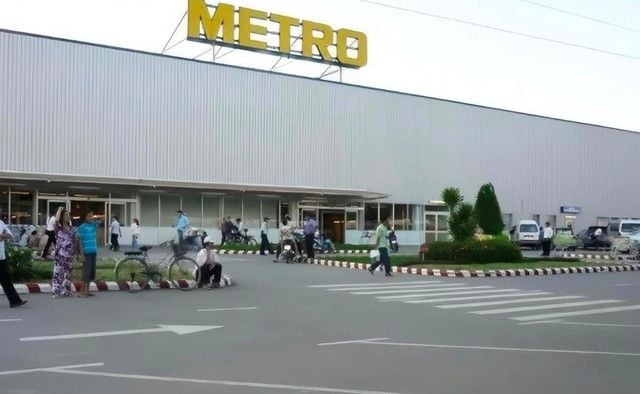
Back in the early 2000s, when the concept of a modern supermarket was still unfamiliar to most Vietnamese, Metro Cash & Carry emerged as a benchmark for a distinct wholesale model. The “Metro” name was widely understood as a cash-and-carry format, common in Europe but new to Vietnam at the time. Rather than operating like a typical retail store, Metro functioned more like a distribution center, with its primary customers including businesses, restaurants, hotels, and small business owners. Purchases were handled through a strict process tied to pre-registered cards.
For many people, Metro’s opening experience became part of a lasting memory: automatic sliding doors, cold air, tall shelves and high ceilings, white lighting, and long lines of shopping trolleys. Goods were often packaged in oversized formats, leading one commenter to recall that “you could hardly buy ordinary goods in bulk back then—the items were gigantic, and even laundry detergent bags seemed to last a year.” Access rules also shaped the customer experience, with member cards required and children subject to height regulations. As a result, visiting Metro with family members was often as much about learning what products looked like and how shopping differed from traditional markets as it was about buying items.
Over time, Metro’s wholesale model, access restrictions, and the novelty of a modern, first-of-its-kind chain left a strong impression. However, Vietnam’s retail landscape began to shift more rapidly in the 2010s, driven by mergers and acquisitions, expanding retail scale and speed, and the normalization of cashless payments.
A key turning point came in 2016, when Metro Cash & Carry Vietnam was sold to TCC Group (a major retailer from Thailand) for about EUR 655 million. After the acquisition, the chain officially adopted the MM Mega Market Vietnam name in 2017. TCC Group representatives said the deal aimed not only at expanding market share but also at building a long-term distribution platform in Southeast Asia.
Following the transition, the company implemented a series of operational adjustments. Wholesale access was gradually liberalized to allow individual consumers to shop, while the chain strengthened relationships with farmers and domestic cooperatives to develop local sourcing and diversify its product mix rather than relying primarily on imported goods. The business also moved toward a multi-channel model and expanded services, including ordering platforms for established wholesale groups. For retail customers, the shopping experience was streamlined to better match daily consumer habits.
Retail has been one of Vietnam’s fastest-growing sectors in recent decades, sustaining double-digit growth except during pandemic-affected years. Latest data from the General Statistics Office shows that in Q1 2026, total retail sales of goods and service revenue reached approximately 1,902.8 trillion VND, up 10.9% year-on-year.
The growth is linked not only to rising domestic living standards but also to increasing participation of major retailers—both foreign and domestic—within Vietnam’s retail ecosystem. Foreign operators such as AEON and Lotte have introduced modern consumer models, while domestic players including Saigon Co.op, WinCommerce, and Bach Hoa Xanh continue expanding to defend market share. Alongside these developments, wholesale-origin models like MM Mega Market Vietnam have adjusted to coexist with retail formats, contributing to a layered, multi-model marketplace within a single corporate ecosystem.
Foreign operators have generally focused on modern consumer environments, emphasizing experience and all-in-one shopping spaces. Domestic systems, by contrast, leverage local market knowledge, network reach, and flexible pricing aligned with Vietnamese consumer preferences for locally made goods.
As the gap between wholesale and retail models narrowed, new hybrids emerged and grew within corporate ecosystems. This reflects evolving demand from both consumers and small to medium-sized businesses, and underscores the importance of understanding consumer behavior, market sensitivity, and adaptive decision-making that prioritizes convenience, product origin, and multi-channel shopping.
The Covid-19 pandemic acted as a catalyst for faster change, pushing more users online and accelerating cashless payments. Retail systems also learned to extend the shopping journey beyond physical stores across multiple online platforms.
Successful retail operators are not necessarily the biggest or the most technologically advanced, but those that can adapt quickly to changing consumer behavior. Twenty years ago, Metro represented a modern but relatively exclusive space; today, the market is more crowded, consumer familiarity is higher, and modern retail standards are no longer an automatic competitive advantage.
Learn more about broader market dynamics and related developments as Vietnam’s retail sector continues to evolve.




Premium gym chains are entering a “golden era” that is ending or already in decline, as rising operating costs collide with shifting consumer preferences toward more flexible, community-based ways to exercise. Long-term memberships are shrinking, margins are pressured by higher rents and facility expenses, and competition from smaller, more personalized…