•
•
•
•
•
•
•
•
•
•
•
•
•
•
•
•
•
•
•
•
•
•
•
•
•
•
•
•
•
•
•
•
•


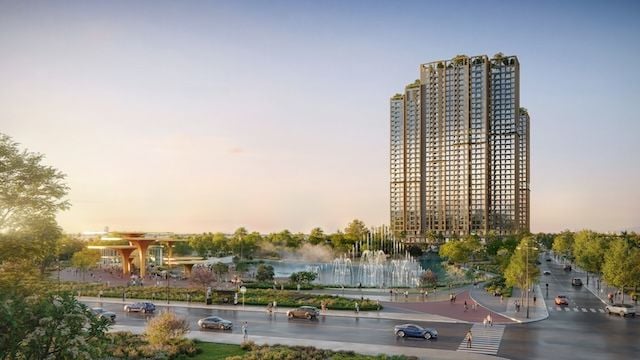
MIK Group is standardizing the development approach for Imperia, its line of luxury high-rise apartments, as the market shifts from choosing individual projects to selecting a lifestyle standard that can be maintained consistently over time.
Recent Imperia projects reflect a change in how MIK Group develops its premium residential line. Instead of completing each project as an independent product, Imperia is being reorganized under a systematic approach with principles applied uniformly across the portfolio.
This shift is visible in projects including Imperia Signature Co Loa, Imperia Sky Park, and Imperia Ocean City, with The Parkland described as the first project under the new framework. Living spaces are designed to align closely with real-use needs, covering movement and relaxation as well as community connectivity.
After more than a decade, approximately 17,000 Imperia units have been brought to market. In the next phase, the company plans to develop about 200,000 units under the I Series, indicating a substantial expansion in the segment.
Within the high-rise product structure, the I Series is defined as the flagship luxury line for the new development phase. It is presented not only as a segment, but as a coordinated standard system built around four elements: planning, design, living environment, and amenities.
The I Series is linked to the letter “I” in “MIK” and is described as following an “Inspire & Improve” orientation, aimed at meeting real living needs and improving quality of life over time.
At an event introducing the three product lines M - I - K, Mr. Nguyen Dung Minh, Deputy General Director of MIK Group, said: “The market is shifting from selecting individual apartments to choosing a lifestyle standard that can be measured and maintained consistently. Therefore, in this new phase, we are developing the Imperia product line under a continuous standard—All New Standard—to ensure living quality is maintained evenly and consistently across the entire project portfolio.”
From a development perspective, the focus is not on each element separately, but on how the components are connected into a complete structure. Planning is organized to balance private and shared spaces. Design prioritizes practicality, including natural light and ventilation. Green space is integrated as part of the living infrastructure. The amenities system is selected to be streamlined, with an emphasis on real user needs.
In practice, the approach is described through project-specific emphases. The Parkland is positioned around a balance between green spaces and amenities, while Imperia Sky Park focuses on maximizing space with height, emphasizing natural light and ventilation.
Imperia’s foundations are described as having been built over time through earlier projects such as Imperia Garden, Imperia Sky Garden, and Imperia Smart City. These projects helped establish the line’s market positioning as luxury apartments with modern design, full amenities, and curated living environments.
However, earlier stages are characterized as accumulating values project by project rather than systematizing them into a common development framework. The current shift is described as a maturation of the development approach—standardizing market-validated values for consistent application across future projects.
The article also notes that partnerships with international planning and design partners are intended to help implement standards more consistently and align with international best practices.
Looking ahead, MIK Group says it will continue developing the Imperia product line in several key markets, including Can Gio, described as an area becoming a growth pole in Ho Chi Minh City’s urban expansion toward the coast. The expansion is presented as both a scale move and a test of how adaptable the standard system is across different development contexts.

Premium gym chains are entering a “golden era” that is ending or already in decline, as rising operating costs collide with shifting consumer preferences toward more flexible, community-based ways to exercise. Long-term memberships are shrinking, margins are pressured by higher rents and facility expenses, and competition from smaller, more personalized…