•
•
•
•
•
•
•
•
•
•
•
•
•
•
•
•
•
•
•
•
•
•
•
•
•
•
•
•
•
•
•
•
•
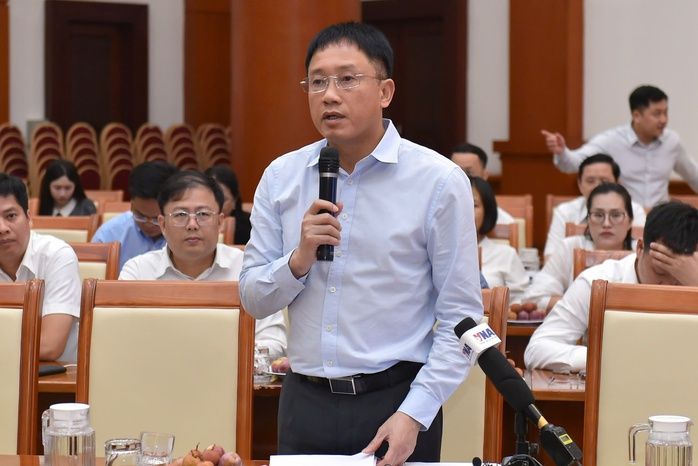
The Ministry of Finance is rolling out measures to support businesses and household businesses as Vietnam transitions to a new tax management method. Speaking at the Ministry of Finance’s quarterly press briefing for Q2 2026 on June 17, Mai Son, Deputy Head of the Tax Department, said the tax authority is implementing the contents of Government resolutions, the action program, and related policies.
Mr. Mai Son said the tax authority has welcomed feedback from the public and will continue studying and improving management to facilitate taxpayers, particularly household businesses. During the transition to the new management model, the tax agency has studied and synchronized solutions under directives from the central government and the Government, aiming to help household businesses operate with confidence.
A key focus in policy development is the revenue threshold. Under the previous approach, the threshold applied to amounts above 100 million dong. It has now been adjusted so that revenue above 1 billion dong triggers the obligation under the regulations.
Regarding tax rates, the taxed group by revenue remains unchanged. The change is in implementation: household businesses will determine revenue monthly or quarterly to determine their tax obligations.
The tax authority is coordinating with solution providers to create convenient conditions for household businesses during implementation. Software applications, digital signatures, and free support packages have been rolled out to help business owners access services more easily.
According to the Tax Department, about 98% of household businesses filed correctly during the rollout. The tax authority said it will continue monitoring each filing and supporting households in the early stage of implementation.
Mr. Mai Son assessed that cooperation among the management agency, solution providers, and the press is contributing to a smooth transition of the tax management method and reflects a positive trend in improving compliance and adaptability among household businesses.
The tax agency will continue reviewing administrative procedures in the draft decree to ensure that enacted policies continue to benefit and provide convenience for household businesses.
On revenue threshold proposals, including a suggestion to apply a simplified tax regime for household businesses with annual revenue under 5 billion dong, Deputy Minister Nguyen Duc Chi said the Ministry is listening to proposals and will study appropriate adjustments if necessary.
Deputy Director Truong Ba Tuan discussed personal income tax policies related to housing. Taxable income is divided into several groups, including salaries and wages and monetary benefits.
He said some housing-related benefits are not taxed when provided by employers to workers in certain contexts, such as housing in industrial zones or difficult areas. To support workers, the Ministry has reported to the Government to broaden the scope.
Housing-related benefits, electricity, and water tied to employer-provided housing will not count toward taxable income, removing previous limits. The Ministry is coordinating with relevant agencies to develop rental housing solutions.
Deputy Minister Nguyen Duc Chi emphasized continuing to listen to opinions to implement personal income tax policies in a coordinated and appropriate manner to support workers.
In addition to tax policy, the Government is pursuing housing solutions, including a social housing development program for workers with middle to low incomes to provide stable housing.
The Government has directed localities with high demand for long-term rental housing, including Hanoi, Bac Ninh, Hai Phong, and Ho Chi Minh City, to actively develop rental housing at prices suitable for workers.