•
•
•
•
•
•
•
•
•
•
•
•
•
•
•
•
•
•
•
•
•
•
•
•
•
•
•
•
•
•
•
•
•


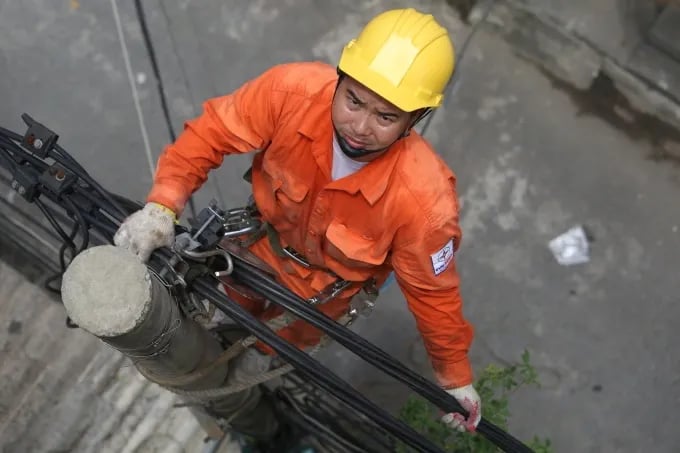
The Ministry of Industry and Trade has proposed a mechanism to gradually allocate into electricity prices costs that have not been fully accounted for, as a legal basis to address EVN’s accumulated losses of nearly 45 trillion dong.
In an appraisal dossier for a project to revise the Electricity Law submitted to the Ministry of Justice, the Ministry of Industry and Trade said retail electricity prices should reflect changes in input costs so that electricity enterprises can earn a profit. The ministry argued this would help the electricity sector preserve capital and develop business activities appropriate to each market stage.
The ministry proposed that costs of electricity production and supply that were not fully accounted for in a single price adjustment would be accumulated and allocated across subsequent price increases. It also proposed that costs not included in the price before the new law takes effect would be broken down and added to future price changes.
According to the dossier, many production and supply costs of electricity in recent times have not been fully included in retail electricity prices, leading EVN to incur large losses in 2022–2023, around 50,029 billion dong.
It said that in 2022 electricity prices were kept unchanged to support economic recovery and social welfare after Covid-19, even as imported coal and gas prices rose sharply due to the Russia-Ukraine conflict. In 2023, prices increased but at a moderate pace, still below the actual costs incurred.
With profits returning in 2024, the accumulated losses of the parent EVN fell to about 44,792 billion dong.
The ministry said regulators would allocate costs at each point in time, in whole or in part, with a small margin to avoid abrupt impacts on households and businesses.
“Under favorable conditions, such as adequate hydro reservoir levels helping to reduce generation costs, the allocation of accumulated costs would not increase electricity prices,” the ministry stated.
Last year, during the revision of Decree 72 on the policy of retail electricity pricing, the ministry proposed this mechanism. At that time, it aimed to allow including unaccounted costs for electricity production and supply of about 44.8 trillion dong for 2022–2024 into the pricing method for future periods.
However, the dossier notes that many opinions at the time argued there was no legal or practical basis to calculate and allocate these costs into electricity prices.
Premium gym chains are entering a “golden era” that is ending or already in decline, as rising operating costs collide with shifting consumer preferences toward more flexible, community-based ways to exercise. Long-term memberships are shrinking, margins are pressured by higher rents and facility expenses, and competition from smaller, more personalized…