•
•
•
•
•
•
•
•
•
•
•
•
•
•
•
•
•
•
•
•
•
•
•
•
•
•
•
•
•
•
•
•
•


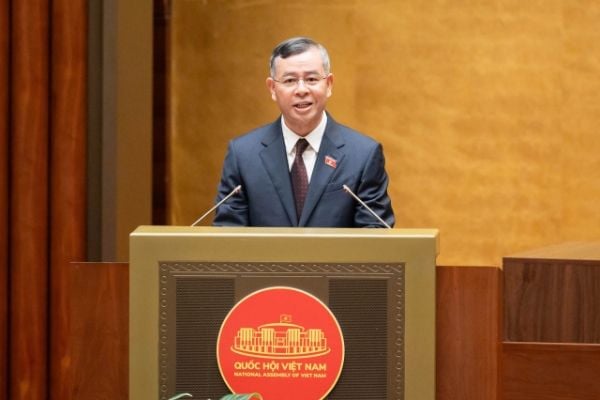
On the morning of April 24, the National Assembly formally approved a law amending and supplementing several major tax provisions, including personal income tax, value-added tax, corporate income tax, and excise tax. The approval rate was high, with 466 of 488 delegates voting in favor. A notable change in this revision is the removal of the rigid rule on the revenue threshold that determines tax liability within the law. Instead, the National Assembly entrusted the Government with the authority to determine the specific level to better adapt to actual economic conditions. Previously, the taxable revenue threshold for household businesses was set at 500 million dong per year. However, during implementation, many opinions argued that this rule is no longer suitable, especially in a context that aims to facilitate household businesses and small-scale enterprises. In a briefing to the National Assembly, Finance Minister Ngo Van Tuan stated that delegating authority to the Government does not change the policy’s substantive nature, but aims to increase operational flexibility while ensuring compliance with constitutional principles. The draft law, after taking into account deputies’ opinions, was adjusted to include clear bases for determining the threshold of revenue exempt from tax. Specifically, this will be based on factors such as macroeconomic conditions and the budget balance capability, to ensure feasibility when implemented, the minister said. Also under the Personal Income Tax Law, under current regulations, households and individuals engaged in business with annual revenue above 3 billion dong will switch to a tax calculation method based on actual income. At the same time, tax rates are divided according to different revenue bands to ensure fairness. Specifically, a 15% tax rate applies to enterprises with total annual revenue not exceeding 3 billion dong; a 17% tax rate applies to enterprises with total annual revenue from more than 3 billion dong to not more than 50 billion dong. With these provisions, if the Government adjusts the revenue threshold not subject to tax beyond 3 billion dong per year, it must report to the National Assembly to amend related laws to ensure policy coherence and rationality. “Although no framework is stipulated in the draft law, to align with existing tax laws, the Government is also allowed to adjust this revenue threshold to below 3 billion dong per year,” emphasized Finance Minister Ngo Van Tuan. Regarding the specific plan, the Government proposed raising the tax-exempt revenue threshold to 1 billion dong per year. Calculations show that this level has been carefully considered to balance the objective of supporting taxpayers with ensuring budget revenue. “With a threshold of 1 billion dong, we believe this threshold is in harmony with the current context. The law has also incorporated this direction, so with a concrete threshold, the Government will set a figure that aligns with macroeconomic and social developments under the principle of balanced interests and shared risks. This level is twice the current threshold and would impact the budget by about 7,000 billion dong. For households and individual businesses, the exemption up to 1 billion dong would reduce budget revenue by about 4,800 billion dong and about 256,000 small enterprises would benefit by about 2,100 billion dong.” (quoted from Finance Minister Ngo Van Tuan) Proposal to assign the Government to set the threshold for personal income tax revenue 16:53, 20/04/2026







Premium gym chains are entering a “golden era” that is ending or already in decline, as rising operating costs collide with shifting consumer preferences toward more flexible, community-based ways to exercise. Long-term memberships are shrinking, margins are pressured by higher rents and facility expenses, and competition from smaller, more personalized…