•
•
•
•
•
•
•
•
•
•
•
•
•
•
•
•
•
•
•
•
•
•
•
•
•
•
•
•
•
•
•
•
•


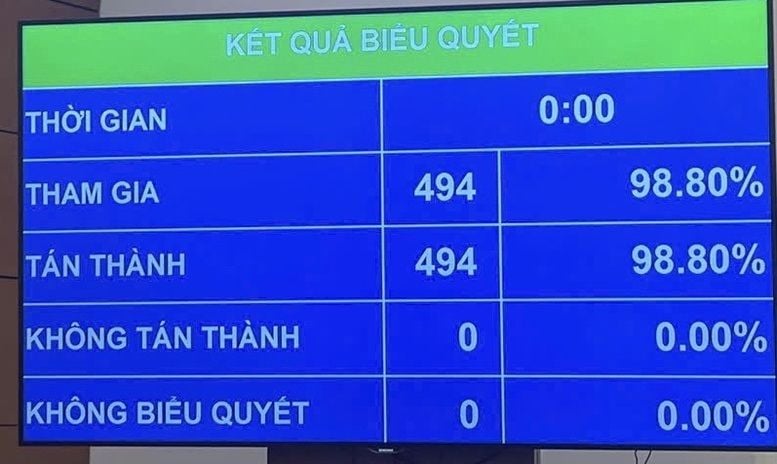
The National Assembly has approved Vietnam’s five-year socio-economic development plan for 2026-2030, setting a growth target of at least 10% per year. The vote took place on the morning of April 24, with 494 out of 494 deputies voting in favor, reflecting a 100% turnout.
In the approved resolution, the general objective is to develop quickly and sustainably. The plan targets average GDP growth of at least 10% per year while maintaining macroeconomic stability, controlling inflation, and ensuring major balances. It also aims to comprehensively improve people’s living standards.
By 2030, the resolution states that Vietnam will become a developing country with modern industry and a high-middle income status, and be among the top 30 economies globally by GDP size. It also calls for building a modern, sustainable development framework, developing a synchronized infrastructure network, and strengthening science and technology, innovation, digital transformation, and human resource quality.
The resolution further emphasizes protecting the environment and adapting to climate change, ensuring a democratic, fair, disciplined, and safe society, and strengthening national defense and security. It also sets a goal of raising Vietnam’s standing and prestige on the international stage.
The resolution highlights several priority tasks and solutions, including:
The resolution calls for unity of thought, awareness, aspiration, and action, and for reforming governance and administration to achieve “two-digit growth.” It also calls for proactive information dissemination to motivate and inspire, and for improving public mobilization to broaden social consensus.
It defines the strategic importance and urgent requirements for implementing the two-digit growth target, linking it to macroeconomic stability and improving living standards. The resolution states that this is a political task requiring yearly programs and plans with specific outcomes and products for each sector, agency, unit, and locality, along with accountability for leaders. It also calls for monitoring, supervision, and evaluation of results.
Beyond growth-focused tasks, the resolution emphasizes productivity gains across the economy and tighter risk management to respond to strategic risks. It also calls for strengthening propaganda, mobilization, and leading by example to build confidence and aspiration among enterprises, people, and society.
On implementation, the resolution directs the government and local administrations at all levels, the Supreme Court, the Supreme People’s Prosecutor, and the State Audit—within their functions and tasks—to develop an action program for the term and concrete plans for each year to ensure successful implementation.
For 2026, the government will focus on vigorously and effectively implementing the tasks and solutions listed in Appendix III of the resolution. By the end of 2028, it will report mid-term results to the National Assembly, and it will proactively respond to changes and report to competent authorities in cases beyond its authority.
The Standing Committee of the National Assembly, the Ethnic Council, the National Assembly committees, and National Assembly deputies will monitor implementation. The Vietnamese Fatherland Front and related political-social organizations will supervise and mobilize all strata of the people to implement the resolution.
The National Assembly calls on compatriots, soldiers nationwide and overseas Vietnamese to uphold the spirit of emulation and solidarity, maximize internal strength, overcome difficulties and challenges, adapt flexibly and effectively to both the world and domestic context, and confidently implement the goals of the 2026-2030 five-year socio-economic development plan.








Premium gym chains are entering a “golden era” that is ending or already in decline, as rising operating costs collide with shifting consumer preferences toward more flexible, community-based ways to exercise. Long-term memberships are shrinking, margins are pressured by higher rents and facility expenses, and competition from smaller, more personalized…