•
•
•
•
•
•
•
•
•
•
•
•
•
•
•
•
•
•
•
•
•
•
•
•
•
•
•
•
•
•
•
•
•


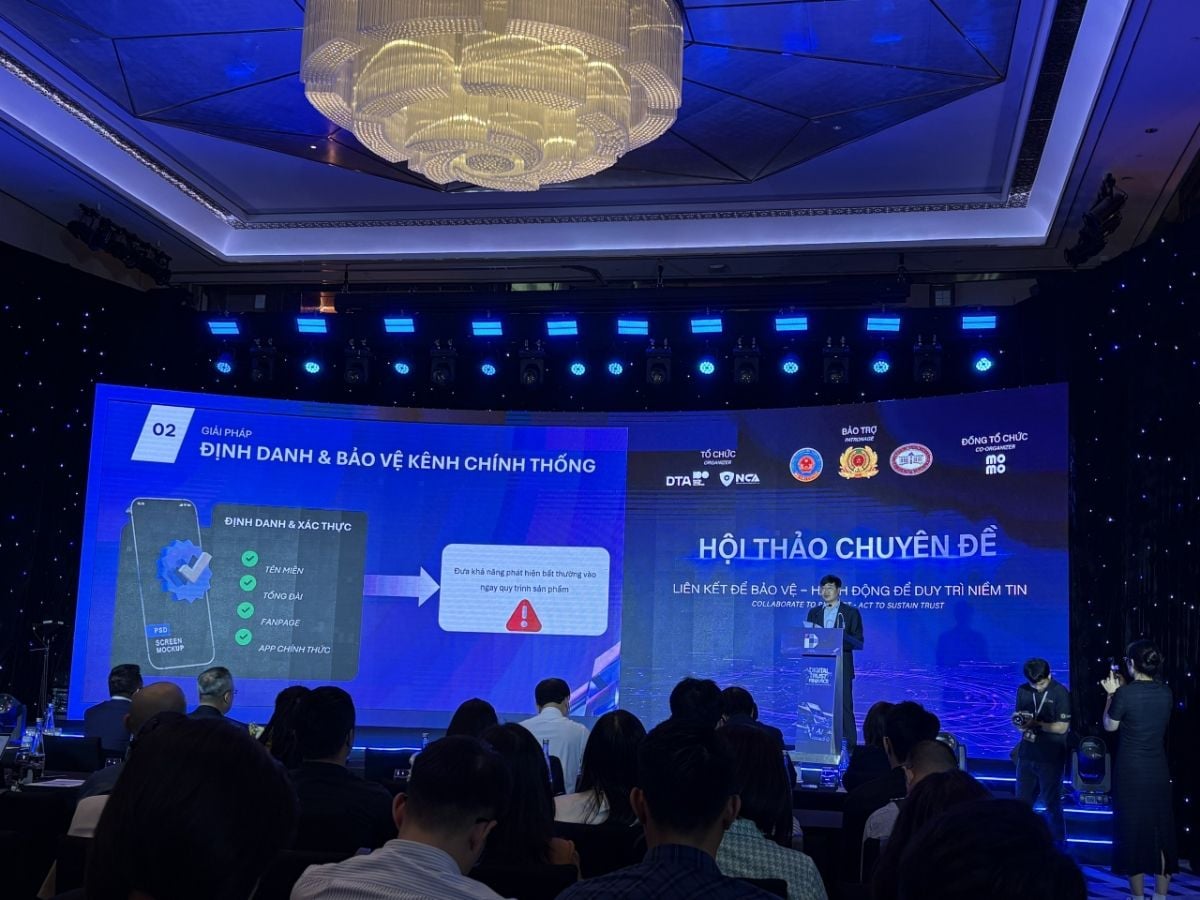
The Digital Trust in Finance 2026 forum, held under the patronage of Vietnam’s Ministry of Public Security, the State Bank of Vietnam, and the Ministry of Finance, focused on “Building digital trust in finance in the AI era.”
Colonel, Dr. Nguyen Hong Quan, Deputy Head of the Department of Cyber Security and Crime Prevention using high technologies (Ministry of Public Security), said that while Vietnam’s digital financial services are expanding rapidly—allowing people to transfer money and invest with just a few steps—this convenience has been accompanied by a sharp rise in increasingly sophisticated, organized fraud and asset misappropriation.
According to 2025 data cited at the forum, losses from online fraud in Vietnam were estimated at about VND 8,000 billion. Quan noted that this figure may represent only a portion of total losses because many victims do not report incidents to authorities.
He said the impact of fraud goes beyond individual financial loss. It also causes distress for families, erodes consumer trust in digital services, increases pressure on financial institutions, and leads the broader ecosystem to adopt a more cautious stance.
Quan added that high-tech crime is no longer operating in isolation. Instead, it forms professional networks that target the entire user journey—from social networks and online advertising to trading platforms.
“Whenever a new service or activity appears, new fraud scripts appear immediately. Script-writing is extremely professional and highly sophisticated,”
he said.
Quan argued that coordination among relevant organizations remains slower than criminals’ pace. He emphasized that a faster mechanism to block money immediately after a fraudster uses an account would be highly meaningful.
“If there is a better, faster mechanism, so that money is blocked as soon as the fraudster uses the account, we can promptly freeze and recover it,”
he said.
The forum highlighted that many countries have moved from single-issue campaigns to a shared-responsibility model involving regulators, financial institutions, telecom operators, digital platforms, law enforcement, and users.
In the United States, the FBI uses data from the Internet Crime Complaint Center (IC3) not only to report losses, but also to support warnings, investigations, and cash-flow interventions. The FBI applies the Financial Fraud Kill Chain, described as a rapid-response process intended to prevent disbursal of fraud proceeds.
When complaints are filed with IC3 and meet criteria, the Kill Chain is activated to trace, freeze, and block funds from further misappropriation. In 2024, the mechanism handled 3,020 cases involving USD 848.4 million in fraud and blocked USD 561.6 million domestically and internationally.
Quan said international experience shows that protecting users requires protecting the entire digital ecosystem, and that doing so depends on a multi-party linked mechanism with faster coordination than criminals.
He posed questions including how to warn faster, block money earlier, and remove harmful content promptly so users are protected before becoming victims.
He outlined three core solutions:
“The role of enterprises, including banks and financial service providers, is crucial,” Quan stressed.
The Digital Trust in Finance 2026 forum was organized by the Digital Trust in Finance alliance in collaboration with the Department of Cyber Security and High-Tech Crime Prevention, the National Cyber Security Association, and MoMo, under the patronage of the Ministry of Public Security, the State Bank of Vietnam, and the Ministry of Finance.

Premium gym chains are entering a “golden era” that is ending or already in decline, as rising operating costs collide with shifting consumer preferences toward more flexible, community-based ways to exercise. Long-term memberships are shrinking, margins are pressured by higher rents and facility expenses, and competition from smaller, more personalized…