•
•
•
•
•
•
•
•
•
•
•
•
•
•
•
•
•
•
•
•
•
•
•
•
•
•
•
•
•
•
•
•
•


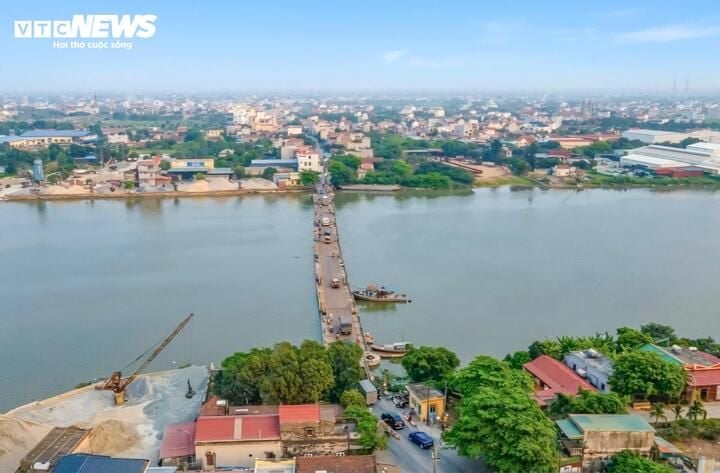
After nearly 30 years in operation, the Ninh Cuong pontoon bridge spanning the Ninh Cơ River in Ninh Binh Province is about to complete its historic mission, making way for a fixed bridge valued at nearly 600 billion dong. This is an important project on National Highway 37B, linking the river banks and helping to resolve long standing traffic bottlenecks in the area. The Ninh Cuong pontoon bridge has been in use since the late 1990s as a temporary solution to connect traffic across the Ninh Cơ River until a fixed bridge existed. The bridge plays a crucial role in linking Nghia Hung commune and Ninh Cuong commune (Ninh Binh Province). The bridge is about 297 meters long and 8.4 meters wide, but the deck is only about 3.5 meters, sufficient for one lane of traffic. Therefore, each crossing can only occur in one direction at a time, with the opposite direction having to stop at the far end of the bridge. During peak hours, traffic jams occur frequently, with vehicles inching forward to cross the river. Not only narrow, the pontoon bridge’s construction also carries many risks. The joints between floating pontoons, combined with the ramps, make movement difficult, especially for freight vehicles or bulky vehicles. Many motorcycle riders must weave between trucks and bulky loads, posing collision risks at any moment. The Ninh Cuong pontoon bridge is designed as a barge-type structure with eight floating pontoons linked by steel beams, bound by heavy steel wires and chains. However, due to the dual role of serving road traffic and ensuring a navigable channel for ships, the bridge must be disconnected twice daily. Specifically, at 9:00–10:00 and 15:00–16:00, the pontoon bridge is towed apart by a canoe to open the waterway for vessels. Then the bridge is towed back to its original position to connect the road for road traffic. This process further disrupts and inconveniences people’s travel. There are days when commuters are in a hurry but have to wait for the scheduled opening. On normal days the wait is about 10–15 minutes, but during holidays, Tet, or peak hours the wait can reach an hour. The most inconvenient are the windows when ships pass, with people on both banks left watching. Having worked on the pontoon bridge for 30 years, Mr. Dinh Viet Thang (60), who works as a gatekeeper regulating vehicles crossing the bridge, said congestion and overload occur regularly, especially during holidays and Tet. He described long queues at both ends and conflicts arising from the narrow deck as people hurry to pass. He hopes for a new bridge. According to the investment decision, the Ninh Cuong Bridge project is led by the Thang Long Project Management Board (under the Ministry of Construction) as the investor, with a total investment of nearly 600 billion dong. The project has completed contractor and supervision consultant selection, with groundbreaking scheduled for April 2026 and completion in 18 months. When completed, Ninh Cuong Bridge will replace the current pontoon bridge entirely, creating seamless road connectivity on both sides of the river and relieving conflicts between road and river transport. The project is also expected to reduce congestion and traffic accidents and to promote regional socio-economic development, while strengthening defense and security in Ninh Binh and the Red River Delta.





Premium gym chains are entering a “golden era” that is ending or already in decline, as rising operating costs collide with shifting consumer preferences toward more flexible, community-based ways to exercise. Long-term memberships are shrinking, margins are pressured by higher rents and facility expenses, and competition from smaller, more personalized…