Mr. Nguyen Minh Giang, Founder & CEO of MGI Investment, said the domestic economy outlook remains broadly positive as the government targets raising the capital market to 120% of GDP by 2028. He added that growth and inflation are currently well controlled.
Despite easing, interest rates are still a headwind for Q1 2026. Mr. Giang noted that bank deposit rates have fallen by about 0.5 percentage points, but the current level remains significantly higher than before.
Looking into Q2, Mr. Giang expects continued strong credit growth, which could put pressure on system liquidity. He said GDP is likely to keep expanding, supported by public investment disbursement, but inflation risks should be monitored as Brent crude trades around $100 per barrel.
He warned that if the Middle East conflict persists, oil prices could remain high, lifting input costs and increasing the risk of stagflation—slower GDP growth alongside higher inflation.
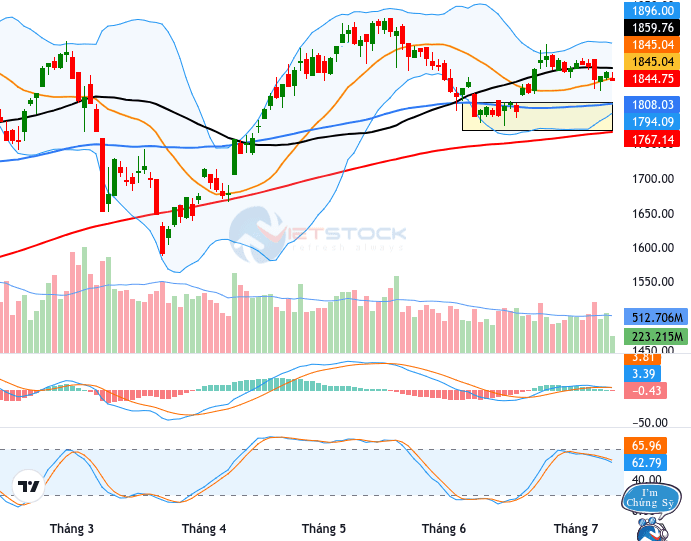
Mr. Giang described Q2 as a period of high volatility. For the stock market, he said the first half of Q2—especially May—could see large swings. However, he believes that if investors find a suitable entry point, the period can still offer investment opportunities.
On portfolio allocation, he said he would prioritize the stock market more in Q2 because liquidity is high. He also stated he maintains a high equity exposure of around 40–50% of the portfolio, similar to Q1.
Mr. Giang said the second channel—savings deposits and certificates of deposit—is expected to remain attractive in Q2, with interest rates staying high. He noted that at times, rates have risen above 9% per year, and this channel will continue to be a preferred option for many investors.
He attributed the continued rise in deposit rates to macro factors that have not yet improved materially, including the ongoing Middle East conflict and domestic pressure on the exchange rate and interest rates. He said these factors are a major source of pressure on the liquidity of credit institutions.
Maintaining a high weight in deposits, he said, helps achieve two goals: ensuring stable portfolio yield and providing a defensive tool against unpredictable market fluctuations. In the event of shocks or “black swan” events, the deposit portion can be used to manage the stock portfolio—either by adding liquidity if the portfolio incurs losses or by taking advantage of buying opportunities when the market falls below intrinsic value.
At the beginning of the year, many expected housing prices to cool due to increased supply, higher rates, and weaker demand. However, Mr. Giang said Q1 did not play out that way.
In the short term, at least in Q2 2026, he said it is difficult for housing prices to fall sharply. He pointed out that the only notable decline was around 30% in 2022, when the global economy slumped and rates rose sharply. In the current period, he said the rate level remains tolerable for many investors, so there is no panic selling.
He also said real estate capital inflows in 2024–2025 have been selective, with investors focusing on areas benefiting from public investment, infrastructure, or national key projects. These segments have continued to appreciate, making a broad market decline unlikely. While some segments may be neglected and transactions may slow, he said this does not necessarily imply prices will drop dramatically, and a collapse similar to 2022 is unlikely in the current environment.
For investors holding cash, Mr. Giang said Q2 remains suitable for seeking real estate for long-term holding of 3–5 years or more. He emphasized that investors should buy when markets are quiet and sell when markets are active, noting that many people tend to do the opposite—buying heavily during the hot 2021–2022 period and then cutting losses in 2023–2024, which he said has forced some clients to take losses.
Looking ahead, he said developers are expected to launch a large amount of new products, which should make the primary market more active. When supply rises sharply, buyers are in a better position, with more choices and greater ability to negotiate. He believes opportunities will be concentrated in products that meet real demand and are located in areas supported by strong public investment and infrastructure development.
He cited examples including mid-range commercial apartments, which still have relatively solid demand compared with luxury units. He also highlighted townhouses for their rental potential and ability to generate cash flow.
Into Q2 2026, he said these segments may offer opportunities for investors seeking liquidity. For example, in provinces, a townhouse priced around VND 5 billion is still relatively easy to trade. He added that apartments in Ho Chi Minh City, Hanoi, and Da Nang—especially in suburban areas with prices around 70–100 million VND per square meter—are expected to continue attracting investment inflows in the near future.
According to Phan Trang