•
•
•
•
•
•
•
•
•
•
•
•
•
•
•
•
•
•
•
•
•
•
•
•
•
•
•
•
•
•
•
•
•


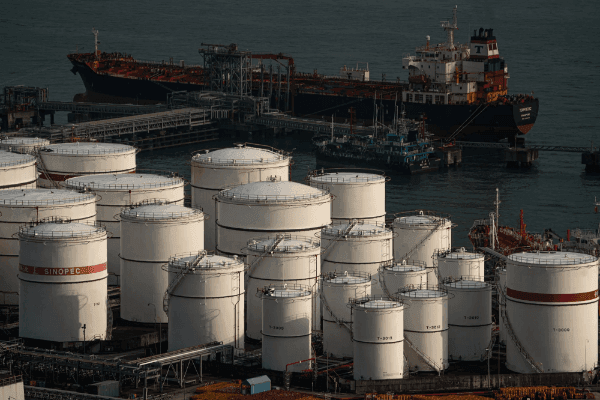
Global oil trading firms say demand destruction linked to the US–Iran conflict will intensify, suggesting the broader economic impact has not yet fully materialized.
In an assessment released on 21 April, Gunvor Group said global oil-demand losses could double in May to 5 million barrels per day, roughly 5% of world oil supply. Gunvor also warned that a global recession could occur if the Hormuz Strait remains closed for another three months.
Trafigura Group said the initial oil-demand decline has been concentrated in Asia, but is expected to spread globally as retail fuel prices continue to rise.
Vitol Group chief executive Russell Hardy said the war has reduced global oil demand by about 4 million barrels per day, adding that the decline could worsen if the situation continues.
Since the US–Iran conflict began in late February, the IEA estimates that supply of crude oil and refined petroleum products from the Gulf has fallen by about 13 million barrels per day. While spot prices for oil and products including jet fuel and diesel have surged, futures prices have remained relatively stable, reflecting concerns about weaker demand ahead.
“Demand destruction is occurring in places that are not the main price-setting centers for commodities. People are underestimating the shortfall in supply, and that shortfall must be balanced by weaker demand,” said Saad Rahim, Trafigura’s chief economist, at a global commodities market conference in Lausanne.
Rahim said the adjustment is already visible across industries. Petrochemical producers in China, Japan and Korea have curtailed operations, contributing to a decline in plastics output, the feedstock used in products ranging from bottles to electronics.
Airlines in multiple countries are canceling flights or planning contingencies to cut capacity. In Southeast Asia, many harvest-ready rice fields are being left idle due to higher fuel and fertilizer prices.
“The adjustment has been happening, but if this continues, the magnitude of the adjustment will grow. We are at a critical turning point,” Rahim said.
Oil futures have risen about 30% since the war began. In March, futures jumped to nearly $120 per barrel, before cooling toward around $100 per barrel more recently as signs emerged that Iran and the US may reach a deal to end the conflict.
Rahim said a diplomatic solution could help avoid recession, while a prolonged crisis would reduce economic activity.
“If there is a diplomatic solution, ‘I think we will avoid a recession,’” Rahim said. But if the crisis persists, “economic activity will shrink.”
Gunvor’s Frederic Lasserre, head of global research and analysis, said the company is assessing three scenarios for the Strait of Hormuz: remaining completely closed, opening partially, or opening fully.
“If Hormuz does not reopen within three months, the problem will become macro and could push the world into a recession. And then there will be a larger adjustment in demand,” Lasserre said.
Last week, the IEA said its forecast for global oil-demand growth this year had been erased entirely for the first time since the Covid-19 pandemic. Instead of growth of 730,000 barrels per day, the IEA now projects a slight contraction of 80,000 barrels per day in global oil demand this year.
The IEA expects declines to be concentrated in vulnerable sectors in Asia and the Middle East, including naphtha and ethane used in petrochemicals, and liquefied petroleum gas (LPG) used for cooking.
Another major impact is on aviation. Airlines including Air New Zealand, SAS AB and KLM have canceled multiple flights, while Deutsche Lufthansa AG is preparing plans to suspend some aircraft if necessary.
Premium gym chains are entering a “golden era” that is ending or already in decline, as rising operating costs collide with shifting consumer preferences toward more flexible, community-based ways to exercise. Long-term memberships are shrinking, margins are pressured by higher rents and facility expenses, and competition from smaller, more personalized…