•
•
•
•
•
•
•
•
•
•
•
•
•
•
•
•
•
•
•
•
•
•
•
•
•
•
•
•
•
•
•
•
•


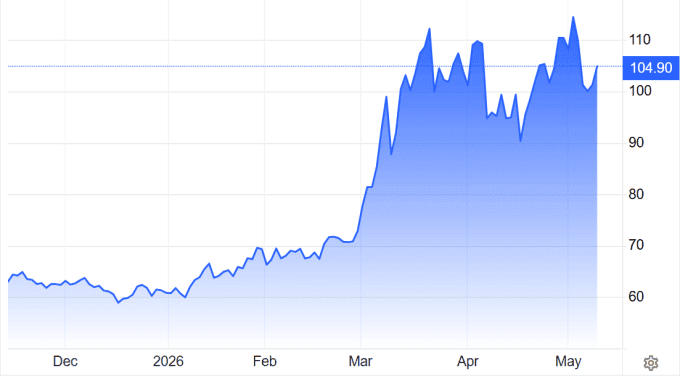
Each barrel rose by $3 as President Donald Trump described Iran's response to the U.S. peace proposal as “completely unacceptable”.
At the open of trading on May 11, Brent and WTI rose 3.3% to $104 and $98 per barrel respectively. The session on the previous Friday also saw gains in these two crude benchmarks.
Expectations that the Middle East conflict would end within ten weeks have faded after President Donald Trump wrote on social media on May 10 that Iran's reply to the peace proposal was “completely unacceptable”.
Iran’s state broadcaster IRIB previously said the focus of the reply was to end the war on all fronts. Iran also seeks compensation for damages from the conflict and emphasizes sovereignty over the Hormuz Strait. The country called on the United States to end its maritime blockade and lift sanctions on Tehran.
These developments mean the risk of oil supply tightness has not been resolved. The Hormuz Strait—the chokepoint that transports about 20% of global crude oil—has been blocked since the early days of the conflict, helping push global crude prices higher by roughly 60% over the period.
This week, Trump is due to travel to Beijing to discuss Iran and other topics with Chinese President Xi Jinping. Markets this week will shift focus to Trump’s visit to China, analysts said. They expect Trump may persuade China to use its influence on Iran to push for a ceasefire and a resolution to the disruption at Hormuz, according to Tony Sycamore of IG Market.
On May 10, Amin Nasser, CEO of Saudi Aramco, said the world has lost about 1 billion barrels of oil in the past two months. The market will require more time to stabilize, even if oil flows resume.
Last week, data firm Kpler said two oil tankers passed through the Hormuz Strait by turning off tracking devices to avoid Iranian attacks. The report indicates rising demand to restore Middle East oil exports.
With the Hormuz disruption continuing and negotiations still uncertain, crude prices remain sensitive to developments around the U.S.-Iran peace proposal and any diplomatic efforts involving China.
Premium gym chains are entering a “golden era” that is ending or already in decline, as rising operating costs collide with shifting consumer preferences toward more flexible, community-based ways to exercise. Long-term memberships are shrinking, margins are pressured by higher rents and facility expenses, and competition from smaller, more personalized…