•
•
•
•
•
•
•
•
•
•
•
•
•
•
•
•
•
•
•
•
•
•
•
•
•
•
•
•
•
•
•
•
•


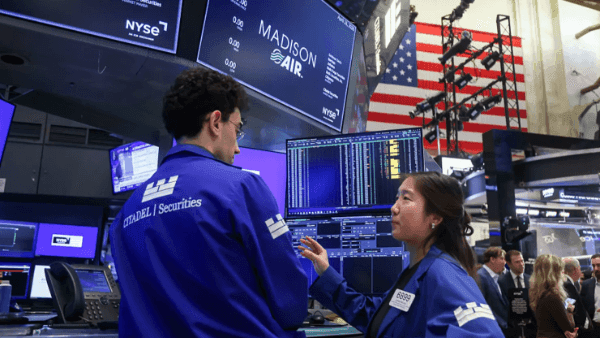
U.S. stock markets rose on Thursday, with the S&P 500 and the Nasdaq posting fresh records as investors remained hopeful that the United States and Iran could find a way to end the war. Oil prices climbed toward $100 a barrel amid ongoing traffic disruptions in the Hormuz Strait, with no date set for the next round of talks.
At the close, the S&P 500 was up 0.26% at 7,041.28. The Nasdaq rose 0.36% to 24,102.7. The Dow edged higher by 115 points, or 0.24%, to 48,578.72.
The Nasdaq marked its 12th consecutive gain, the longest streak for the index since 2009. Both the S&P 500 and Nasdaq closed at record highs, with consecutive record closes for both indices.
Since the start of the week, the S&P 500 is up 3.3%, while the Nasdaq has risen roughly 5.2% and the Dow has gained a little over 1%.
The rally gained traction after President Donald Trump confirmed he had spoken with Lebanon’s President Joseph Aoun and Israeli Prime Minister Benjamin Netanyahu, saying Israel and Lebanon agreed to a 10-day ceasefire beginning at 5 p.m. Eastern Time on Thursday.
Market participants viewed the development as supportive of U.S.-Iran peace talks, noting that Iran had set a key condition for the United States: that Israel stop attacking Lebanon.
On U.S.-Iran talks, Trump said officials from the two countries could meet late next week, though no specific schedule was announced. Earlier on Wednesday, Trump said the war “is very near to ending” and that Iran “wants a deal very much.”
Analysts cautioned that even if a peace agreement is reached soon, markets could remain volatile as investors weigh the conflict’s potential impact on the U.S. economy.
“There could be about two quarters of weaker growth. People may be waiting for Iran to be resolved and the U.S. economy is still growing above 2%. But there could be two quarters of growth below 2%. I'm not sure the market is prepared for that yet,” said Rob Williams, a strategist at Sage Advisory, in an interview with CNBC.
Brent crude for June delivery rose nearly 5% on the London market, settling at $99.39 a barrel. WTI futures in New York rose about 4%, closing at $94.69 a barrel.
Oil prices increased as traffic through the Hormuz Strait remains severely limited and there is no plan to fully open the sea lane. Since Washington began restricting Iran’s ports in the Hormuz area earlier this week, only a few oil tankers have passed through the strait each day, as Iran continues to threaten further attacks on ships.
According to Bloomberg’s informant, leaders of several European and Gulf states believe it could take up to six months to negotiate a peace agreement between the U.S. and Iran. Meanwhile, the two-week ceasefire between the U.S. and Iran is expected to end next Tuesday (April 21).
Premium gym chains are entering a “golden era” that is ending or already in decline, as rising operating costs collide with shifting consumer preferences toward more flexible, community-based ways to exercise. Long-term memberships are shrinking, margins are pressured by higher rents and facility expenses, and competition from smaller, more personalized…