•
•
•
•
•
•
•
•
•
•
•
•
•
•
•
•
•
•
•
•
•
•
•
•
•
•
•
•
•
•
•
•
•


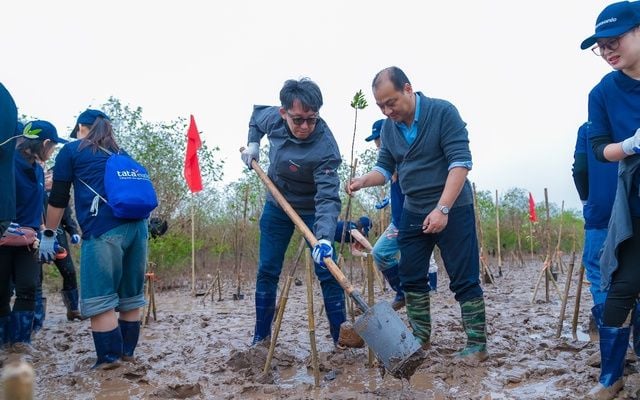
A recent United Nations report has stressed that sustainable development is not a destination but a continual journey of renewal, adaptation, and commitment toward a life with greater dignity for every person.
Panasonic’s sustainability journey is led by its business philosophy: “Contributing to society,” a mission and raison d’être proclaimed by founder Konosuke Matsushita from the early days of the company, and still guiding Panasonic’s global operations today.
Mr. Taka Fujino, General Director of Panasonic Vietnam, said: “Panasonic is a manufacturing company that aims to bring convenience and quality of life to people, which means we must use natural resources responsibly and create products with defined lifecycles. Therefore, corporate social responsibility activities are how we show respect and gratitude for the resources we have used, while demonstrating our best efforts to protect the environment and safeguard the planet for sustainable development.”
Panasonic frames sustainable development in Vietnam as more than production and business growth aimed at improving people’s quality of life and convenience. The company says sustainable development must also rest on a second pillar: its CSR activities in environmental protection and education.
Panasonic reports that it has planted more than 1.3 million trees across Vietnam through tree-planting programs spanning over a decade.
Beyond tree planting, the company highlights long-running environmental initiatives including solar-powered lighting donations, ecological education classes, and old-battery trade-ins for eco-battery solutions.
In education, Panasonic cites Panasonic Risupia Vietnam, described as a STEM center for students with over 10 years of activity and 800,000 visitors.
The company also says the “Panasonic for Sustainable Schools” program continues Risupia’s momentum, bringing STEM experiences to more than 100,000 students nationwide.
Panasonic further notes that its scholarship program, launched in 2004, has awarded over 300 scholarships and numerous training courses to help students build a solid foundation for the future and develop human resources for the country.
Panasonic says its CSR efforts rely on collaboration with a broad range of stakeholders, including government, local authorities, employees, and customers.
In recent years, the company adds that Gen Z participation has brought additional energy to CSR activities, including on-the-ground tree planting and coastal mangrove protection projects, solar lighting donations for border-area households, and proposals for circular economy initiatives. Panasonic says young people are empowered to help the company generate tangible, lasting sustainability impacts.
Panasonic links its approach to broader global trends. It cites World Economic Forum 2024 findings that successful sustainability initiatives are driven by a public–private–community ecosystem.
The company also references Deloitte’s survey, which it says found that 63% of Gen Z and Millennials believe companies should play an active role in solving social issues and are willing to collaborate.
Panasonic presents its long-term sustainability journey as a statement of its vision, placing CSR at the core of its business. The company says it will continue to empower and collaborate with communities, turning sustainability initiatives into concrete actions that create positive and enduring social impact.






Premium gym chains are entering a “golden era” that is ending or already in decline, as rising operating costs collide with shifting consumer preferences toward more flexible, community-based ways to exercise. Long-term memberships are shrinking, margins are pressured by higher rents and facility expenses, and competition from smaller, more personalized…




