•
•
•
•
•
•
•
•
•
•
•
•
•
•
•
•
•
•
•
•
•
•
•
•
•
•
•
•
•
•
•
•
•


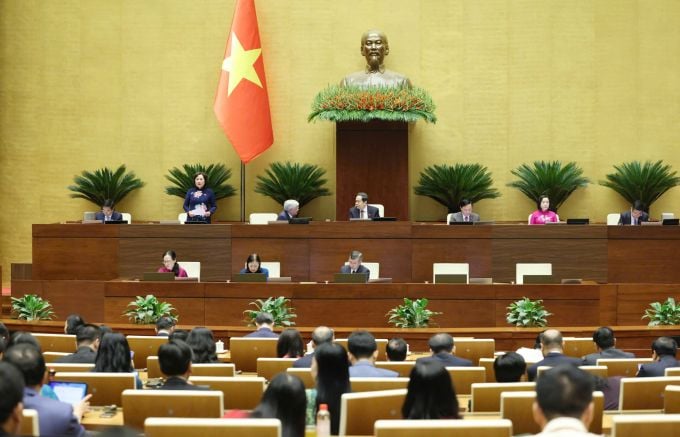
On Friday, April 24, 2026, Vietnam’s Parliament approved amendments to the Tax Law package—covering Personal Income Tax, Value-Added Tax, Corporate Income Tax and Special Consumption Tax—with more than 93% of delegates voting in favor. The changes remove the existing 500 million VND annual revenue threshold that had determined personal income tax and VAT obligations for households and individuals running small businesses. Under the amendments, the government will set and adjust the threshold, and the corporate income tax threshold will also be determined by the government rather than being fixed in law.
The provisions take effect from January 1, 2026. According to the briefing notes, the non-taxable revenue threshold for households and individuals operating businesses is expected to increase to 1 billion VND per year. A similar exemption threshold applies to small and micro enterprises.
The Finance Ministry estimates that doubling the exemption threshold would reduce state revenue by about 7,000 billion VND. Of this total, approximately 4,850 billion VND would come from household business activities and about 2,200 billion VND from small enterprises.
Government data indicate there are about 2.56 million households and individuals with revenue below 1 billion VND, alongside roughly 900,000 active enterprises. Small and micro units account for about 94% of these enterprises. As of 2025, tax revenue from these groups reached 32,840 billion VND, up 37.5% year-on-year.
The Finance Ministry noted that discussions continue regarding future adjustments, including a reported ceiling for adjustable thresholds of under 3 billion VND per year. The Finance Minister said that households and individuals with revenue above 3 billion VND per year would pay personal income tax.
Under the corporate income tax framework, revenue above 3 billion VND would be taxed at 15%–17%, which the minister said would require corresponding amendments to the tax laws.
The government is also considering potential expansion of the exemption policy. Debates include raising the exemption threshold further to better support operating costs and encourage formalization.







Premium gym chains are entering a “golden era” that is ending or already in decline, as rising operating costs collide with shifting consumer preferences toward more flexible, community-based ways to exercise. Long-term memberships are shrinking, margins are pressured by higher rents and facility expenses, and competition from smaller, more personalized…