•
•
•
•
•
•
•
•
•
•
•
•
•
•
•
•
•
•
•
•
•
•
•
•
•
•
•
•
•
•
•
•
•


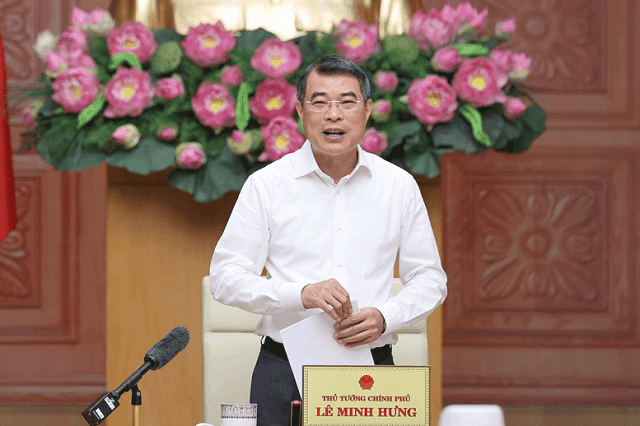
Prime Minister Le Minh Hung chaired a meeting with the Ministry of Finance on the morning of April 29 to review the status of tasks in the first months of 2026, set directions and key tasks for the near future, and discuss proposals and recommendations.
The meeting focused on evaluating results, limitations, and underlying causes; analyzing growth drivers and economic bottlenecks; assessing the capacity to mobilize resources and use them effectively; and implementing tasks to ensure the two-digit growth target as specified in Conclusion 18-KL/TW of the Second Central Committee.
Reports and opinions at the meeting said the Ministry of Finance has clearly demonstrated its role as adviser, coordinator, and leader in building strategies and plans for economic and social development, including growth scenarios. The Ministry also proposed macroeconomic management solutions to ensure resources and meet expenditure needs.
Participants noted that the Ministry of Finance plays a crucial role in improving the investment climate and promoting entrepreneurship, while actively addressing backlog and prolonged projects.
The meeting highlighted that the Ministry of Finance has quickly responded with policy changes covering fuel taxes, handling projects, land, business household tax, and support for small and medium enterprises. It also emphasized efforts related to developing the stock market, insurance, accounting, and auditing.
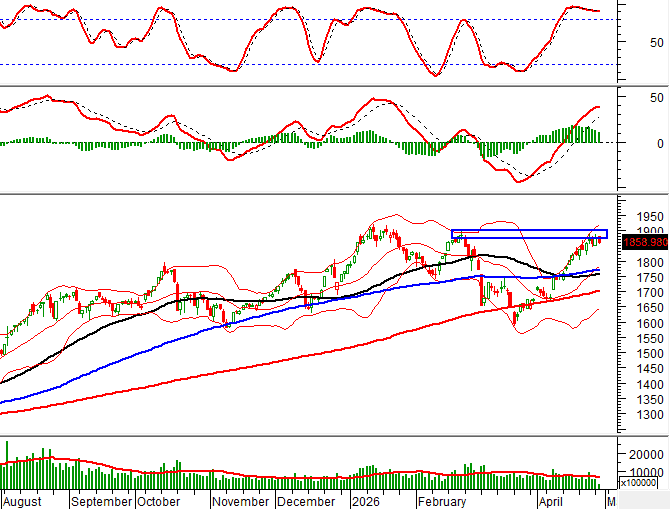
In 2025, Vietnam’s stock market was upgraded from frontier to emerging, according to the meeting materials.
In his remarks, Prime Minister Le Minh Hung stressed that achieving the targets requires solutions to mobilize state and social resources, as well as domestic and foreign resources for socio-economic development.
He emphasized developing the stock market and privatization of state-owned enterprises, while ensuring discipline and order so the market operates openly and transparently, thereby increasing investor and public confidence. The Prime Minister also called for improving capital discipline and efficiency, raising the efficiency of budget expenditures, and reorganizing public assets, especially state-owned houses in Hanoi and Ho Chi Minh City.
The Prime Minister directed the development of economic components, including state-owned enterprises, private enterprises, and attracting foreign direct investment (FDI). He also called for strengthening tax administration, curbing losses, nurturing revenue sources, and expanding the tax base.
He further requested promoting digital transformation and applying data in management and operations, including speeding up digital transformation, improving data infrastructure, restructuring procedural workflows, and perfecting the institutional framework for development.
The Prime Minister proposed that in the second quarter, completion, adjustment, and approval of planning within the system of plans must ensure synchronization and consistency with the requirement of two-digit growth. He also called for perfecting laws to fully address public assets and reviewing and completing sectoral standardization and technical economic norms.
He urged strong solutions to develop the stock market into a medium- and long-term financing channel for the economy, including urgently amending and completing the Decree on corporate bonds. In parallel, he called for improving the investment environment by reducing administrative procedures, business conditions, processing time, and compliance costs.
Regarding state budget revenue and expenditure, Prime Minister Le Minh Hung emphasized ensuring the central budget’s leading role and maintaining the neutrality of tax policy. He requested studying to complete regulations on taxes, broadening and closing tax base erosion, exploiting remaining revenue sources, preventing revenue leakage, and nurturing revenue sources to support development.
He also called for effectively implementing policies on tax relief, fees, and charges to support businesses and people, including implementing the regulation raising the threshold for household business revenue exempt from tax to 1 billion dong. He further directed increasing savings in current expenditures and increasing spending on development investment.
The Prime Minister called for strengthening discipline and order, promoting allocation and disbursement of development investment capital, and ensuring internal guidance from central to local levels. He also stressed strict compliance with directives on assessing the economic and social efficiency of public investment projects at every stage—before, during, and after investment.
He additionally requested promptly finalizing growth-operating scenarios with different options and strengthening inter-ministry coordination, especially with the State Bank of Vietnam and the Ministry of Industry and Trade, in macroeconomic management and price control.
Author: Đông Tư






Premium gym chains are entering a “golden era” that is ending or already in decline, as rising operating costs collide with shifting consumer preferences toward more flexible, community-based ways to exercise. Long-term memberships are shrinking, margins are pressured by higher rents and facility expenses, and competition from smaller, more personalized…