•
•
•
•
•
•
•
•
•
•
•
•
•
•
•
•
•
•
•
•
•
•
•
•
•
•
•
•
•
•
•
•
•


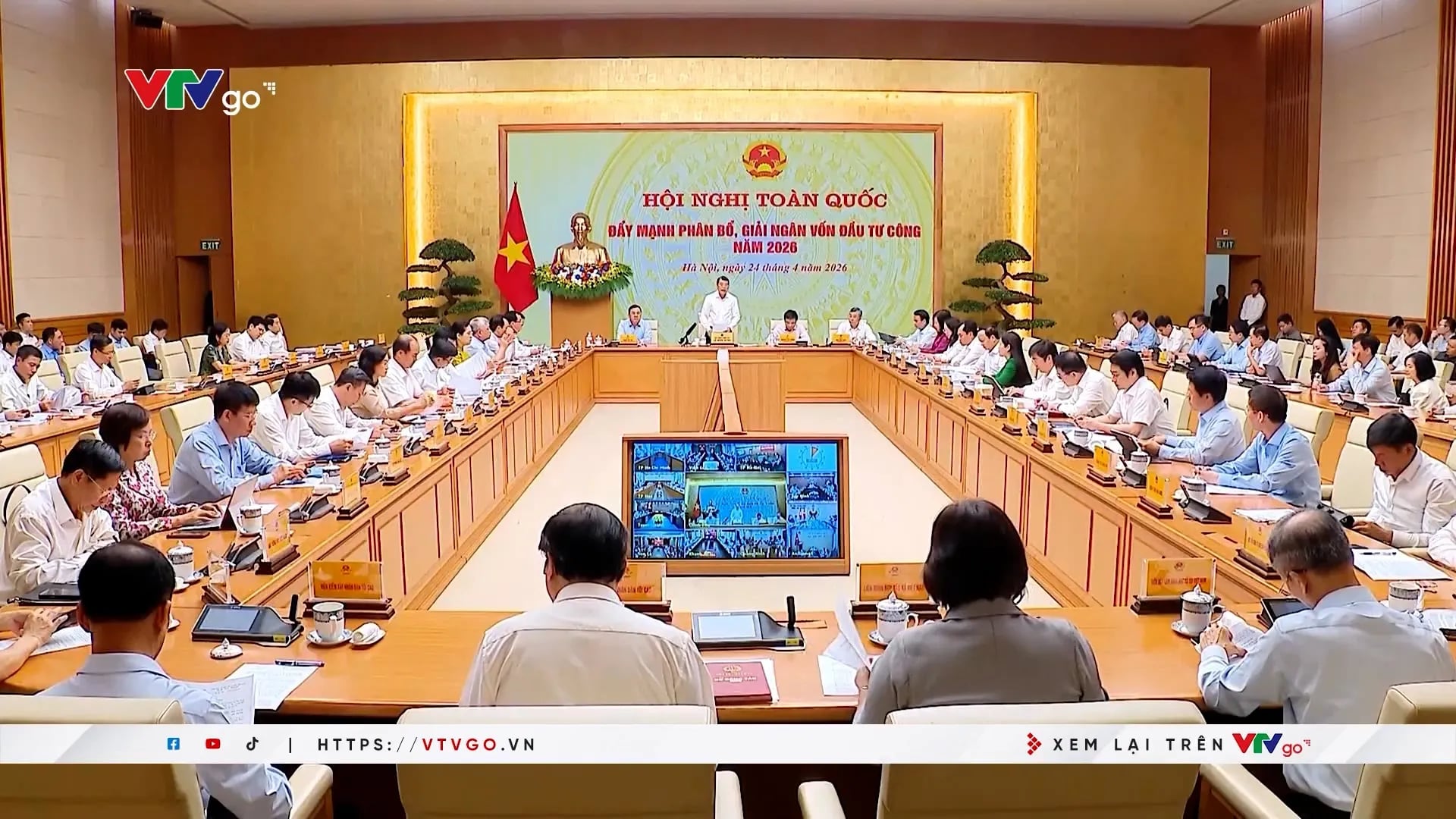
At a conference on public investment on April 24, Prime Minister Le Minh Hung criticized 28 ministries and agencies and 18 localities for having disbursement rates in the first quarter below the national average, urging leaders to review progress and improve the speed and quality of public investment disbursement.
The Prime Minister commended seven ministries/agencies and 16 localities with disbursement rates above the national average. He said public investment remains “scattered,” citing weak project preparation, cumbersome procedures, slow allocations, delayed land clearance, and inadequate material resources.
He also pointed to lack of synchronization in coordination among agencies and that the leadership’s role has not been fully exercised. “Slow disbursement and underspending have become a long-standing problem; strong measures must be taken to address it,” he said.
According to the Prime Minister, slow disbursement is largely driven by subjective factors. He noted that even under the same legal framework, some ministries and localities perform well while others lag. He cited insufficient oversight and delayed handling of delayed projects, along with a “mentality of waiting, avoiding, and fear of responsibility.”
He further said coordination between agencies is not tight, and that some project owners, management boards, and contractors have limited capacity. Some localities, he added, are slow in land clearance and face shortages of construction materials and fluctuating labor costs.
The Prime Minister said public investment is an important growth driver. He noted that public investment plays a leading role in stimulating private capital and FDI flows, raising total social investment, and supporting faster and more sustainable growth.
Calculations cited by the Prime Minister indicate that in the 2021-2025 period, a 1% increase in public investment disbursement could add 0.058 percentage points to GDP.
For 2026, the Prime Minister said the total public investment plan assigned exceeds 1 quadrillion dong, accounting for nearly 35.5% of total budget expenditure—30.6% higher than last year.
By April 15, nationwide disbursement reached nearly 127.4 trillion dong, equivalent to 12.6% of the Prime Minister’s assigned plan.
Concluding the conference, Prime Minister Le Minh Hung said the government identifies public investment as a key growth driver to achieve double-digit growth, develop synchronized infrastructure, and open new development space. He emphasized that disbursement must accelerate while ensuring project quality and effective use of capital.
He tasked the Ministry of Finance with studying a KPI scoring method for the disbursement task, with a report due by May 15. He also required ministries, agencies, and localities—especially leaders—to treat disbursing public investment as a top priority.
“We must designate specific leadership and personnel in charge of each project, individualize responsibility to form the basis for evaluating task performance,” he said, adding that project management boards, contractors, and underperforming staff that fail to meet requirements should be replaced immediately.






Premium gym chains are entering a “golden era” that is ending or already in decline, as rising operating costs collide with shifting consumer preferences toward more flexible, community-based ways to exercise. Long-term memberships are shrinking, margins are pressured by higher rents and facility expenses, and competition from smaller, more personalized…