•
•
•
•
•
•
•
•
•
•
•
•
•
•
•
•
•
•
•
•
•
•
•
•
•
•
•
•
•
•
•
•
•


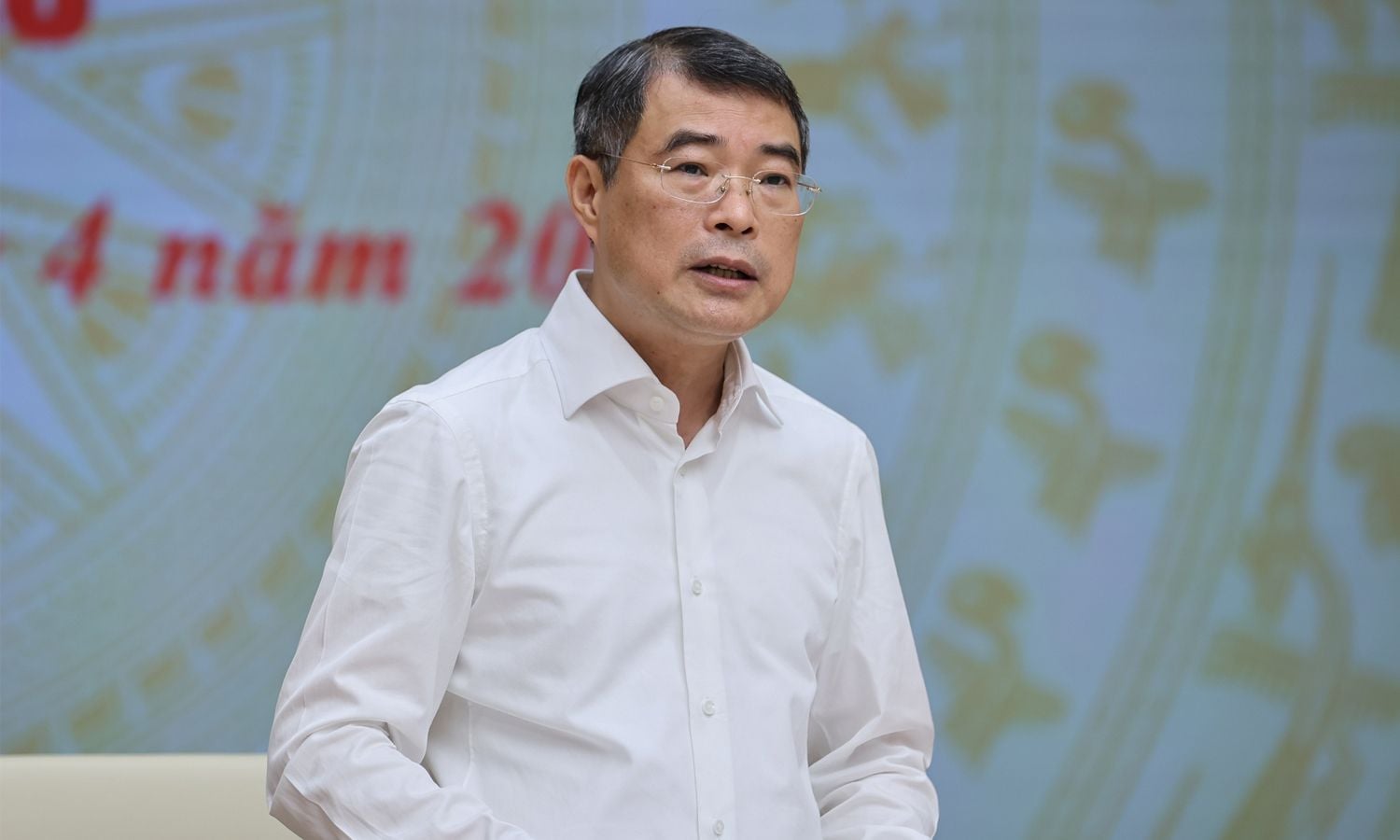
On April 24, Prime Minister Le Minh Hung chaired a national conference on accelerating the allocation and disbursement of public investment capital for 2026.
In his remarks and conclusions, the Prime Minister said public investment is a key political task for 2026 and for the entire term. He described it as a macro-management tool and a driver to achieve the country’s two-digit growth target, while developing synchronous and modern infrastructure and opening new development space.
The Prime Minister emphasized that public investment must play a leading, activating, and pervasive role in overall social investment. He said it should act as seed capital to mobilize social resources, create projects with substantive use value and efficiency, and promote production and business, job creation, livelihoods, and social welfare.
Regarding 2026 disbursement status, the Prime Minister praised, acknowledged, and highly valued seven ministries/agencies and 16 localities with disbursement rates above the national average. He also sternly criticized 28 ministries/agencies and 18 localities with disbursement rates below the national average.
The Prime Minister said public investment remains dispersed and has not paid enough attention to assessing economic-social efficiency and macro accounting. He cited ongoing issues including investment preparation problems, cumbersome procedures, slow capital allocation, land clearance delays, inadequate material supply, and insufficient coordination and leadership.
He noted that disbursement is slow and funds are not fully disbursed, creating persistent problems that require strong measures to address shortcomings and constraints.
The Prime Minister said that addressing these difficulties is being carried out decisively. He pointed to the National Assembly’s approval of a Resolution on special mechanisms to handle violations of land law by organizations and individuals that occurred before the 2024 Land Law took effect, along with solutions to continue removing obstacles for lingering, protracted projects.
He required provincial secretaries, chairmen of provincial People’s Committees, and ministers to take decisive responsibility for resolving bottlenecks for projects. He also called for stronger determination and close, decisive direction to accelerate project implementation.
To eliminate the “capital waiting for projects” situation, the Prime Minister called for specific leadership and accountability for each project, replacing weak performers, consultants, and contractors, and strictly handling wrongdoing and corruption in the management and use of public investment funds.
He instructed further improvement in investment preparation—especially selecting projects that are truly necessary, effective, and aligned with planning, and ensuring balanced funding—while avoiding registering projects merely to hold capital.
Another measure is to promptly reallocate funds from projects with poor disbursement to those with good progress and higher capital demand, and to proactively inspect and resolve issues at the unit and on construction sites. He also directed agencies to identify shortcomings at each governance and implementation stage to solve problems quickly.
The Prime Minister directed the Ministry of Finance to lead, together with other agencies, in reviewing institutional, mechanism, and policy obstacles related to investment, especially bidding, construction, and land. He said obstacles should be removed within authority or reported to higher authorities.
He also instructed immediate use of sole-source procurement for consulting and for civil works tied to strict monitoring.
The Prime Minister required local governance to promptly solve public investment difficulties at two levels, and said localities must appoint capable personnel, especially in remote areas.
He also ordered immediate allocation of the 2026 capital plan that has been allocated but not detailed. By May 10, if any agency or locality has not allocated the funds, a detailed report with reasons and accountability of collectives and individuals must be submitted to the Ministry of Finance by May 15. The Ministry of Finance will consolidate and propose remedial actions for unallocated funds in May.
He further directed urgent completion of investment-preparation work by the Ministry of Construction and localities, especially for the North-South high-speed railway and rail lines connecting with China.
In April, the Ministry of Finance and the Ministry of Science and Technology will finalize guidelines on criteria and procedures for investment and budgeting for science, technology, innovation, and digital transformation. In May, they will finalize financial mechanisms for strategic technology development.
The Prime Minister also required provincial chairs to promptly direct the review and completion within Q2 of planning for mineral materials to ensure sufficient materials for investment projects, especially public investment, and to address mining license difficulties, including reclaiming mines if violations occur or licenses are not properly issued.
He urged a rapid review and finalization of the list and allocation plan for the 2026–2030 medium-term public investment, ensuring centralized capital allocation to key projects and preventing dispersion. He said the total number of projects in 2026–2030 should be reduced by at least 30% compared with 2021–2025 at both central and local levels.
The Prime Minister said all ministries, agencies, and localities—especially leaders—must treat disbursement of public investment as a central political task and top priority for 2026, aiming for a notable improvement in disbursement rates and targeting disbursement of 100% of the 2026 plan to contribute to two-digit economic growth.
According to the Ministry of Finance, the total public investment plan for 2026 is over 1 quadrillion dong, accounting for nearly 35.5% of total state budget expenditures, higher than 2025’s 30.6%.
By the end of Q1, disbursement stood at 11% of the Prime Minister’s plan. By April 15, disbursement was nearly 127.4 trillion dong, equivalent to 12.6% of the plan—of which the central budget was over 34.8 trillion dong (9.6%) and the local budget was over 92.5 trillion dong (14.2%).







Premium gym chains are entering a “golden era” that is ending or already in decline, as rising operating costs collide with shifting consumer preferences toward more flexible, community-based ways to exercise. Long-term memberships are shrinking, margins are pressured by higher rents and facility expenses, and competition from smaller, more personalized…