•
•
•
•
•
•
•
•
•
•
•
•
•
•
•
•
•
•
•
•
•
•
•
•
•
•
•
•
•
•
•
•
•


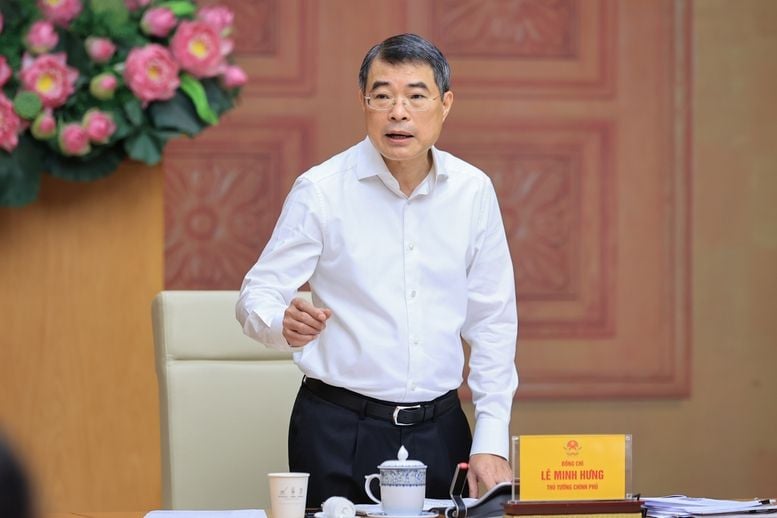
On the morning of April 22, Prime Minister Le Minh Hung chaired a working meeting with the Ministry of Industry and Trade at the Government Office to review the implementation status of tasks assigned for 2026, identify difficulties and obstacles, and discuss urgent and important issues arising in practice. The meeting also focused on near-term directions and core tasks, as well as resolving proposals and recommendations.
The meeting was attended by Deputy Prime Ministers Pham Gia Tuc and Nguyen Van Thang; Minister of Industry and Trade Le Manh Hung; Minister and Head of the Government Office Dang Xuan Phong; and leaders from multiple ministries, sectors, and state-owned economic groups.
According to reports presented at the meeting, the Ministry of Industry and Trade has achieved important results in building and perfecting institutions, improving the effectiveness of state management, and promoting three pillars: industry; energy; and the market (exports and domestic consumption).
The Prime Minister highlighted that the government has assigned the Ministry and related agencies a multi-sector mandate covering key pillars and strategic areas. He commended the ministry’s efforts in overcoming difficulties and in proposing bold policy decisions, particularly regarding gasoline and oil, in a challenging context.
The meeting aimed to unify approaches and methods to address issues raised and to focus on completing tasks in the Government’s Action Program to implement the Party’s XIV Congress and Central Resolution 18-CQ/TW, with the goal of achieving two-digit growth. The Prime Minister noted the country’s difficulties and the government’s prompt, decisive actions to address obstacles across fields, including the industry and trade sector.
The Prime Minister requested the Ministry of Industry and Trade and related agencies to concretize and implement the Plan for the Government’s Action Program following the XIV Congress and Central Committee’s Conclusion 18. He asked that activities be rolled out across energy, gasoline, science and technology, innovation, exports, and domestic markets, with specific targets, tasks, and deadlines assigned to the ministry, relevant units, state-owned enterprises, and localities.
He also emphasized strengthening internal party governance, building a clean and strong agency and a capable team of officials, and timely replacement of those who do not meet requirements.
Minister Le Manh Hung reported, and deputy leaders discussed specific tasks. These include building and perfecting the institutional framework; accelerating the drafting and issuance of guiding documents to avoid delays; and finalizing draft laws to submit to the 2nd session of the 16th National Assembly.
Draft laws mentioned include: the Petroleum Law (amendments); amendments to laws related to commerce; amendments to electricity laws; and the derivatives trading law.
The meeting also referenced Government Resolution 82/NQ-CP on promoting key industrial policy, with a request to rapidly complete draft laws for passage in the upcoming session.
The Prime Minister directed the Ministry to coordinate with relevant ministries to clarify functions and duties to avoid overlap, ensuring a “one matter – one responsible agency” approach. This was specifically noted for areas such as minerals, industrial parks, export processing zones, and state-owned enterprises within the sector.
He further urged continued implementation of directives to reduce administrative procedures, delegate authority to localities, simplify business conditions, and focus on reforming organizational structure.
The Prime Minister stressed ensuring energy security and a just energy transition. He required that the Ministry and the sector must not allow shortages of electricity or gasoline/oil under any circumstances.
Key tasks outlined include:
Attendees also discussed restructuring industrial and supply chains, deepening domestic production capacity, participating more in global supply chains, and strengthening linkages between domestic and foreign-invested enterprises.
Focus areas for export-import performance included improving export-import efficiency, diversifying markets, negotiating countervailing duties with the United States, maximizing benefits from existing FTAs and pursuing new ones, and assessing and innovating Vietnam’s overseas trade missions to contribute more concretely.
The Prime Minister called for digitalization and modernization of domestic distribution systems to stimulate domestic consumption in line with the government’s plan on developing science, technology, innovation, and digital transformation.
He also requested completing sector databases and connecting them with national databases, streamlining administrative procedures, and strengthening market management and enforcement against violations.
During the session, participants also viewed a photo of the delegates at the working session.




Premium gym chains are entering a “golden era” that is ending or already in decline, as rising operating costs collide with shifting consumer preferences toward more flexible, community-based ways to exercise. Long-term memberships are shrinking, margins are pressured by higher rents and facility expenses, and competition from smaller, more personalized…


