•
•
•
•
•
•
•
•
•
•
•
•
•
•
•
•
•
•
•
•
•
•
•
•
•
•
•
•
•
•
•
•
•


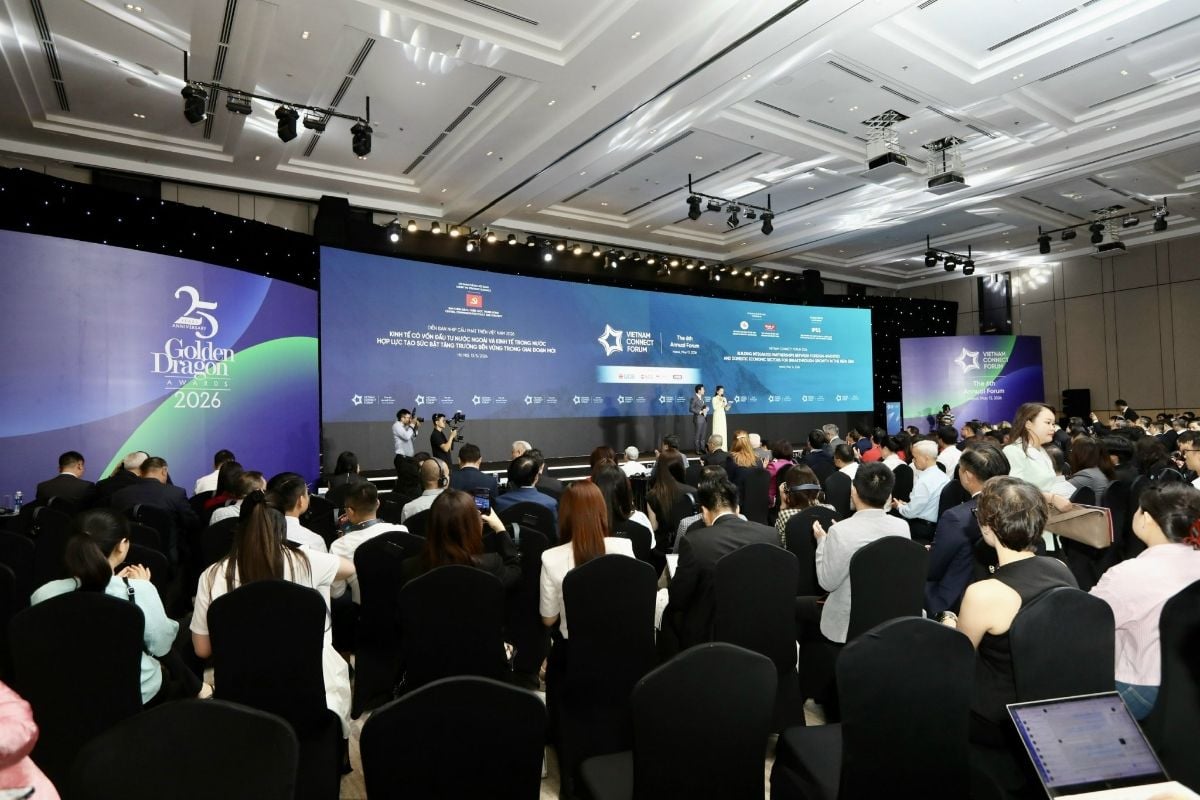
The sixth Vietnam Connect Forum 2026 was held in Hanoi on 13 May under the theme “An economy with foreign direct investment and the domestic economy synergizing to create sustainable growth momentum in the new phase.” The forum was organized under the guidance of the Policy and Strategy Committee of the Central, Vietnam Association of Economics, and Vietnam Economy Journal, bringing together policymakers, provincial and central leadership, representatives of international investment and trade promotion bodies, FDI enterprises and domestic business associations, as well as many economic, investment, trade and sustainability experts. Opening remarks by Hoang Van Cuong, Vice Chairman of the Vietnam Association of Economics, stated that the Vietnam Connect Forum, initiated in 2021 by the Vietnam Economy Journal in collaboration with the Ministry of Foreign Affairs to mark the 20th anniversary of the Golden Dragon program for the FDI sector, has become a credible policy exchange channel with participation from policymakers, associations, FDI enterprises, domestic businesses and experts. The forum aims to strengthen connections among the government, local authorities, international partners, and the business community; to provide a space to discuss mechanisms and policies and to promote joint action among parties in development. The forum’s hosts noted that after five previous events in Hanoi, Hai Phong, Da Nang and Ho Chi Minh City, the forum has become a reputable policy exchange platform, drawing participation from policy makers, associations, foreign-invested enterprises, domestic businesses, and sustainability experts. The forum this year focuses on two core topics: solutions to attract new-generation foreign capital in priority sectors and mechanisms to promote deeper links between FDI and domestic enterprises to enhance Vietnam’s position in the global value chain. In the context of intensifying strategic competition among major economies, and with trends toward restructuring supply chains and shifting global investment, experts noted that Vietnam is emerging as an attractive destination due to a stable policy environment, dynamic economy, strategic regional location in supply chains, and a network of new-generation free trade agreements. After nearly four decades of renovation, the FDI sector has become a major component of Vietnam’s economy, contributing about 20% of GDP, more than 70% of export turnover, and directly employing millions of workers. Many global technology and industrial groups have chosen Vietnam as a strategic production hub, contributing to industrialization, modernization, and international integration. However, according to the Deputy Chairman of the Vietnam Association of Economics, the degree of linkage between the FDI sector and domestic enterprises remains limited; domestic localization rates in many sectors remain low; the number of Vietnamese firms deeply participating in global value chains is not large. Domestic enterprises still face technology, human resource, and management capability constraints to meet international requirements; while many FDI enterprises tend to form relatively closed supply chains and rely heavily on external ecosystems. From this reality, the Deputy Chairman suggested that Vietnam’s orientation should be to form a “new generation FDI,” not only bringing capital but also knowledge, technology, and modern management capabilities; and to strengthen cooperation and closer links with domestic enterprises to grow together. According to the organizers, this year’s forum focuses on two main issues: solutions to attract new-generation foreign investment in priority sectors and mechanisms to promote deeper linkage between FDI and domestic enterprises to elevate Vietnam’s position in the global value chain.

Premium gym chains are entering a “golden era” that is ending or already in decline, as rising operating costs collide with shifting consumer preferences toward more flexible, community-based ways to exercise. Long-term memberships are shrinking, margins are pressured by higher rents and facility expenses, and competition from smaller, more personalized…