•
•
•
•
•
•
•
•
•
•
•
•
•
•
•
•
•
•
•
•
•
•
•
•
•
•
•
•
•
•
•
•
•


The approved plan will widen National Highway 1A (QL1A) from the Kim Liên tunnel to the Cầu Giẽ interchange to a cross-section of up to 90 meters, classifying it as an urban arterial. The main carriageway will have 10 lanes, with on-street service roads of three lanes on each side. The corridor will include 11 major interchanges, linking directly to Ring Road 1, Ring Road 2, Ring Road 2.5, Route 70, Ring Road 3, Ring Road 3.5, Ring Road 4, Provincial Road 427 (Duong Tru Nguyên bridge), the Olympic sports-city axis, and the Cầu Giẽ interchange.
With the scale of the expansion, the widened QL1A is expected to relieve the existing southern axis and form a major corridor connecting central Hanoi with surrounding areas. The interchanges are designed to shift the transport system from reliance on a few main trunks to a multi-node, more flexible model, supporting improved traffic capacity and helping reposition the area’s value.
Within this framework, areas with multi-directional access near intersections such as Vĩnh Hưng are set to become focal beneficiaries. The Vĩnh Hưng area is being developed with two internal roads that connect directly to existing traffic axes, with expected completion by June 2026.
These roads are described as “unlocking” keys to improve intra-area connectivity and gradually complete the regional transport network in the coming period.
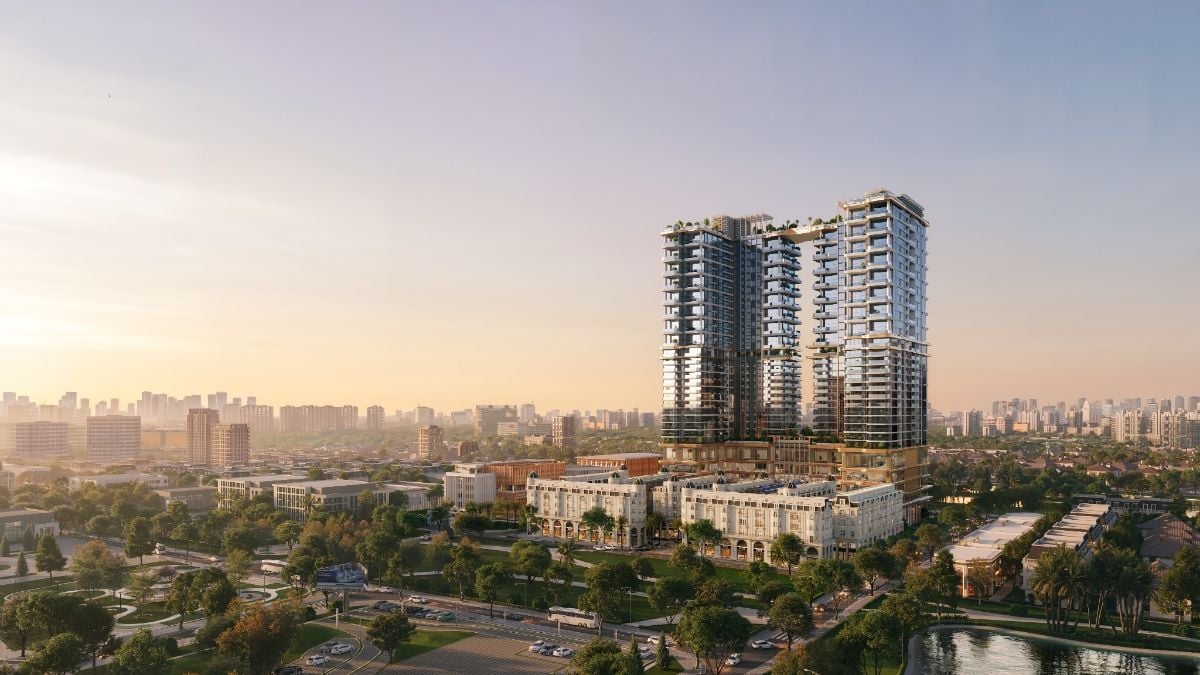
Rivea Residences, developed by Meygroup, is located on a land parcel of nearly 3 hectares on the Hoàng Mai – Hai Bà Trưng border. The twin-tower project sits adjacent to the two corridors, giving it the ability to connect to major transport axes more flexibly rather than depending on a single access direction.
From its proximity to Ring Road 2, the addition of new intra-area roads is expected to shorten travel time to Ring Road 1, Hoàn Kiếm Lake, and the Old Quarter. Once the QL1A expansion becomes operational, connectivity from the project to southern areas and the wider belt is also expected to be more convenient.
With the infrastructure network progressively completed, residents can move in multiple directions. Within about 5–10 minutes of travel, residents can reach medical facilities, shopping centers, and administrative services. The project also provides access to central Hanoi areas including Hoàn Kiếm Lake, the Opera House, and the Old Quarter, along with major universities such as Bách Khoa, National Economics University, and Xây dựng. For healthcare, it offers convenient access to Bệnh viện Bạch Mai and Bệnh viện 108.
Beyond regional infrastructure benefits, Rivea Residences is designed to raise inner-city living standards. The project follows a twin-tower, 35-story design with 618 units and is built to the EDGE green-building standard. International design consultants include Aedas, Belt Collins, and YD Illumination.
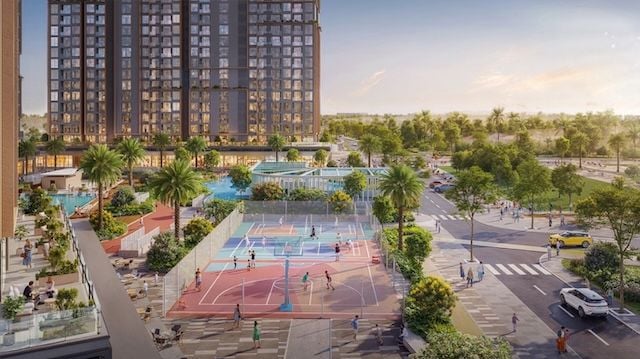
Amenities are planned across multi-floor facilities to support work, leisure, and health needs within a closed ecosystem, including a Business Lounge, private event spaces, golf 3D, gym, swimming pool, BBQ area, outdoor bar, and rooftop facilities. The development is intended to expand daily living experiences with a focus on flexibility and seamlessness.
In the context of ongoing infrastructure restructuring toward multi-connectivity, projects like Rivea Residences are positioned to benefit as travel times shrink. Coupled with the scarcity of inner-city land and the long-term infrastructure plans, the location is described as supporting current asset values and potentially enabling longer-term price appreciation.





Premium gym chains are entering a “golden era” that is ending or already in decline, as rising operating costs collide with shifting consumer preferences toward more flexible, community-based ways to exercise. Long-term memberships are shrinking, margins are pressured by higher rents and facility expenses, and competition from smaller, more personalized…




