According to Da Nang Housing Development Investment Joint Stock Company (NDN)'s Q1 2026 financial statements, total assets reached 1,309 billion dong, a slight increase from the start of the year. In the asset structure, short-term financial investments accounted for more than half of assets, rising by 200 billion dong to 727 billion dong. The company also held 157 billion dong in short-term bank deposits. It spent about 600 billion dong, equal to 46% of total assets, to invest in
stocks, up sharply from 389 billion dong in the same period a year earlier. The investment provision reserve rose from 15 billion dong to over 29 billion dong.
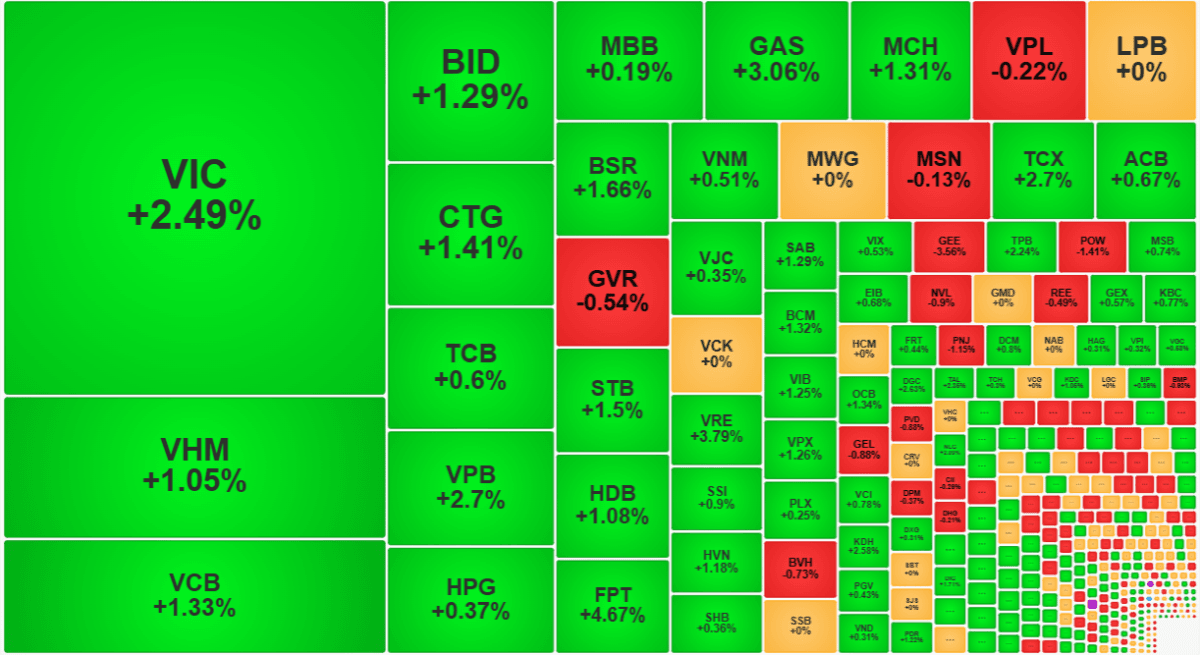
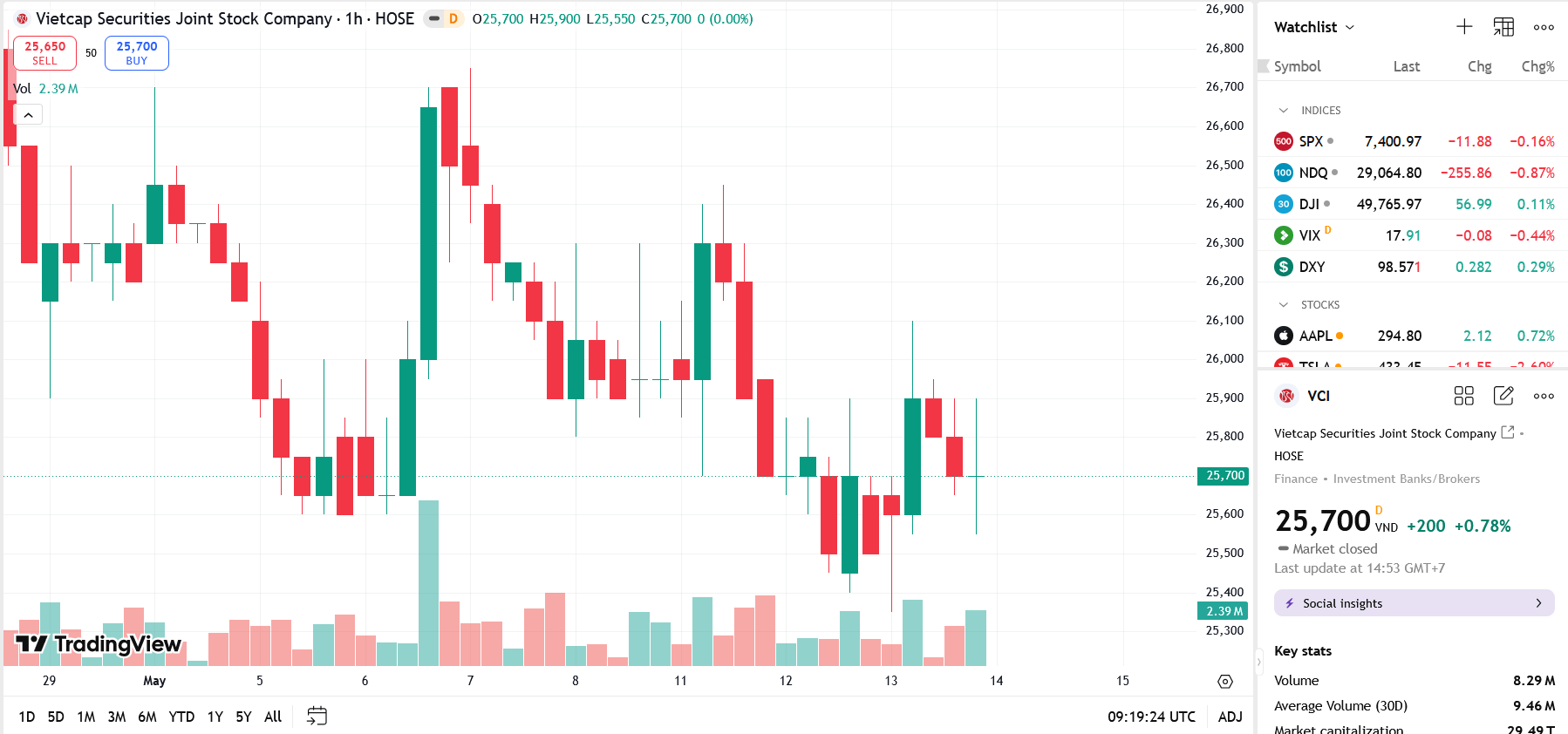
In the first quarter, the company increased investments in several stocks, boosting the weight of GEX, MBB and VHM, while spending 75 billion dong to buy VPB shares.
The fair value of trading securities at the end of March was nearly 698 billion dong, mainly due to gains from Hoà Phát (HPG) and Vinhomes (VHM). Conversely, NDN is currently recording losses on its VPB investment, having to set aside 6.18 billion dong; GEX shows a loss of 3.05 billion dong. Additionally, the company has set aside 19 billion dong for other stocks.
In terms of operations, Da Nang Housing Development recorded revenue of 17 billion dong, up threefold versus the same period last year. As a result, gross profit reached 8.59 billion dong, up 364.3%.
Nevertheless, financing costs rose sharply to 22 billion dong, while the year-ago figure was negative 27 billion dong. Selling and administrative expenses also rose. This led the company to report a net loss after tax of more than 660 million dong in Q1, whereas the same period last year posted a profit of 45 billion dong.
For 2026, the company targets revenue of 75.31 billion dong and net profit after tax of 37.23 billion dong, down 64.9% and 78.1% respectively from 2025 results. With a loss already in the first quarter, the Da Nang development company remains far from its annual profitability target.