•
•
•
•
•
•
•
•
•
•
•
•
•
•
•
•
•
•
•
•
•
•
•
•
•
•
•
•
•
•
•
•
•


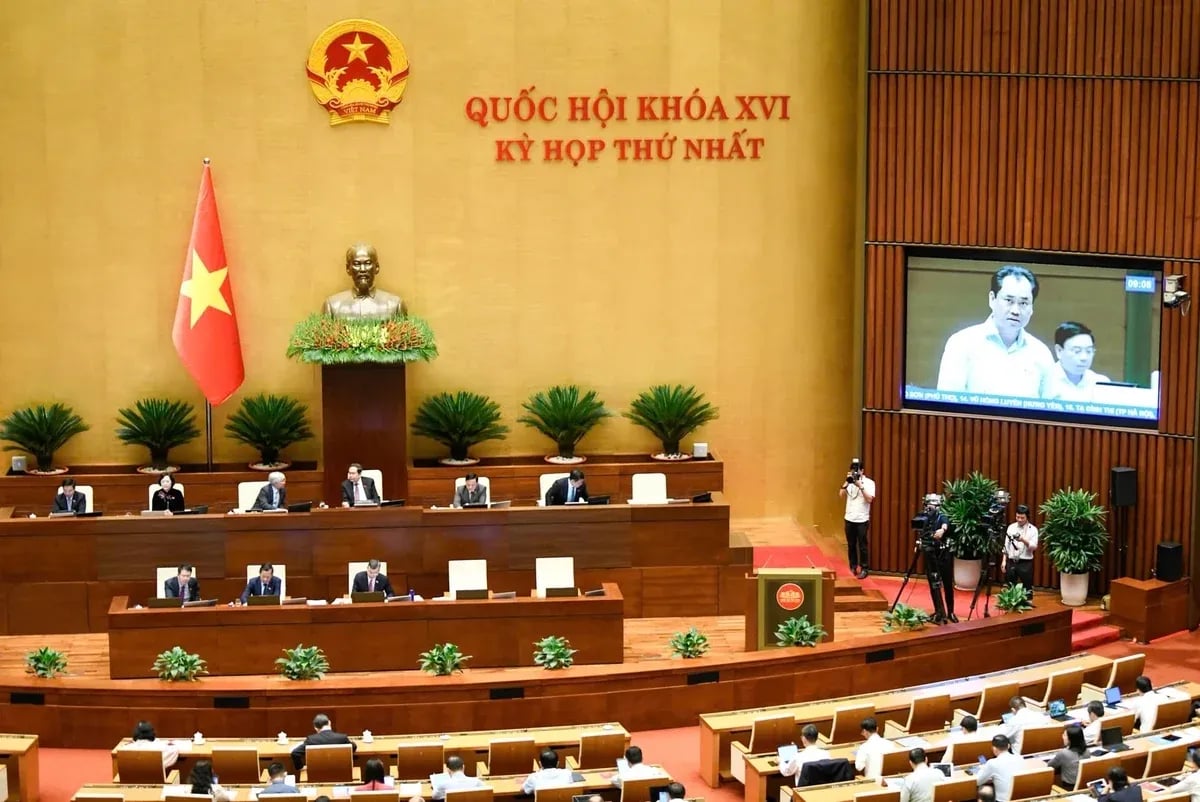
During a session before the National Assembly on April 21, Minister of Agriculture and Environment Trịnh Việt Hùng clarified issues of interest to deputies, including steps to reduce administrative procedures, restructure agriculture, adjust mineral resources planning, and manage paddy land.
In the plenary session, Minister Trịnh Việt Hùng said the Ministry of Agriculture and Environment has updated and supplemented tasks and solutions for developing modern, smart, sustainable, green and ecological agriculture in the five-year report on implementing the sector’s restructuring plan for 2021–2025. The ministry will absorb deputies’ opinions and report to the Government and the Prime Minister to complete the assigned tasks and contribute effectively to overall growth.
The minister said the near-term focus is to complete and amend relevant laws; organize effective implementation of national and sectoral planning; and reform management, institutions and administrative procedures.
He noted that the ministry currently manages 630 administrative procedures, with about 56% delegated. Following directions from the General Secretary, President Tô Lâm, and conclusions of the Politburo, the Secretariat and the Government, the ministry has reduced administrative procedures from 44% to 25% in the past week, leaving only about 160 procedures under the ministry’s management.
The ministry will continue restructuring sub-sectors, fields and key product groups; develop markets and expand consumption; and ensure stable outputs for agricultural products. It will emphasize the domestic market and implement plans for agricultural exports.
On cooperation with China, the ministry signed a protocol on exporting pomelo and citrus with the General Administration of Customs of China. It also began tracing the origin of durian from the growing area to the border gate, shortening clearance time from about 20 days to 5–6 days.
The minister said the ministry is strengthening research and development, application and technology transfer; promoting innovation and digital transformation; improving vocational training for farmers; and making breakthroughs in agricultural and rural infrastructure with local participation.
Regarding adjustments to Group 1 mineral resources planning under Prime Minister’s Decision 866, the minister said many localities—especially midland and northern mountainous provinces such as Thái Nguyên, Cao Bằng, Tuyên Quang, Lào Cai, Lai Châu and Sơn La—are facing bottlenecks.
The ministry has reviewed, appraised and approved adjustment dossiers and plans to submit them to the Prime Minister for approval in April 2026 to ensure alignment with reality.
Under national land-use planning through 2030 with a vision to 2050, the total rice land area is 3.568 million hectares. The ministry is reviewing to propose adjustments to the plan and will seek input from other ministries, sectors and local authorities.
The minister cautioned that in the past decade localities have used no more than 7% of industrial land as planned. Large-scale registrations for land-use conversion that are not implemented will cause waste, he said, requiring careful consideration.
He also stated that current rice yield is about 6.2 tons/ha, ranking second in the world. Calculations cited by the minister show that reducing rice land to about 3.25 million hectares would still ensure food security and exports of around USD 5 billion per year.
On restructuring and reform of agricultural and forestry companies, the minister said 161 of 256 firms have completed their restructuring. The Prime Minister has approved 40 of 41 master plans, while Hà Nội is awaiting alignment with the Capital Law and related regulations.
He urged the Ministry of Finance to coordinate with localities to complete the remaining work promptly to avoid land waste.
Regarding food safety control, the minister said the Ministry of Health will review and amend the amended Food Safety Law, while the Ministry of Agriculture and Environment will coordinate closely in implementation.
To achieve double-digit growth, the minister said investment bottlenecks and capital-raising bottlenecks must be removed and funding must be mobilized effectively for growth.






Premium gym chains are entering a “golden era” that is ending or already in decline, as rising operating costs collide with shifting consumer preferences toward more flexible, community-based ways to exercise. Long-term memberships are shrinking, margins are pressured by higher rents and facility expenses, and competition from smaller, more personalized…