•
•
•
•
•
•
•
•
•
•
•
•
•
•
•
•
•
•
•
•
•
•
•
•
•
•
•
•
•
•
•
•
•


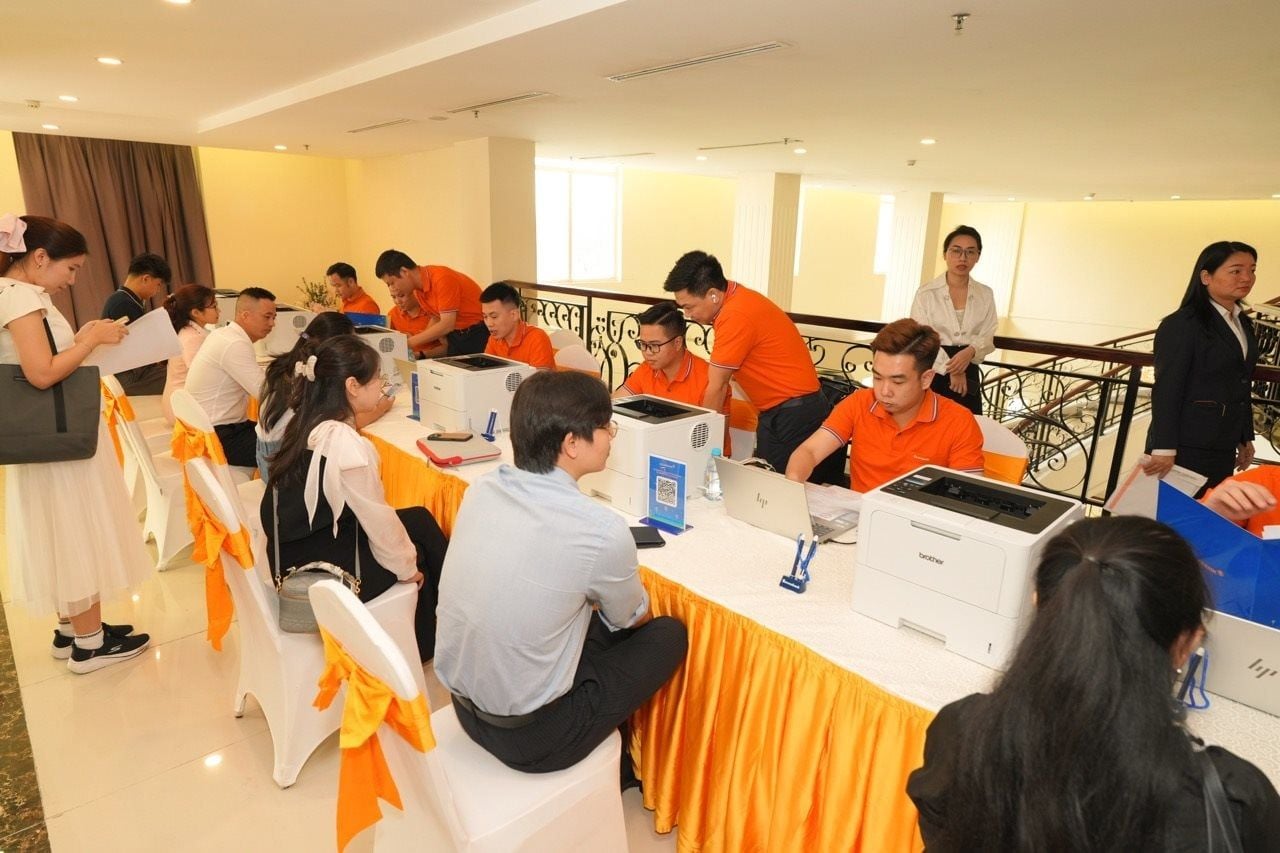
Saigon Thuong Tin Commercial Joint Stock Bank (Sacombank) held its annual general meeting of shareholders on April 22 at the Sai Gon - Phu Tho Hotel in Viet Tri Ward, Phu Tho Province. According to the shareholding qualification check report, at 9:01 a.m. there were 135 shareholders and proxies attending the meeting, representing 80.6% of the voting shares.
At the meeting, Sacombank proposed changing its name from “Saigon Thuong Tin Commercial Joint Stock Bank” to “Saigon Tai Loc Commercial Joint Stock Bank.” The Vietnamese abbreviation would change from “Sacombank” to “SACOMBANK.” The board said the current head office location is not in the core area of the International Financial Center in Ho Chi Minh City, and that the name change is intended to align with the bank’s development direction and strengthen brand recognition in its next phase.
The board also proposed establishing scholarship and charitable funds to support social welfare, poverty alleviation, and knowledge development projects. The proposal aims to further Sacombank’s support for high-performance and mass sports through facilities, services, and events.
Sacombank will appoint one additional member to the Board for the 2022–2026 term. The candidate is Nguyễn Đức Thụy, currently the General Director of Sacombank.
The bank noted that Thụy previously resigned as Chair of the Board of LPBank and joined Sacombank as Acting General Director from December 23, 2025. On March 3, 2026, the State Bank approved him to serve as the official General Director.
The current Board has seven members: Dương Công Minh (Chairman), Phạm Văn Phong (Vice Chairman), and others including Nguyễn Đức Thạch Diễm, Phan Đình Tuệ, Nguyễn Xuân Vũ, as well as two independent members Vương Công Đức and Phạm Thị Thu Hằng.
The discussion segment was moderated by Phan Đình Tuệ, a Board member, who answered shareholders’ questions.
On the status of the restructuring plan and the timing for resolving Trầm Bê’s 32.5% stake, Sacombank said it has essentially completed remaining financial obligations and provisions. The bank added that the Trầm Bê stake must be resolved to restore the nonperforming loan ratio to regulatory levels, subject to NNNN approval. The bank said it has submitted the plan and that policy changes require additional time, with approval hoped to come soon.
Regarding why the 2026 plan is only 8,100 billion VND while 2025 saw higher provisioning, management said its growth target is a cautious 6%. The approach is to strengthen loan-loss provisions as a buffer in a more volatile market. Sacombank said the focus is on covering bad debts and stabilizing assets rather than pursuing short-term high growth.
On how Board remuneration is set if Sacombank misses profit targets, the bank cited the 2025 AGM resolution: remuneration equals 0.7% of consolidated pre-tax profit, equivalent to 102.55 billion VND. Based on last year’s profit of 7,628 billion VND, the remaining remuneration pool would be about 53 billion VND. Sacombank said the Board will only draw according to actual results and applicable regulations.
For plans to improve the cost-to-income ratio (CIR), the bank said it has long considered CIR. It noted that a prior retail-focused strategy required more staff, and at times Sacombank had over 18,000 employees. Under the upcoming restructuring, Sacombank aims to reduce CIR to 38% in 2026 and progressively toward 28%, describing the target as challenging but ambitious.
On Q1 2026 results, Sacombank said liquidity faced headwinds as deposit rates rose. Total assets reached 861 trillion VND, down by about 57 trillion. The bank said revenue growth did not meet internal targets. Pre-tax profit was 3,572 billion VND, about 44% of the plan, as Sacombank worked to streamline CIR and operating costs.
On why the bank is renaming Saigon Thuong Tin to Saigon Tai Loc, Sacombank said the change marks a milestone after 35 years and reflects its new direction and branding as it moves forward.




Premium gym chains are entering a “golden era” that is ending or already in decline, as rising operating costs collide with shifting consumer preferences toward more flexible, community-based ways to exercise. Long-term memberships are shrinking, margins are pressured by higher rents and facility expenses, and competition from smaller, more personalized…