•
•
•
•
•
•
•
•
•
•
•
•
•
•
•
•
•
•
•
•
•
•
•
•
•
•
•
•
•
•
•
•
•


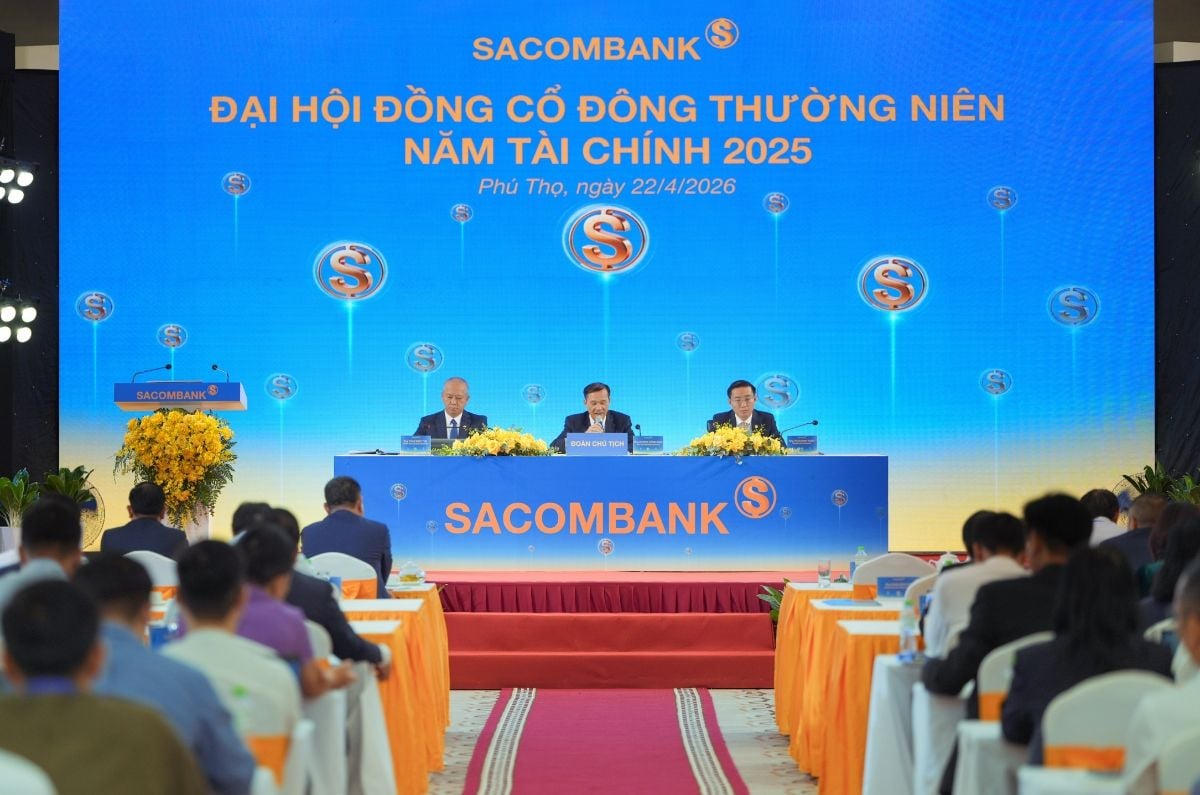
On April 22, 2026, Sai Gon Thuong Tin Joint Stock Commercial Bank (Sacombank, STB: HoSE) held its 2025 annual general meeting of shareholders. The meeting approved the bank’s 2026 business plan, focusing on safe, efficient and sustainable growth, with priority given to asset quality.
Under the approved plan, Sacombank expects total assets as of December 31, 2026 to reach 1,010.3 trillion VND, up 10% year-on-year. Total deposits are targeted at 921.3 trillion VND, up 10%. Credit outstanding is expected to reach 699.4 trillion VND, up 12% (or within the limits permitted by the State Bank of Vietnam). The bank also set a pre-tax profit target of 8.1 trillion VND, up 6% year-on-year.
The bank also aims to keep the on-balance-sheet non-performing loan (NPL) ratio below 4.5%.
The AGM approved changing the bank’s name from Sai Gon Thuong Tin Joint Stock Commercial Bank to Saigon Tài Lộc Joint Stock Commercial Bank (SACOMBANK). The meeting also agreed to relocate the headquarters to another site within Vietnam to support the expanded scale and the bank’s mid- to long-term vision.
In terms of personnel, the board appointed Mr. Nguyen Duc Thuy as Acting Vice Chairman of the Board, with direct responsibility for strategic direction, senior governance and long-term development of the bank.
The bank also agreed to appoint Mr. Loic Faussier as Interim CEO, responsible for running the bank in accordance with current regulations.
Sacombank said the leadership overhaul and the appointment of a senior executive team with international experience—particularly in risk management and compliance—are intended to accelerate restructuring, strengthen financial safety and support a prudent, sustainable development path.
The bank noted that the changes are not only aimed at brand positioning, but also at governance mindset and operational dynamism, with expectations to further consolidate its position among Vietnam’s commercial banks and create sustainable value for shareholders, partners and the community.







Premium gym chains are entering a “golden era” that is ending or already in decline, as rising operating costs collide with shifting consumer preferences toward more flexible, community-based ways to exercise. Long-term memberships are shrinking, margins are pressured by higher rents and facility expenses, and competition from smaller, more personalized…