•
•
•
•
•
•
•
•
•
•
•
•
•
•
•
•
•
•
•
•
•
•
•
•
•
•
•
•
•
•
•
•
•


SBM’s Board of Directors member, Mr. Lại Hợp Quốc of Bac Minh Investment and Development Joint Stock Company (UPCoM: SBM), sold all SBM shares he held on 21 April. The disclosure came only days before SBM published its Q1 2026 financial results, which showed growth versus the same period last year.
Mr. Quốc sold 963,149 shares on 21 April, representing his entire 2.14% stake in the company. On the same day, the market recorded only off-market deals of a similar size, suggesting the transaction was his sale.
The transaction value was 28.9 billion dong, equivalent to about 30,000 dong per share. This price was roughly 13% below SBM’s then-current market price of 34,500 dong per share on 21 April.
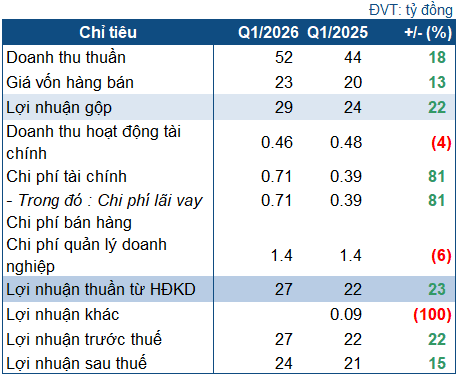
In Q1 2026, SBM reported net revenue of nearly 52 billion dong, up 18% year over year. The increase was attributed to higher rainfall, which raised the company’s total electricity output by 4.87 million kWh and lifted revenue.
Cost of goods sold increased 13%, enabling gross profit to rise 22% to nearly 29 billion dong.
Finance costs rose 81%, but total financing expenses were only 715 million dong, all interest costs. Selling, general and administrative expenses declined 6%, to nearly 1.4 billion dong.
SBM also paid 3.5 billion dong in taxes, more than double the year-ago period. The increase was linked to hydro plants no longer benefiting from tax relief.
After tax, SBM posted profit of nearly 24 billion dong in Q1, up about 15% year over year. Compared with the annual plan approved at the 2026 AGM, the company achieved 20% of the revenue target and more than 23% of the profit target.
By end-Q1, SBM’s total assets were about 615 billion dong, down 7.3% from the start of the year, mainly due to lower long-term assets. Current assets fell 32% to 88 billion dong, with more than 70 billion dong in cash and cash equivalents. Trade receivables declined by more than 50% to 14 billion dong.
On the liabilities side, SBM’s liabilities decreased 36% year to date to around 48 billion dong. Total short- and long-term borrowings stood at over 34 billion dong, all below the cash on hand.






Premium gym chains are entering a “golden era” that is ending or already in decline, as rising operating costs collide with shifting consumer preferences toward more flexible, community-based ways to exercise. Long-term memberships are shrinking, margins are pressured by higher rents and facility expenses, and competition from smaller, more personalized…