•
•
•
•
•
•
•
•
•
•
•
•
•
•
•
•
•
•
•
•
•
•
•
•
•
•
•
•
•
•
•
•
•


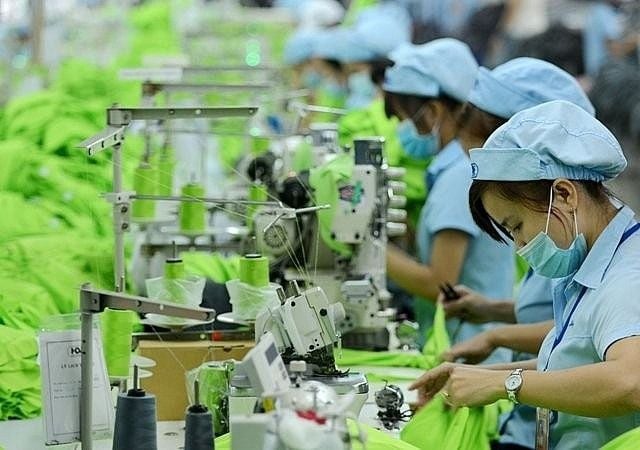
Gaps in financial resources, a severe shortage of green skills, and data infrastructure that is not yet ready are emerging as roadblocks to the green transition in the economy. At the Forum “Leveraging Resources to Accelerate Green Growth,” experts said Vietnam’s net-zero by 2050 commitment reflects a modern mindset, but implementation has not matched the ambition.
PGS.TS Bùi Quang Tuấn, Vice Chairman of the Vietnam Academy of Economics, said that five years after COP26, progress has been slower than expected. He cited shortcomings across awareness and execution, noting that while legal texts exist, capacity constraints arise during implementation.
He also argued that Vietnam is pushing hard for GDP growth, but the determination for sustainable and green growth is not at the same level. “Scientifically, to achieve high and sustainable growth, green growth contributes a lot; it creates space and new opportunities,” he said.
According to Bùi Quang Tuấn, Vietnam has strategy documents, national action plans, and pilot circular economy projects, but implementation still lacks key enabling conditions.
Funding and the ability to mobilize capital remain limited. The state mainly plays the role of seed capital, while external resources need to be mobilized more effectively.
Training for implementers has not yet fully matched the needs for correct awareness and execution. Implementation is described as reactive, with weak coordination and limited connectivity among organizations to create synergy.
Communication about “green” is said to remain superficial and not reach the core—so individuals, enterprises, and communities do not consistently understand that high growth requires green growth. The speaker also pointed to technology-related reasons.
TS Vu Van Doanh, Deputy Head of the Environmental Science Department at Hanoi University of Resources and Environment, described “green jobs” as sustainable jobs that help preserve and restore the environment across sectors from agriculture to services.
He said the actual situation shows a substantial mismatch between demand and supply. Citing a World Bank 2023 report, Doanh noted that the green workforce currently accounts for about 3.6% of total employment. He added that the shortage is not only in quantity but also in training quality: Vietnam is missing more than 60% of curricula related to green skills and data for sustainable development.
Doanh said many enterprises need to recruit but cannot find suitable workers, while graduates do not work in the field. He proposed four trends to address the gap: shifting toward knowledge workers; developing multi-skills; strengthening links among Government–Education–Business; and internationalizing vocational skills.
Green finance remains limited in scale, which speakers described as a key constraint for financing the transition. Nguyen Tri Hieu, Director of the Global Finance and Real Estate Market Research and Development Institute, said green lending has expanded over the last decade, with participating credit institutions rising from 15 in 2017 to 43 by end-2023.
However, he said the overall scale is still small: green credit outstanding accounts for about 4.4% of total economy loans, roughly VND 620–650 trillion. Agriculture represents 30–33% of green credit, while renewable and clean energy accounts for about 45%. Other areas still lack credit, including green infrastructure, green transport, and the circular economy.
Hieu highlighted several entrenched bottlenecks when banks approach green projects: short-term mobilization but long-term lending, while green projects often have long payback periods; limited foreign capital; and the reluctance of firms to borrow in USD at low rates due to foreign-exchange risk. He also said support resources are limited.
Nguyen Trung Thang, Deputy Director of the Institute for Agricultural and Environmental Policy Strategy, said subsidy rates for interest from 2.6% to 3.6% with a cap of VND 70 billion per project are not meaningful for large green projects such as waste-to-energy investments.
On whether administrative measures should be used to force banks to meet green lending quotas, Hieu said he favors incentives first. “We should use tools such as refinancing, widening the credit room, or reward–penalty schemes based on each bank’s roadmap. If, in the end, targets are not met for the national interest, only then should hard measures be taken,” he said.
Le Nguyen Truong Giang, Director of the Digital Transformation Strategy Institute, argued that digital transformation should be treated not only as a supporting tool but as a platform to generate data that can “measure, count, and quantify” greenification. He said that without data, understanding digital transformation or green finance becomes meaningless.
Giang introduced the concept of “Data Capital” and said Vietnam needs to establish a new default based on standardized data to access global green capital.
Specifically for energy optimization in enterprises, he suggested measuring exactly how much energy each device consumes and using the data to guide rational decisions. He also cautioned that “green” does not always mean truly green—for example, using electric cars in cities may shift pollution elsewhere—so the transition must be balanced and sustainable.






Premium gym chains are entering a “golden era” that is ending or already in decline, as rising operating costs collide with shifting consumer preferences toward more flexible, community-based ways to exercise. Long-term memberships are shrinking, margins are pressured by higher rents and facility expenses, and competition from smaller, more personalized…