•
•
•
•
•
•
•
•
•
•
•
•
•
•
•
•
•
•
•
•
•
•
•
•
•
•
•
•
•
•
•
•
•


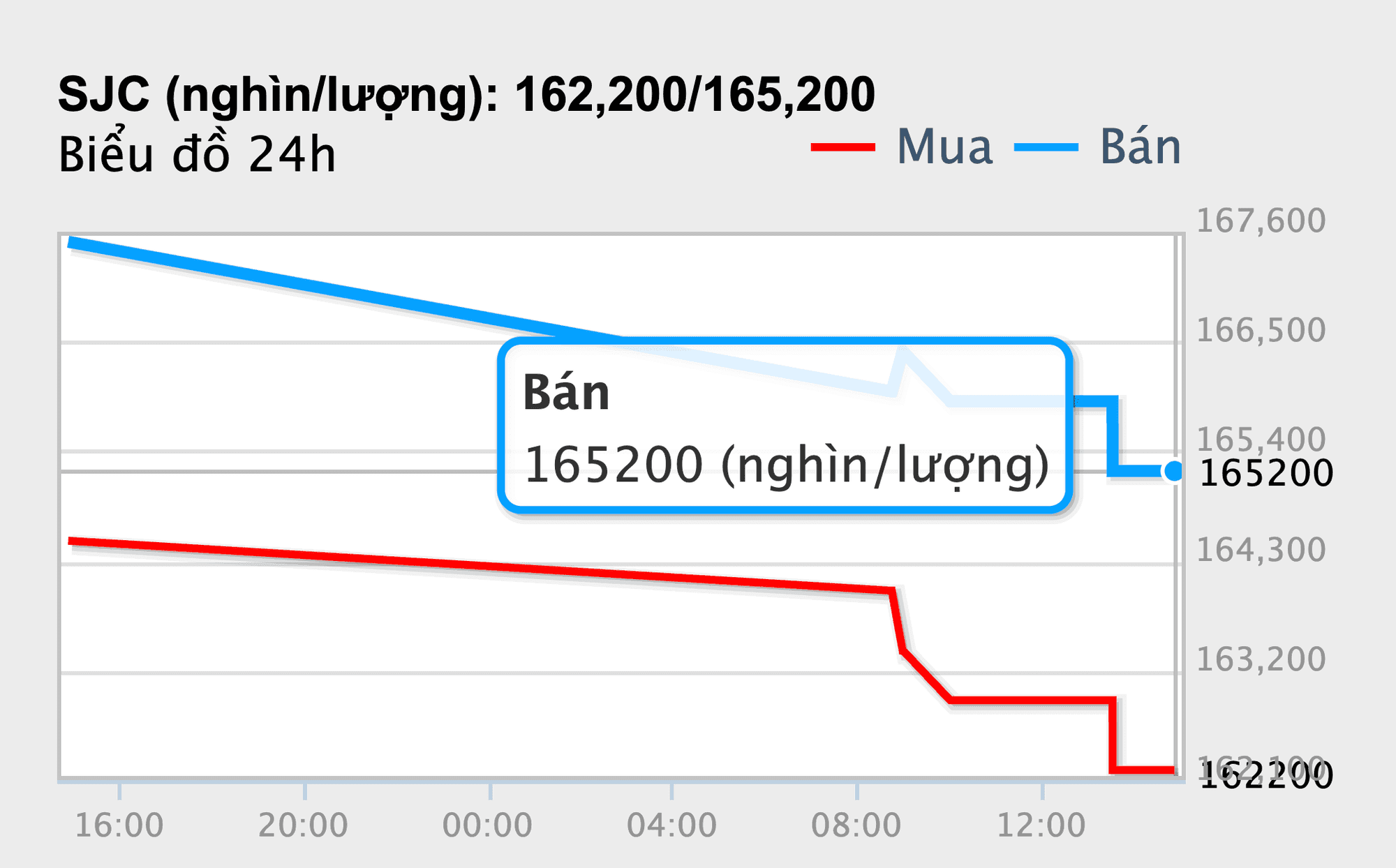
On the evening of May 11, Saigon Jewelry Company (SJC) and many other gold traders quoted SJC gold bars at 162.2 million VND per tael for buying and 165.2 million VND per tael for selling, down 2.3 million VND per tael from the morning session. Prices for 99.99% purity gold rings and jewelry were commonly at 161.7 million VND per tael for buying and 164.7 million VND per tael for selling, down about 2.3 million VND per tael.
Domestic gold prices fell as global prices dropped sharply, retreating from the 4,700 USD per ounce level. Tonight (Vietnam time), gold was trading at 4,676 USD per ounce, down nearly 40 USD per ounce versus the previous session.
The precious metal declined as the U.S. dollar index and crude oil prices recovered. Brent crude rose to 98.5 USD per barrel, up 3.27% from the previous session, while the U.S. dollar index (DXY) also touched 98 points, up 0.11% from the previous session.
In the domestic market, the gold price fell by more than 2 million VND in a day. At present, the world gold price converted at the official exchange rate stands at about 148.7 million VND per tael.
Looking ahead, Shaokai Fan, Asia-Pacific (excluding China) regional director and Global Central Bank Director at the World Gold Council, said many factors that supported gold’s rally remain, including geopolitical tensions and central bank net purchases.
World Gold Council data show central banks worldwide bought a net 244 tonnes of gold in the first quarter of 2026, higher than the five-year average. In the near term, central banks are expected to maintain a net long position in gold, though the scale may not be as strong as in the previous quarter and may be in line with 2025 levels.
However, international investors’ behavior could change due to the persistent impact of high interest rates. Additional concerns include the independence of the U.S. Federal Reserve, U.S. debt risks, or potential weakness of the U.S. dollar, all of which could affect the gold market.
Premium gym chains are entering a “golden era” that is ending or already in decline, as rising operating costs collide with shifting consumer preferences toward more flexible, community-based ways to exercise. Long-term memberships are shrinking, margins are pressured by higher rents and facility expenses, and competition from smaller, more personalized…