•
•
•
•
•
•
•
•
•
•
•
•
•
•
•
•
•
•
•
•
•
•
•
•
•
•
•
•
•
•
•
•
•


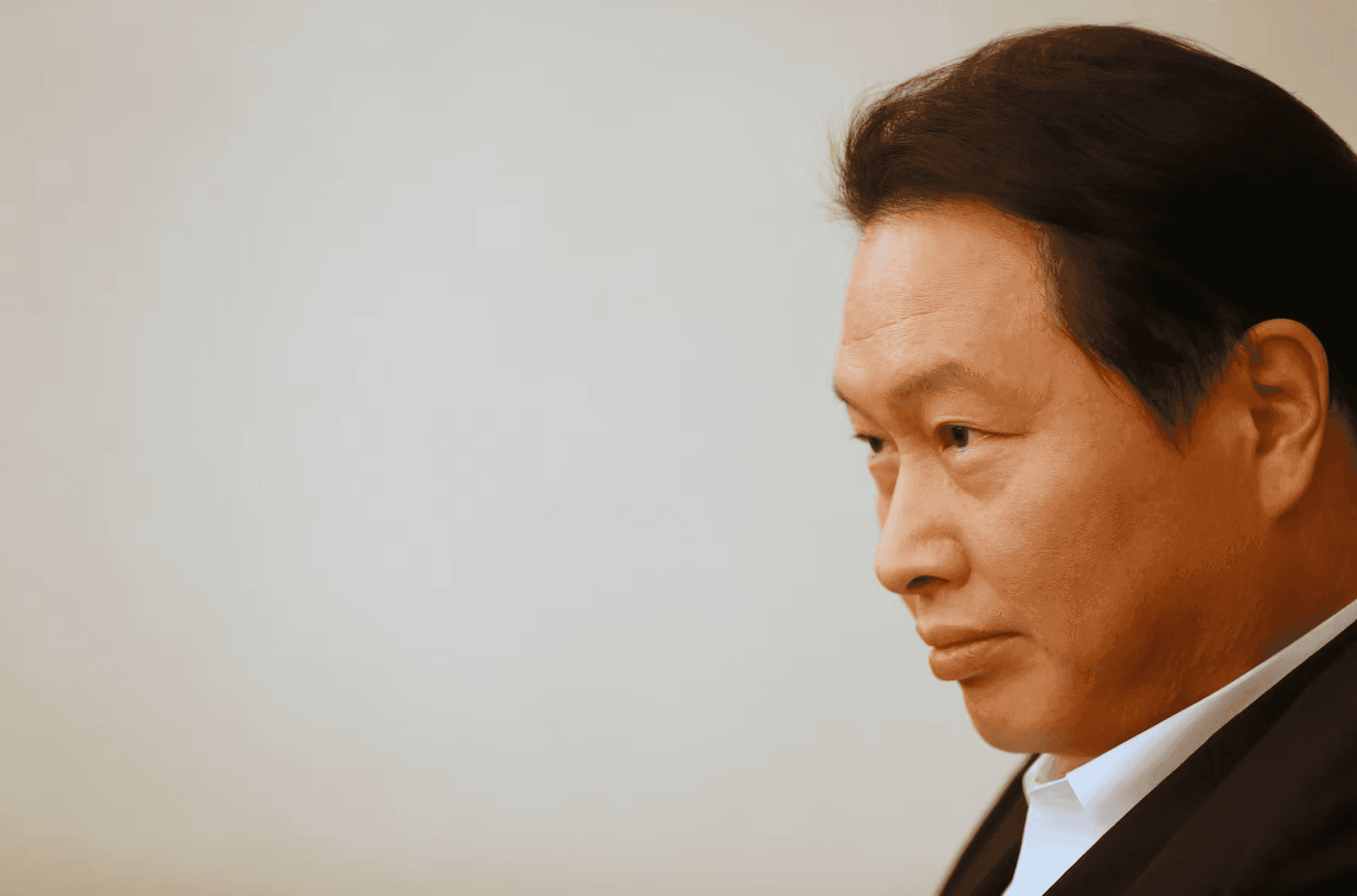
SK Group may not be widely recognized by Vietnamese consumers, but in South Korea and internationally it is viewed as a major “tech dragon,” with strengths spanning the core infrastructure of the digital economy and future industrial development. Rather than selling consumer electronics under its own brand, SK focuses on enterprise-oriented technologies—dominating high-bandwidth memory (HBM) used in AI systems, operating world-class 5G telecom infrastructure, and controlling large-scale energy and chemical supply chains. The group’s revenues are in the hundreds of billions of dollars, and its operating profit has at times exceeded that of Samsung.
SK Group’s history reflects South Korea’s postwar economic development and a pattern of adaptation. Founded on April 8, 1953 by Chey Jong-gun as Sunkyong Textiles, the group began with textiles and aimed to revive the domestic industry. A key early milestone came in 1958, when it produced Korea’s first polyester fiber. From textiles, SK pursued a vertical integration strategy described as “From oil to thread.”
In the early 1990s, SK began shifting toward information technology and telecommunications, including the establishment of Sunkyong Telecom in 1991. Under Chey Tae-won’s leadership from 1998, the group made moves to escape the dominance of traditional heavy industry. The renaming from Sunkyong to SK in 1998 was positioned as more than branding, aligning with a globalization push.
SK Group’s governance is structured through SK Inc., which manages a network of more than 186 to 213 subsidiaries. The ecosystem spans semiconductors, telecommunications, energy, and life sciences, operating under a philosophy of “Independence but Unity,” where subsidiaries can be autonomous in business while aligned with shared governance values.
In the modern tech economy, semiconductors are often described as the “new oil.” SK Hynix is presented as one of the highest-quality players in memory. While Samsung Electronics was long considered a global benchmark in memory, the AI boom reshaped the competitive landscape.
SK Group’s standout achievement is enabling SK Hynix to lead in high-bandwidth memory (HBM), a memory type designed for ultra-high-speed data handling and essential for GPUs powering large AI models such as ChatGPT. Market data for 2025 cited in the article indicates SK Hynix controls more than 70% of the global HBM market, while Samsung is still working to close the gap.
The article attributes this performance to long-term, focused investment. It contrasts SK Hynix’s concentration on advanced memory solutions with Samsung’s broader resource allocation across hundreds of products. By 2025, SK Hynix achieved record operating profit and, briefly in a volatile year, eclipsed Samsung’s semiconductor division.
SK’s semiconductor strength also extends to SK Materials, a supplier of specialty gases and materials used in wafer production, helping support supply chain integration and reduce external dependence. The 2021 acquisition of KeyFoundry is described as part of SK’s ambition to expand contract silicon fabrication capacity, competing in specialized segments alongside TSMC and Samsung.
The article also notes that SK’s “Intel Inside” approach means consumers may not see SK branding on devices, but SK Hynix memory and HBM chips are used in high-end technology such as iPhones, Dell PCs, and Google/Microsoft servers.
Beyond chips, the article highlights SK Innovation as a key pillar. SK Innovation is described as a leading energy company with a refining capacity of 1.2 million barrels per day. It is also presented as one of the fastest-growing EV battery makers through SK On.
The third element shaping SK’s “dragon” image is SK Telecom (SKT). In South Korea, SKT is described as more than a mobile operator, functioning as a technology institution that leads connectivity trends. The article states SKT holds market share near 50% and that 5G subscribers exceeded 17 million by 2025, placing it ahead of rivals such as KT and LG Uplus.
SKT’s role extends into AI transformation, including an AI Data Center (AIDC) model. Combined with SK Hynix memory and SK Innovation’s energy solutions, the article describes this as a holistic offering that is difficult for peers to match.
Unlike Samsung’s approach of making Vietnam a global manufacturing hub for devices, SK is described as pursuing collaboration with local conglomerates and investment in core infrastructure. The article points to SK’s Vietnam footprint through partnerships with the National Innovation Center (NIC), including support for AI infrastructure in Hoa Lac and green materials production in Hai Phong via biodegradable PBAT projects with a $500 million investment.
As President of the Korea Chamber of Commerce and Industry (KCCI), Chey Tae-won is cited as emphasizing that Vietnam is not only a trading partner but also a strategic, trusted partner to address global challenges. The article lists four cooperation areas proposed by Chey: advanced AI infrastructure and data centers, green energy and materials, workforce development and supply chain synergies, and agricultural logistics modernization.
With Vietnam’s rapid digital economy growth, the article says demand for storage and processing is rising. SK Telecom is described as exploring collaborations with Vietnamese operators and technology groups to build modern AI data centers. Vietnam’s renewable energy potential (wind and solar) is also highlighted, alongside grid challenges. The article states SK, drawing on experience in energy storage (ESS) and hydrogen technology, can support development of a smarter grid.
A key barrier noted is the shortage of skilled personnel. Through KCCI, SK commits to training 1,000 chip-design and automation engineers for Vietnam via university partnerships.
The article also links SK’s interests to applying AI and digital solutions to modernize agriculture. It suggests integrating SK’s smart logistics centers with Vietnam’s agricultural production could help unlock new export value chains, raise farmers’ incomes, and strengthen Vietnamese agri-exports globally.
With potential spanning semiconductors, AI, green energy, and innovation, the article concludes that SK Group is positioning itself as a “giant companion” for Vietnam’s path toward a modern, sustainable economy, and that the visit is expected to elevate SK from a “hidden force” to a rising player aligned with Vietnam’s development.
Source: Quoc Vinh, Nhịp sống thị trường
Original link: https://markettimes.vn/mot-con-rong-an-minh-thap-tung-tong-thong-han-quoc-tham-viet-nam-vi-the-co-nao-ma-samsung-cung-kieng-ne-116027.html






Premium gym chains are entering a “golden era” that is ending or already in decline, as rising operating costs collide with shifting consumer preferences toward more flexible, community-based ways to exercise. Long-term memberships are shrinking, margins are pressured by higher rents and facility expenses, and competition from smaller, more personalized…




