•
•
•
•
•
•
•
•
•
•
•
•
•
•
•
•
•
•
•
•
•
•
•
•
•
•
•
•
•
•
•
•
•


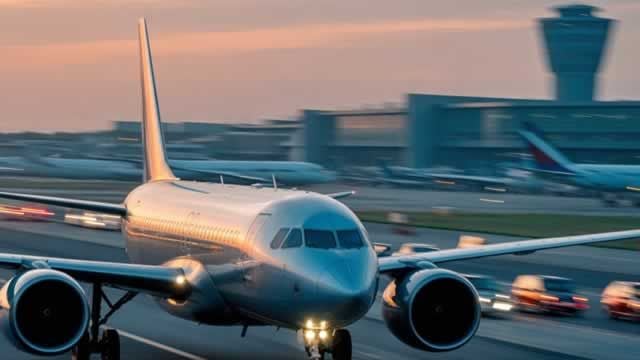
Spirit Airlines’ abrupt disappearance from the skies has prompted scrutiny of why the U.S.-born ultra-low-cost model failed. The airline announced it had canceled all upcoming flights and begun winding down operations after failing to secure funding from the Trump administration.
According to Reuters, Spirit’s attorney, Marshall Huebner, told the Southern District of New York Bankruptcy Court that a sudden spike in jet fuel prices left the airline with “no remaining way out” of bankruptcy. The increase was linked to the closure of the Strait of Hormuz during the conflict in Iran.
U.S. Transportation Secretary Sean Duffy said the previous administration failed to approve a merger between JetBlue and Spirit that he argued could have benefited both carriers. In the USDOT’s announcement of measures to support air travelers following Spirit’s wind-down, Duffy criticized the 2024 blocking of the JetBlue/Spirit merger, saying it “turned their backs on the American consumer and our great aviation workforce.”
The Trump administration had discussed a possible rescue package for Spirit, but those talks ended without success.
Beyond immediate financial pressures, the article points to structural challenges facing low-cost airlines. It cites an explanation from Visual Analytics CEO Courtney Miller about a “seat cost vs trip cost paradox.”
Miller’s analysis argues that the ultra-low-cost model has been optimized for years around packing as many seats as possible onto large narrowbody jets to reduce operating cost per seat. Lower seat costs can support lower fares, but the approach depends on aircraft being full and on ancillary fees to offset thin margins.
The article notes that trip costs are largely fixed by aircraft operational demands. As a result, flying larger aircraft into markets with limited demand can produce low passenger load factors and losses. In contrast, smaller aircraft can serve the same markets more profitably because higher load factors can better cover trip costs.
The article says airlines that once relied on a low-cost “sweet spot” near 100 seats have grown average aircraft sizes in pursuit of lower seat costs, reaching about 240 seats. It describes this as a 240% increase in seat gauge, paired with a shrinking number of markets where such large aircraft can be deployed profitably.
Miller is quoted as saying that ultra-low-cost airlines now face market saturation from prior growth and are constrained by the largest aircraft needed to sustain that growth.
Miller suggests that operating smaller aircraft in larger markets could be more profitable than relying on large aircraft, even if it means turning away some passengers. He writes that the “small narrowbody is not a replacement for the large narrowbody, but rather a supplement to unlock new growth while allowing the large narrowbody to focus on the most profitable routes.”
The article adds that this would require low-cost carriers to reconsider the single-type fleet model. While single-type operations can reduce maintenance and labor costs, the economics may be failing as narrowbody aircraft used in these fleets have stretched in size.
The article describes how the fuel price spike accelerated Spirit’s collapse. Spirit’s restructuring plan assumed jet fuel prices of about $2.24 per gallon, but prices rose above $4 per gallon—nearly doubling one of the airline’s highest costs.
It also notes that ultra-low-cost carriers are particularly exposed because they rely on high aircraft utilization to offset low fares that stimulate demand. Their high-density seating configurations add weight, increasing fuel consumption. The article further states that even with higher oil prices, airlines generally spend less on fuel when operating smaller aircraft such as Airbus A220s or Embraer 190s than when operating larger narrowbody jets.
Spirit’s response to its financial crisis was to shrink its fleet dramatically to around 76 aircraft. The airline cut unprofitable routes, limiting potential revenue, and focused on higher-revenue flying. The article characterizes this as an acknowledgment that the airline’s earlier growth model—built on scale and density—no longer worked.
The article highlights challenges for other carriers, including Southwest Airlines. It says Southwest has been waiting on the Boeing 737 MAX 7, described as a smaller, more flexible aircraft that fits its network strategy. Boeing certification delays have forced Southwest to operate larger aircraft with higher trip costs that lower per-seat costs cannot offset.
To adapt, Southwest has modified its operating model by introducing assigned seating, premium seating, and baggage fees, moving closer to strategies used by major network carriers while reducing its core brand differentiator. The article states that Boeing plans to certify the 737 MAX 7 this year, with deliveries beginning next year.
While other ultra-low-cost carriers have moved toward larger, high-density aircraft, the article says Breeze Airways is taking the opposite approach. It describes Breeze as serving underserved city pairs with 57 Airbus A220s and eight Embraer 190s, emphasizing more flexible aircraft than those favored by other low-cost competitors.
David Neeleman, Breeze’s founder, is quoted describing the advantage of profitably connecting smaller markets without relying on high passenger volumes. In a 2020 interview cited by the article, he said Breeze looks at demand levels between city pairs and adjusts pricing and travel time to encourage more frequent trips, including the goal of offering direct flights that reduce travel time compared with longer journeys.
After Spirit’s failure, Breeze added four new routes to Atlantic City, where Spirit had been the predominant carrier.
The article concludes that while smaller aircraft may not solve every challenge for established low-cost airlines, Spirit’s exit could provide some relief for remaining U.S. carriers through higher fares in key markets. It also suggests Breeze may be positioned to compete in markets that still lack adequate air service, offering an alternative to hub connections on less-crowded planes.
Premium gym chains are entering a “golden era” that is ending or already in decline, as rising operating costs collide with shifting consumer preferences toward more flexible, community-based ways to exercise. Long-term memberships are shrinking, margins are pressured by higher rents and facility expenses, and competition from smaller, more personalized…