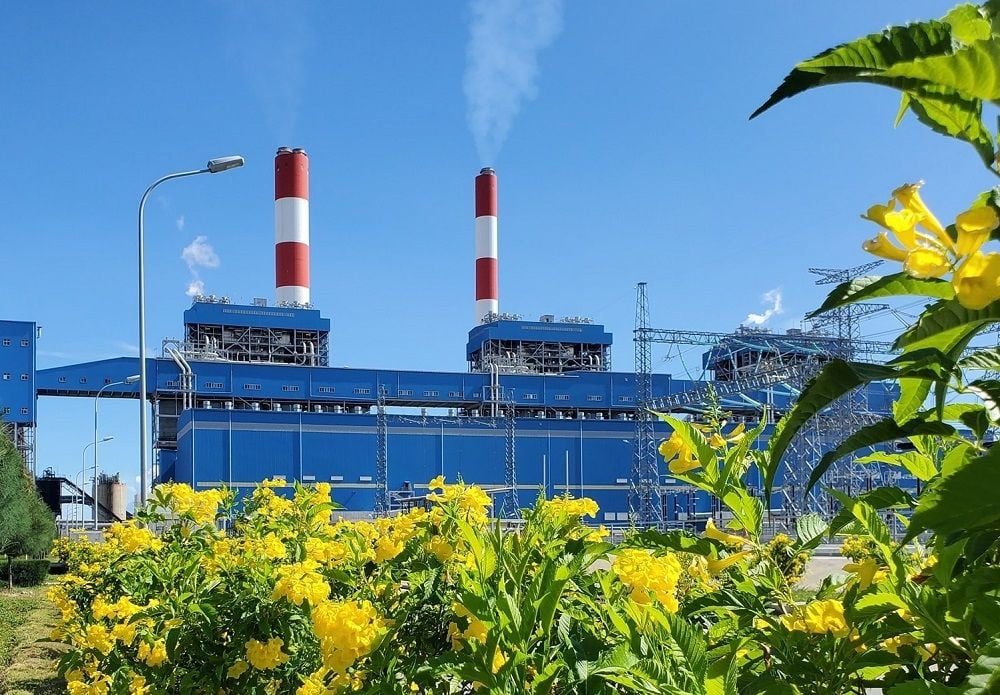
In the context of rising electricity demand, ensuring stable operation of generating units is a critical requirement. However, environmental protection responsibilities are tightening, and proactively deploying solutions not only helps minimize risk but also contributes to shaping the energy sector toward sustainable development that balances economic and environmental goals.
On April 28, 2026, the Ministry of Agriculture and Environment issued Official Dispatch No. 4187/BNNMT-MT to investors and operators of thermal power plants nationwide, requiring strict implementation of environmental protection measures while ensuring no impact on the mobilization of generating units during the peak dry-season months.
RÀ SOÁT TOÀN DIỆN HỆ THỐNG XỬ LÝ KHÍ THẢI (Comprehensive review of the exhaust gas treatment system)
This directive is based on the Prime Minister’s guidance in Government Office Announcement No. 158/TB-VPCP dated March 29, 2026, which assigns the Ministry the task of guiding investors to implement plant operations that meet emission requirements while ensuring stable electricity supply during periods of high demand.
A core content of the dispatch is to require investors and operators of thermal power plants to conduct a comprehensive review of the current state and efficiency of waste treatment facilities, with particular emphasis on inspecting exhaust gas treatment systems to prevent or minimize the risk of environmental incidents leading to emissions beyond technical standards.
Based on the comprehensive review, units should promptly address signs of degradation or damage to exhaust gas treatment systems, and develop maintenance, repair, and replacement plans in a proactive manner. Implementation should prioritize actions before the dry season or during periods of low load to minimize the impact on electricity generation.
The Ministry also emphasizes the principle of “prevention early, distant,” encouraging plants to implement technical and management solutions that can be performed without interrupting plant operation. If maintenance, repair, or upgrade work that could affect power output is necessary, units should develop concrete plans and coordinate closely with the system dispatch center to schedule during the dry season.
In addition to improving exhaust gas treatment, the Ministry highlights operational measures to reduce emissions at the source, including improving input
fuel quality—especially sulfur content, ash, and moisture in coal. Based on fuel quality assessments, units should forecast emission concentrations for key pollutants such as SO2, NOx, and total dust to adjust fuel blending accordingly. The Ministry also requires not accepting coal that does not meet the designed technology standards of the unit.
Maintaining and enhancing heat exchanger surface area through adjustments to coal grinding, air supply, and slag handling is also seen as important. These measures help ensure stable combustion, reduce load fluctuations, maintain optimal unit operation, and lower variability in pollutant concentrations in exhaust gas.
TO NEP LU TRINH KHÍ THẢI MOI (Adherence to new emission schedules)
To improve the efficiency of exhaust gas treatment systems, the Ministry recommends setting internal alert thresholds for pollutants such as CO, NOx, SO2, and total dust. This helps units proactively adjust operation and fuel composition.
Additionally, it is necessary to strengthen inspection, monitoring, and evaluation of the operation of devices in the exhaust gas treatment system. Specifically, for ESP (electrostatic precipitators), monitor electrode conditions and rectifier components; for fabric baghouse filters, monitor filter bags and dust-collection systems.
For SO2 scrubbing, plants must tightly control pH, circulating scrubber solutions, limestone feed rates, and fouling in pipelines and absorbers. For NOx reduction, use low-NOx burners, adjust air-fuel ratios, and employ reducing agents such as urea or ammonia with either non-catalytic (SNCR) or catalytic (SCR) approaches.
Notably, for major upgrading topics with high investment costs such as ESP systems, SO2 scrubbing, or SCR, the Ministry requires units to develop concrete roadmaps to minimize the impact on dispatch during the dry season and in subsequent years.
The dispatch also reiterates regulations related to Circular No. 45/2024/TT-BTNMT, which sets the national technical standard for industrial air emissions (QCVN 19:2024/BTNMT), effective from July 1, 2025.
According to Article 3, Clause 1, from July 1, 2025 to December 31, 2031, power plants already in operation or projects that completed environmental procedures before July 1, 2025 may continue applying QCVN 22:2009/BTNMT and local regulations to control air quality. From January 1, 2032, these facilities must meet the new requirements under QCVN 19:2024/BTNMT. The Ministry urges investors to promptly develop plans to study technology conversion, waste treatment technologies, and to apply advanced environmental management measures to meet the new standards.
Hà Tĩnh inaugurated the Vũng Áng 2 Thermal Power Plant, worth USD 2.2 billion (16:38, 18/04/2026).
Coal-fired power plants still account for more than 46% of national electricity production.
Specific emission allocations for 110 facilities in the power, steel, and cement sectors have been outlined (18:35, 09/03/2026).
Keywords: Ministry of Agriculture and Environment; power generation capacity; environmental protection solutions; exhaust gas treatment system; industrial emissions; upgrading waste treatment technology; thermal power plants; national technical regulation; Circular No. 45/2024/TT-BTNMT; Prime Minister’s Office.
Further reading: various related articles on energy and economy topics