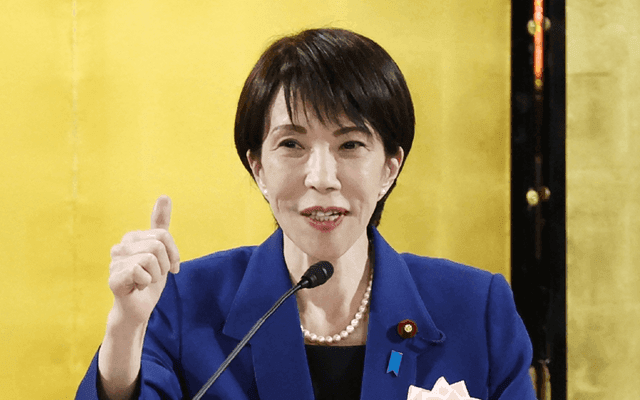
Prime Minister of Japan Takaichi Sanae will visit Vietnam from May 1 to May 3, 2026, in his first trip as Prime Minister, with the aim of deepening the Comprehensive Strategic Partnership between the two countries.
The information was announced by the Japanese ambassador to Vietnam Ito Naoki at a press briefing in Hanoi on 28 April. According to him, the visit demonstrates the Japanese government’s and Prime Minister Takaichi’s regard for Vietnam, and reflects Vietnam’s increasingly important role in the region and on the international stage.
The trip aims to reinforce trust between the senior leaders of the two countries and broaden cooperation in key areas such as economy, energy, and people-to-people exchange. This also marks a follow-up step after the two countries upgraded their relationship to a Comprehensive Strategic Partnership in 2023, after more than 50 years of diplomatic ties since 1973.
Bilateral trade continues to grow steadily. In 2025, two-way trade exceeded
USD 51.43 billion. In the first three months of 2026, this figure rose by 12.7% year-on-year, and is expected to reach around USD 60 billion by 2027. Japan is currently the third-largest investor in Vietnam with 5,722 active projects and total registered capital of nearly USD 78.9 billion.
One of the new cooperation priorities is the high-tech sector, particularly semiconductors. Vietnam aims to train 500 PhD students in this field by 2030, with Japan expected to host about half through joint research and international cooperation programs.
Additionally, cooperation in digital transformation, green transition, and innovation will continue to be promoted. Japan has provided a loan of about USD 330 million to help Vietnam respond to climate change and disasters, and has pledged to continue supporting infrastructure and energy projects.
In the energy and supply chain sector, Tokyo also unveiled the Power Asia initiative, with a commitment to support USD 10 billion for Southeast Asia. In addition, Japan will continue participating in major projects such as the urban railways in Hanoi and Ho Chi Minh City, along with infrastructure development programs in the mountainous regions.
Diplomatic and security cooperation is also on the agenda, with expectations that the two sides will strengthen coordination to maintain regional stability. Japan values Vietnam’s approach to strategic autonomy and international integration in recent times.
On the social front, people-to-people exchanges remain an important link. There are more than 680,000 Vietnamese residents in Japan, the second-largest foreign community there. The two sides aim to raise the number of annual exchanges to more than 2 million by 2030.
The visit by Prime Minister Takaichi comes on the occasion of a major Vietnamese holiday, and is expected not only to strengthen bilateral relations but also to unlock additional cooperation opportunities in new areas such as technology, energy, and people-to-people connectivity.