•
•
•
•
•
•
•
•
•
•
•
•
•
•
•
•
•
•
•
•
•
•
•
•
•
•
•
•
•
•
•
•
•
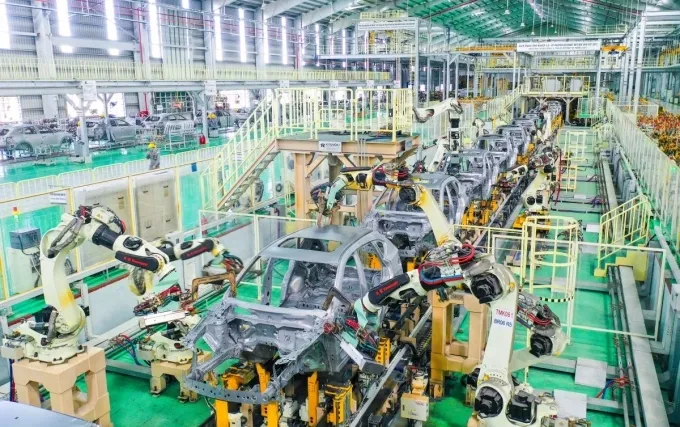
Thaco, VinFast and TC Group have proposed keeping Vietnam’s automotive sector on the list of conditional businesses, amid an ongoing government review of business conditions. The move follows a draft proposal by the Ministry of Finance to cut and simplify business conditions, including a plan to remove automotive manufacturing, assembly and import activities from the list of conditional investment sectors.
The three major carmakers—Trường Hải (Thaco), Thành Công (TC Group) and VinFast—have jointly urged the Prime Minister, the Ministry of Industry and Trade and the Ministry of Finance to reconsider the proposal.
Thaco said reducing investment conditions for the automotive sector is not appropriate, arguing that automobiles are a foundational industry affecting many sectors and linked to social order, public safety, public health and environmental outcomes. The company added that vehicles require very high quality standards to ensure safety for users and the wider community.
Thaco also pointed to the long lifespan of automobiles and the need to ensure consumers can access manufacturers and distributors with sufficient capacity for warranties, maintenance, spare parts supply and product recalls. It said meeting requirements for factories, production lines and after-sales service networks is not an administrative barrier, but a guarantee of quality and producer responsibility across the vehicle lifecycle.
VinFast echoed the view, saying requirements for physical facilities and technical capabilities demonstrate manufacturers’ capacity and long-term investment commitment. The company also urged keeping administrative procedures for importing and producing cars to reduce the risk of non-compliant firms entering the market, warning that the potential harm to consumers would be greater because cars are high-value goods with complex technology.
TC Group argued that removing mandatory business conditions would be unfair to domestic manufacturers compared with imported cars. It said that if conditions are removed for both domestic and imported vehicles, importers could enter the market with lower barriers, disadvantaging firms that have invested and built long-term domestic production strategies.
Before this, the Ministry of Industry and Trade had cited similar risks while considering removing the conditional category. It said current regulations encourage firms to invest in domestic facilities to manufacture and assemble cars from component parts. Removing these rules could allow imports of largely complete bodies, requiring only simple assembly, which would undermine local localization and the development of supporting industries.
In contrast, the Vietnam Chamber of Commerce and Industry (VCCI) said scrapping the conditional investment category aligns with reform trends and has a practical basis. VCCI noted that current rules require cars to undergo safety and environmental checks, and that post-market recall and consumer protection frameworks already provide protections.
VCCI argued that required licenses and certificates add compliance costs without creating additional public safety value. It also said high barriers related to after-sales service and authorized dealerships limit market entry, which can raise car prices and reduce consumer options.
VCCI further cited localization levels, saying the domestic localization rate for cars remains low—around 7-10 percent for passenger cars—compared with 70-80 percent in Thailand. It suggested policy measures such as tax incentives for domestically produced components and support for research and development in the automotive supply chain as more effective ways to promote localization.
The chamber cautioned that the current rules were designed for a traditional auto manufacturing model and may hinder investment in electric vehicles and autonomous driving. It said international experience shows many countries regulate safety and recalls through standards and post-market oversight rather than granting blanket production licenses.
As a result, VCCI supports removing the conditional sector, while urging the Ministry of Industry and Trade to coordinate with the Ministry of Transport to refine technical standards and post-market oversight to ensure consumer safety.
The automotive industry in Vietnam accounts for more than 3 percent of GDP and employs around 200,000 skilled workers in manufacturing and supporting industries. Domestic production and assembly have risen from about 323,892 vehicles in 2020 to over 500,000 in 2025, representing roughly 65-75 percent of total sales.
There are about 650 car manufacturers and auto parts suppliers in Vietnam, with more than 400 Tier-1 suppliers meeting car-maker standards.
Premium gym chains are entering a “golden era” that is ending or already in decline, as rising operating costs collide with shifting consumer preferences toward more flexible, community-based ways to exercise. Long-term memberships are shrinking, margins are pressured by higher rents and facility expenses, and competition from smaller, more personalized…