•
•
•
•
•
•
•
•
•
•
•
•
•
•
•
•
•
•
•
•
•
•
•
•
•
•
•
•
•
•
•
•
•


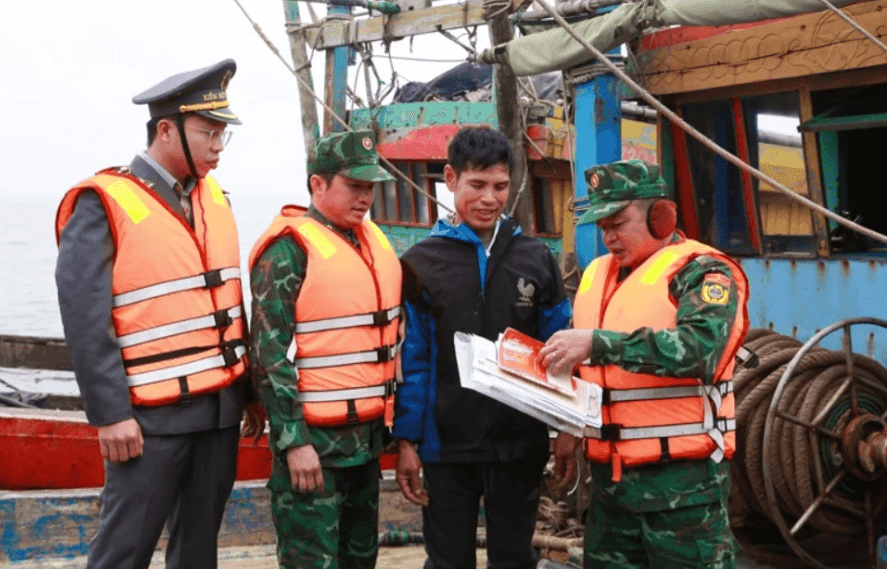
Thanh Hóa has a long coastline and abundant natural resources, giving it a key advantage in developing the blue economy. However, pressure from overfishing, destructive fishing methods, waste and climate change are creating major challenges. To address these issues, local authorities are implementing coordinated solutions ranging from restoring mangrove forests and managing fisheries to protecting the coastal environment alongside tourism development.
Thanh Hóa currently has 6,211 fishing vessels. Of these, 1,135 vessels are 6m to under 12m in length; 773 are 12m to under 15m; and 987 are 15m or longer. Among the 2,895 vessels that are 6m and up, 100% have been marked and entered into the National Fisheries Vessel Database (Vnfishbase). In addition, 2,881/2,895 vessels have harmonized CCD data on Vnfishbase and VneID (99.5%), 2,872/2,895 vessels have been issued fishing licenses (99.2%), and 1,700/1,760 vessels have safety certificates (96.6%). All 987/987 vessels have voyage-time monitoring devices installed.
Vessel monitoring system (VMS) surveillance is conducted regularly. From the start of 2026 to date, Thanh Hóa has detected 18 instances of vessels losing VMS connection for more than 6 days, and fined 1 vessel 35 million dong. There have been no Thanh Hóa vessels detained or processed for IUU violations in foreign waters.
“We always keep the VMS on to record our journey and report to the Port Management before docking. Compliance not only helps manage more effectively but also enables traceable seafood marketing, giving fishermen confidence to stay at sea,” said Anh Dương Văn Công, a captain of TH-90808 from Nam Sầm Sơn.
Authorities also focus on raising fishermen’s awareness of compliance. Violations such as fishing outside permitted zones, using electric shock devices, or using banned gear have declined markedly after guidance from competent authorities.
According to Mr. Nguyễn Đức Cường, Deputy Director of the Thanh Hóa Department of Agriculture and Environment, the department is coordinating with localities to review fishing-boat data, check registration and licensing, and monitor actual activity. He said cases of boats being sold, transferred, or operating outside the province are tightly controlled to avoid “ghost boats” in the system. Disseminating the Fisheries Law and related IUU provisions to every fisherman, boat owner and captain is described as a prerequisite to verify seafood origin and meet international transparency requirements.
With more than 100 km of coastline and a large sea area, Thanh Hóa is viewed as a locality with strong potential to develop the blue economy, spanning fisheries, coastal tourism, coastal industries and port infrastructure. While development pillars are gradually forming, sustainability and competitiveness remain key challenges.
Beyond fisheries management, Thanh Hóa is also restoring fish resources. The province has formed 15 coastal fishery co-management groups with more than 2,800 members. These groups establish harvesting conventions and directly monitor and protect fishing grounds.
As Le Xuân Đống, Director of the Provincial Fisheries and Sea Department, noted, mangrove forests are described as both the “green lungs” of the coastal area and a natural barrier against climate change. In the coming period, authorities plan to intensify outreach, encourage protection, and apply science and technology to improve mangrove planting and care.
Sam Son and Hai Tiến are Thanh Hóa’s two major seaside tourism destinations, attracting millions of visitors each year. Rapid development has also increased environmental pressure, particularly waste. The Sam Son landfill (2.7 ha) has operated for more than 20 years and is now overloaded.
At Sam Son Beach, there are four wastewater outflows along the area from the Đền Độc Cước to the FLC gate, each about 1 km apart. During previous tourist seasons, black wastewater sometimes flowed into the sea, and the drainage system has malfunctioned during the rainy season, carrying various kinds of trash.
On April 21, during a press conference announcing Sam Son’s coastal tourism activities for 2026, local authorities outlined efforts to renew the city’s tourism image by addressing longstanding issues affecting tourism. The pumping system has been reactivated to prevent wastewater from flowing directly into the sea. For waste treatment, Thanh Hóa provincial authorities approved a 280-billion-dong project covering 6.9 ha in Nam Sam Son Ward to treat 300 tons of waste per day, expected to improve living conditions and support a greener tourism image.
Alongside infrastructure projects, environmental cleanliness is pursued by authorities and residents. Sam Son’s urban environmental company and tourism services regularly mobilize forces to clean beaches and extend working shifts during peak tourist seasons to maintain a clean and safe environment.
In Hai Tiến, an environmental cleaning team under the Women’s Union has been established, with more than 600 waste bins for about 1,000 households. Clean-up activities are conducted regularly alongside public awareness campaigns. However, the area still faces algae and waste from the Lạch Trường River, requiring integrated river-basin management combined with coastal protection measures.
Climate change, stronger storms and coastal erosion threaten Thanh Hóa. Mangrove forests are described as a “green shield” that protects the coast while supporting sustainable livelihoods. In Hậu Lộc, about 600 ha of mangroves exist, with active community groups promoting restoration. In Nga Sơn, roughly 350 ha of mangroves stretch across several communes.
Local authorities have implemented programs planting species such as sú, vẹt and bần chua to build a diverse ecosystem supporting shrimp, crabs and other species. Local people harvest sustainably and combine mangrove-based livelihoods with canopy-based beekeeping to raise incomes. A resident from Nga Sơn described mangrove forests as a lifeline, with beekeeping supporting stable incomes and education for his children.
Citing Thanh Hóa’s mangrove program, forestry authorities emphasize that mangroves are not only the region’s lungs but also a natural barrier against climate change. They plan to increase outreach, promote protection and apply science and technology to improve planting and maintenance efficiency.
From fisheries management to environmental tourism and mangrove restoration, Thanh Hóa is building a foundation for a blue economy that sustains livelihoods and strengthens resilience to climate change, while preserving marine ecosystems for future generations.





Premium gym chains are entering a “golden era” that is ending or already in decline, as rising operating costs collide with shifting consumer preferences toward more flexible, community-based ways to exercise. Long-term memberships are shrinking, margins are pressured by higher rents and facility expenses, and competition from smaller, more personalized…