•
•
•
•
•
•
•
•
•
•
•
•
•
•
•
•
•
•
•
•
•
•
•
•
•
•
•
•
•
•
•
•
•
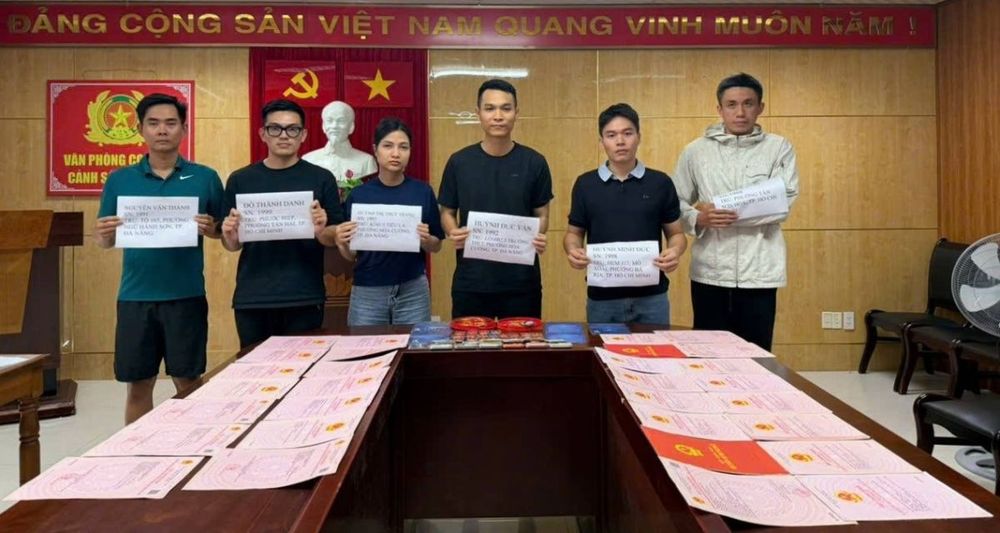
In the early months of 2026, authorities repeatedly exposed and dismantled cryptocurrency schemes disguised as multi-level marketing (MLM) networks, highlighting both the scale of fundraising and the sophistication of the deception.
On March 30, 2026, the Thanh Hóa Province Police’s Criminal Investigation Department indicted the DRK crypto MLM group. Four suspects—Xiang Guoquan (Chinese nationality), Vo Tan Hiep, and Tran Viet Huy—were detained for investigation on charges of “Fraudulent appropriation of assets.”
The scheme centered on creating an app named Merry Trade and promoting it through social media and seminars held in luxury hotels across multiple localities. After participants joined, organizers instructed them to deposit USDT to convert into “points” on the app. In reality, these “points” were virtual numbers generated by Xiang Guoquan’s technical team and had no real value.
During the initial phase, the group allowed victims to withdraw small cash amounts to build trust. When participants deposited larger sums, the organizers used tactics such as “system upgrade” or “technical fault” to lock accounts and seize the victims’ assets.
One victim, Ms. P.T.O in Quy Lộc commune, Thanh Hóa, invested 15,000 USDT (about 378 million VND). She was told that her deposit qualified her for a “system upgrade” and that she could open a Merry Trade representative office in Thanh Hóa. After transferring the money, she could not withdraw as promised. The app became inaccessible, related Zalo groups were removed, and those who had advised or led participants blocked contact.
Another similar scheme involved the HelWin crypto ecosystem. In 2023, Ms. Nguyen Thi T. from Hải Phòng was introduced to a “new investment opportunity.” The promotion claimed that investing around 10 million VND would let money in the app “grow itself,” generating stable passive income with promised profits of up to 6% per month (over 70% per year).
Ms. T joined after the app displayed continuously increasing returns, which convinced her the project was legitimate. Organizers then pressured her to upgrade to higher investment packages, arguing that small investments yield little and that participants needed to join larger packages, the ecosystem, and the downline to get rich. The opportunity was framed as a one-time chance, with warnings that those who joined late would be left behind.
As upgrades continued, Ms. T increased her investments. She and her husband sold two plots of land and borrowed from family. The profits shown in the app rose more sharply, reinforcing her belief that she was on the right track.
Beyond monetary incentives, the HelWin ecosystem promoted a glamorous lifestyle through conferences, meetings, and social events portrayed as business gatherings. Participants were encouraged with messages about “financial freedom” and public praise as “strategic partners.”
Ms. T recruited relatives, and the money contributed by her family ultimately reached billions. When authorities moved in to dismantle the ring, Lào Cai Province reported that the HelWin network attracted about 39,682 participants, with total transactions around 10,000 billion VND. Authorities accused the group of illicit gains totaling about 780 billion VND, and seized or froze assets and accounts valued at more than 400 billion VND.
After the system collapsed, investors did not receive the promised 6% monthly profits. Accounts could not withdraw, chat groups disappeared, and leaders went silent. Promises of “absolute safety” were no longer meaningful.
HeliWin and Merry Trade were described as fragments of a larger pattern of crypto MLM schemes in Vietnam. Authorities noted that these models often rebrand and change form, but the core mechanism remains: taking money from newcomers to pay earlier participants, sustaining belief through fake profits, and using downline recruitment to attract new funds.
In the early months of 2026, authorities arrested Vuong Le Vinh Nhan and several accomplices, charging them with establishing 52 companies and operating the ONUS crypto ecosystem. Investigators said the group mobilized billions of USD and seized tens of thousands of billions of VND.
Investigators stated that since 2018, Vương Le Vĩnh Nhân and Tran Quang Chiến founded the VNDC cryptocurrency and the ONUS exchange, then with Ngô Thị Thảo and others built an ecosystem and created coins including VNDC, ONUS, and HNG to issue and sell to investors through the ONUS exchange.
In addition to the group’s own coins, the ONUS exchange listed nearly 600 other crypto projects. With high trading volumes, billions of USD reportedly flowed through the system.
The ONUS platform is believed to have about 5.5 million accounts. To attract participants, the group offered high-yield investment packages, paying returns in crypto and promoting attractive profits while building a downline network to spread trading results showing profits and sustaining a multi-level model. Investigators also believed participants were exposed to losses due to alleged manipulation, including creating fake buy/sell orders to influence the prices of listed coins.
Many experts say multi-level crypto schemes rely on building trust, creating value systems, and forming communities. Participants often invest not only for money but also for the promise of a different life, which can lead them to recruit relatives and defend the system against warnings.
From an economic and social perspective, authorities and experts described these as more than isolated criminal cases, pointing to systemic financial risks. When tens of thousands are drawn into illicit models, the consequences extend beyond asset losses, undermining social trust, creating hidden debt, distorting the investment environment, and potentially affecting order, security, and financial stability.
The schemes are said to proliferate in a market where digital assets still operate in grey areas. People may hear about blockchain, crypto, and a “tech revolution,” then invest with high expectations while lacking basic financial literacy and verification channels. This gap is exploited to build apps, issue tokens, and create ecosystems without real value, then attract funds with promises of high profits that can be drained or toppled quickly.
Nguyễn Hòa Bình (Shark Bình), described as an experienced crypto project developer who previously helped build crypto projects before being arrested, discussed tactics of “ruthless extraction” in the crypto market. On September 26, 2025, during an online chat, he stated that 99% of crypto projects fail, operate in an “anti-entrepreneurial” manner, lack practical applications, and pose systemic risk to investors and society. He also described “self-hacking,” where project teams fabricate a hack to steal coins and justify the disappearance of investor assets, noting that some projects raised 50–100 million USD before later claiming they were hacked, with investigations rarely pursued.
The article concludes that investors should be cautious about offers promising high returns or guaranteed profits and should avoid recruitment-driven schemes. It emphasizes the importance of building basic financial literacy, verifying project legality, and not relying on flashy seminars or numbers shown inside apps.