•
•
•
•
•
•
•
•
•
•
•
•
•
•
•
•
•
•
•
•
•
•
•
•
•
•
•
•
•
•
•
•
•
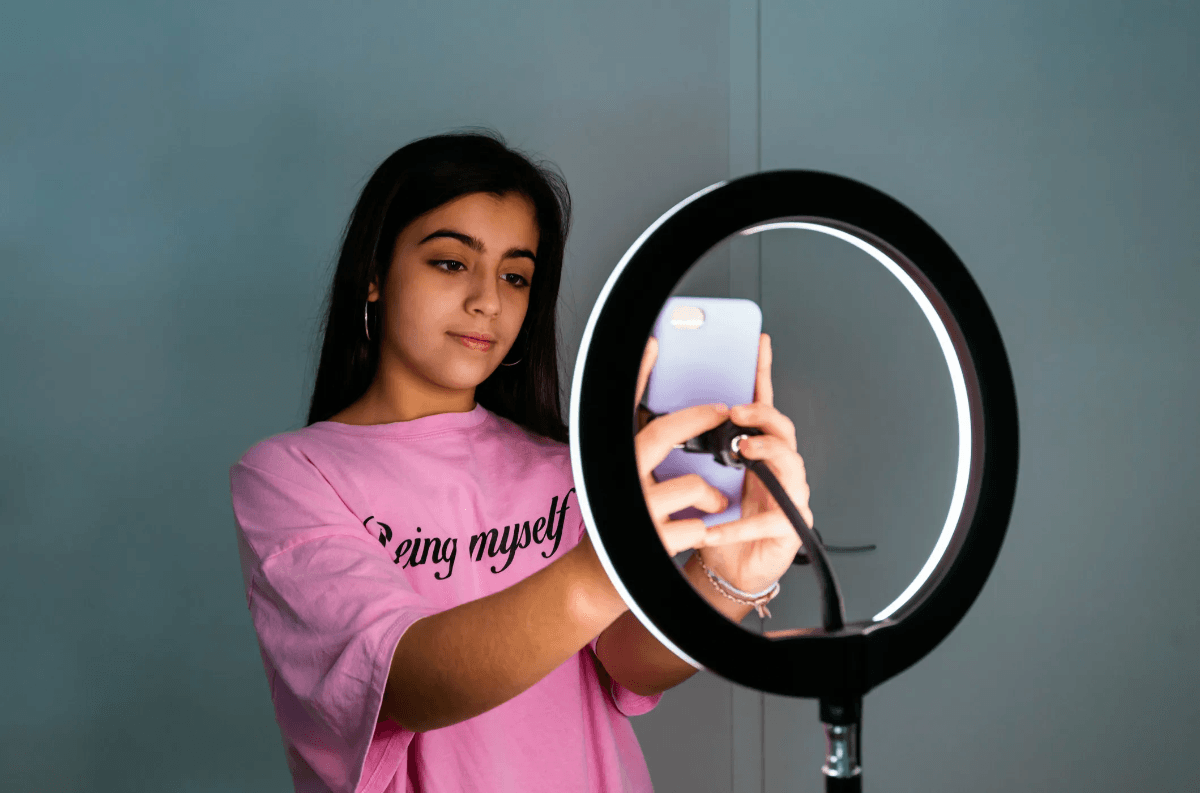
Experts say regulating child influencers remains in a legal “gray area,” as young creators publicly promote many skincare products on social media while not yet reaching adulthood.
The Italian Competition Authority (AGCM) is investigating beauty brands Benefit and Sephora after suspicions that they used a “very sophisticated” strategy involving young, underage influencers to market skincare products for children. The agency has also opened an investigation into LVMH, the parent company that owns these brands, regarding possible efforts to market anti-aging products to children under 10.
AGCM said the companies “may not have clarified” that the cosmetics they sell are not intended for children, while they “appear to encourage purchases through covert marketing strategies, using micro-influencers who are very young.”
LVMH said the group would “fully cooperate with the authorities,” but declined to comment further. A company spokesperson said the group “reaffirm[s] strict compliance with current regulations in Italy.”
A Guardian investigation found many videos in which children thank brands for gifts. It also points to ambassador programs open to 13-year-olds that offer free products in exchange for promotional content online. However, these arrangements remain in a legal gray area.
Evereden, a US skincare brand, runs a program with no age limit specified, welcoming “all ages, all stages” and promising early access to new products. Some influencers identified by The Guardian appear to be around 12 years old.
If influencers are under 18, parental or guardian consent is required to participate. After joining, they may receive monthly free PR packages and invitations to events. Brand ambassadors are also given free products and early access to launches. In another Evereden TikTok video, viewers are shown a game with the brand, answering questions and accumulating points to redeem for “gifts” in the brand’s store.
On Evereden’s website, when asked whether it works with influencers under 18, the brand responded: “Yes. As a children’s brand, we want to work with our own target audience, as well as with parents and guardians. However, we commit to working with young creators in a responsible and ethical way, and require parental or guardian consent in all collaborations.”
Bubble, another skincare brand for youth, recruits brand ambassadors from 16 years and up in a similar model, though it previously accepted as young as 13. Ambassadors are asked to perform tasks such as interaction (likes, shares) or product-focused video creation, in exchange for points to redeem for purchases. Ambassadors are also given free products and early access to new launches.
Francis Rees, a law lecturer at the University of Essex and coordinator of the Child Influencer Project, said the legal boundary in this field is “very unclear.” “Most consumer-protection mechanisms focus on advertising law for consumers, not on children who create content,” she said.
Rees added that children appearing in online content are not protected by the Online Safety Act or child-performance regulations unless an action violates criminal thresholds. “In those cases, brands and intermediaries do not have a duty to look after the child,” she said. “They contract with the parents, and parents are expected to protect the child.”
Christopher Gabbitas, a partner at Keystone Law, said that while UK law has stricter protections for children in work and commerce, influencer-related arrangements still require case-by-case assessment. “If a role is regular and has a work-like structure, it can be considered labor, regardless of whether wages are paid in cash,” he said. “Points, gifts, or products are considered compensation.”
He also noted that cross-border ambassador programs—such as Bubble’s model, which is subject to US law—are operating in a “Wild West” environment with a lack of clear and consistent rules.
The article argues that, in the digital-media ecosystem, advertising and child-labor regulations have so far mainly focused on consumer protection or traditional fields like acting or modelling, rather than keeping pace with the realities of the creator economy.
It also notes that brands often sign contracts with parents rather than directly with children, shifting responsibility, while children may have limited understanding of advertising disclosure. The result is an ecosystem where rights, responsibilities, and legal boundaries are not clearly defined.
Premium gym chains are entering a “golden era” that is ending or already in decline, as rising operating costs collide with shifting consumer preferences toward more flexible, community-based ways to exercise. Long-term memberships are shrinking, margins are pressured by higher rents and facility expenses, and competition from smaller, more personalized…