•
•
•
•
•
•
•
•
•
•
•
•
•
•
•
•
•
•
•
•
•
•
•
•
•
•
•
•
•
•
•
•
•


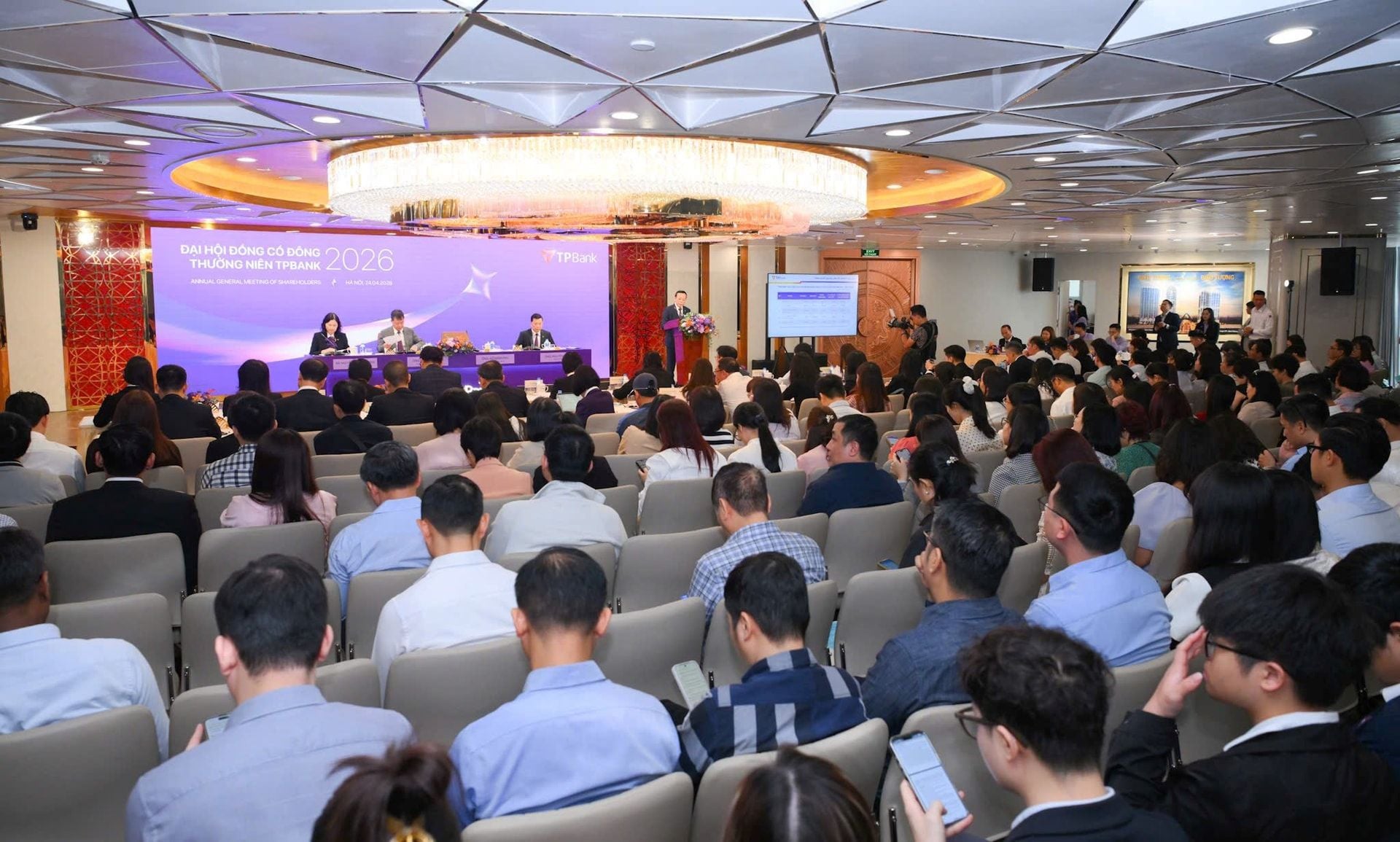
On the morning of April 24, 2026, TPBank (TPB) held its 2026 annual general meeting (AGM) of shareholders. According to the scrutineer’s report, at the opening there were 106 delegates representing over 1.9 billion voting shares, equivalent to 71.18% of the bank’s total voting shares. The meeting was quorate.
Mr. Do Minh Phú, Chairman of the Board, delivered remarks. Shareholder discussions centered on TPBank’s business direction, including digitalization, talent management, and future expansion, alongside asset and risk management priorities.
TPBank presented its 2026 business plan with a focus on stable growth and strict risk control. The bank also proposed a flexible mechanism to adjust targets if global economic and political uncertainties affect market conditions.
Regarding credit growth, TPBank CEO Nguyen Hung said that in Q1 2026 credit growth was about 2.8%. He noted that lending activity still faces challenges, particularly in the real estate sector.
In Q2, the State Bank of Vietnam (NHNN) temporarily did not apply credit room restrictions, which the bank assessed as favorable. However, regulations on real estate credit—limited to not exceeding overall growth—may continue to pressure TPBank’s lending capacity.
TPBank reported that it exceeded several 2025 business targets. Total assets reached nearly 506 trillion VND, up 21% year-on-year and 112.42% of the plan. Total mobilization exceeded 450 trillion VND, up 20.3% and 107.16% of the plan.
The bank paid cash dividends of 10%, totaling 2,642 billion VND, and increased charter capital to over 27,740 billion VND through share issuance.
TPBank said it implemented changes in 2025 related to business style and governance. The bank cut nearly 500 indirect staff while boosting direct sales and business-focused personnel. It also said its size grew by about 20%, while headcount declined due to process simplification, technology adoption, and data-driven decision-making.
At the AGM, TPBank emphasized that automation and AI are intended to augment human work rather than replace it entirely. The bank also highlighted strict ethical standards and maintaining a personalized customer experience even as processes become more automated.
Asset and risk management were presented as core priorities, alongside disciplined resource management (people, assets, and capital), governance data practices, and risk controls. TPBank also pointed to customer trust as a key asset, noting it has roughly 17 million customers.
Shareholders approved all proposals with strong consensus.
Linh San, Nhịp sống Thị trường






Premium gym chains are entering a “golden era” that is ending or already in decline, as rising operating costs collide with shifting consumer preferences toward more flexible, community-based ways to exercise. Long-term memberships are shrinking, margins are pressured by higher rents and facility expenses, and competition from smaller, more personalized…