•
•
•
•
•
•
•
•
•
•
•
•
•
•
•
•
•
•
•
•
•
•
•
•
•
•
•
•
•
•
•
•
•
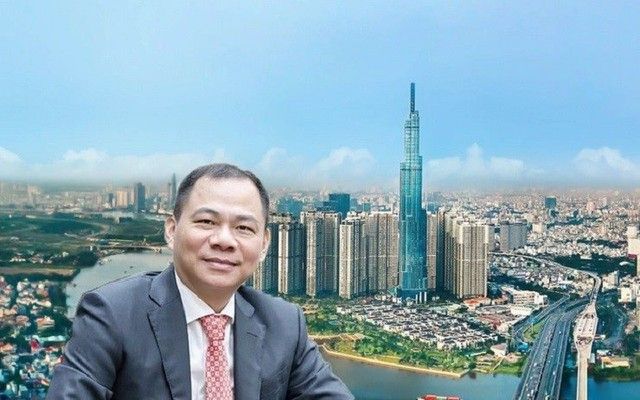
Vinhomes has decided to stop completely expanding its land bank for new projects in Vietnam, according to Chairman Phạm Thiếu Hoa. In an interview, he said the company has no intention or demand to dominate the market “now or in the future,” and will suspend developing new land bank in Vietnam, focusing instead on existing projects or those in the process of obtaining approvals.
Phạm Thiếu Hoa stressed that the decision does not mean Vinhomes is exiting the real estate market. The company will continue operating normally, but will pause land-bank expansion to prioritize quality and to increase value per square meter of project area.
According to the chairman, the decision is based on two fundamental reasons.
First, after many years of completing legal procedures and preparing projects, Vinhomes has accumulated a land bank large enough to develop continuously for the next 5–7 years.
Second, rather than continuing to spend resources pursuing new projects, Vinhomes believes it is the time to focus on building, operating, and delivering the best living environment for projects it already holds. The leadership’s objective is to create higher added value and contribute positively to the economy’s two-digit growth target.
Phạm Thiếu Hoa said real estate projects play a role in economic growth. When a project starts, thousands of businesses in construction, materials, trade, and services are drawn into the value chain, creating hundreds of thousands of new jobs. When projects complete and are handed over, investment, business, and consumer opportunities continue to be promoted, and each project entering operation also contributes to local budgets.
On whether pausing land-bank expansion could weaken Vinhomes’ position as Vietnam’s leading developer, the chairman said the current land bank is sufficient to maintain the company’s top standing. He also said stopping expansion could create opportunities for other companies to enter the market, supporting healthier competition and greater market diversity.
While Vinhomes announced a halt to new land acquisition in Vietnam, the broader Vingroup ecosystem has pursued international urban development initiatives.
Reuters reported that Vingroup signed a memorandum of understanding with the Telangana government for a planned investment of about $3 billion to develop a multi-industry ecosystem in the state. The project is expected to cover about 2,500 hectares and include smart urban development, electric transportation, healthcare, education, tourism, and renewable energy.
Vingroup’s press release said the group plans to develop the Vinhomes Smart City megacity on about 1,080 hectares in Telangana, designed for around 200,000 residents. The plan includes low- and high-rise housing, amenities to international standards, and sustainable urban planning.
Separately, Reuters reported in April 2026 that Vingroup signed an agreement with Maharashtra to study roughly $6.5 billion in investments across urban development, electric transportation, renewable energy, and public infrastructure. Documents from the Mumbai Metropolitan Region Development Authority indicate the scope includes developing about 1,000 hectares of integrated urban areas in high-potential sites such as Mumbai 3.0/KSC New Town, along with large-scale electric-transport solutions.
In Africa, Reuters reported that Vingroup and Kinshasa’s authorities signed a memorandum of understanding in October 2025 on urban development and green transportation. The press release said the two sides will study developing a riverfront megacity of about 6,300 hectares in Kinshasa and gradually convert over 300,000 petrol cars to electric, develop an electric bus network, and build charging infrastructure.
The riverfront megacity is described as including housing, villas, hospitals, schools, shopping centers, hotels, and entertainment facilities. A February 2026 Vingroup press release reiterated that the Kinshasa authorities and Vingroup had signed an MoU to study and develop the riverfront megacity of about 6,300 hectares.