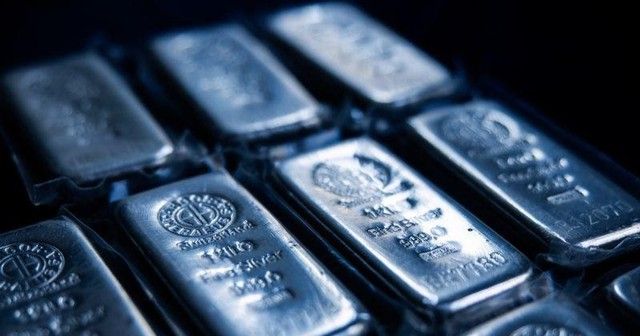
World silver prices eased last week amid pressure from lower gold prices and rising bond yields, according to Phú Quý Group’s latest report. The U.S. Federal Reserve’s decision to hold rates and its hawkish stance added to near-term pressure on silver. Despite this, geopolitical risks and expectations for industrial demand continued to provide support, keeping silver in a narrow trading range rather than falling sharply.
Phú Quý reported the following declines in key silver contracts and benchmarks:
Economic data is expected to be central to short-term price direction, with the April U.S. non-farm payroll report highlighted as a key catalyst. At the same time, geopolitical tensions remain elevated: Iran has proposed new terms while the United States is weighing them. Phú Quý noted that this backdrop helps sustain safe-haven demand for silver.
In this context, the report expects silver to be volatile, with prices reacting to news flow rather than establishing a clear short-term trend.
On inventories, Shanghai stockpiles rose by more than 116 tonnes versus last week and by about 73 tonnes versus end-2025. In contrast, Comex silver inventories fell by more than 19 tonnes compared with the prior week.
Phú Quý analyst commentary pointed to shifting physical silver flows between regions: “as supply tends to move from Western markets and be absorbed in China.”
Phú Quý also said Comex silver remains in a downtrend after a brief rebound to the 50% Fibonacci retracement of the previous decline. Current price action has reacted at that level, with signs of a renewed decline.
Based on its assessment, Phú Quý outlined two potential scenarios for silver prices:
If prices retreat to around 71.39 USD/ounce, Phú Quý expects a further breakdown toward 64.3 USD.
If prices break through Fibonacci resistance at 77.7–79.18 USD and move toward around 84 USD, the uptrend could be reinforced, with a target toward 90 USD.
Domestically, Phú Quý reported that last week’s prices eased and traded around 78 million dong per tael. On May 4, 2026, the selling price for bullion bars traded below 79 million dong per tael, while 1-tael ingots were at about 2.919 million dong per tael.