•
•
•
•
•
•
•
•
•
•
•
•
•
•
•
•
•
•
•
•
•
•
•
•
•
•
•
•
•
•
•
•
•



Experts from United Overseas Bank (UOB) in Singapore forecast that the State Bank of Vietnam is likely to keep policy rates unchanged this year, including the refinancing rate at 4.5%. UOB expects the response to inflation to rely more on fiscal policy and price-management measures rather than monetary policy tools.
UOB’s experts said inflation pressures are largely cost-driven, which they view as limiting the effectiveness of tight monetary policy. They therefore expect the State Bank of Vietnam to hold the policy rate steady, including the 4.5% refinancing rate in 2026.
Instead of using monetary tools, UOB expects greater emphasis on fiscal policy and price-management measures. The government is expected to play a leading role in dampening the impact of higher input costs while maintaining supply for essential goods.
Vietnam’s GDP growth in Q1 increased 7.83% year-on-year, compared with 8.46% in Q4 2025. The figure was also above earlier forecasts of 7% by UOB and 7.6% by Bloomberg.
Growth momentum continues to be supported by key sectors, including processing and manufacturing, construction, and services. Output in the processing and manufacturing sector rose nearly 10% year-on-year, close to the 10.6% recorded in Q4 and higher than the same period in 2025. UOB said this indicates stability in the production sector, a core pillar of the economy.
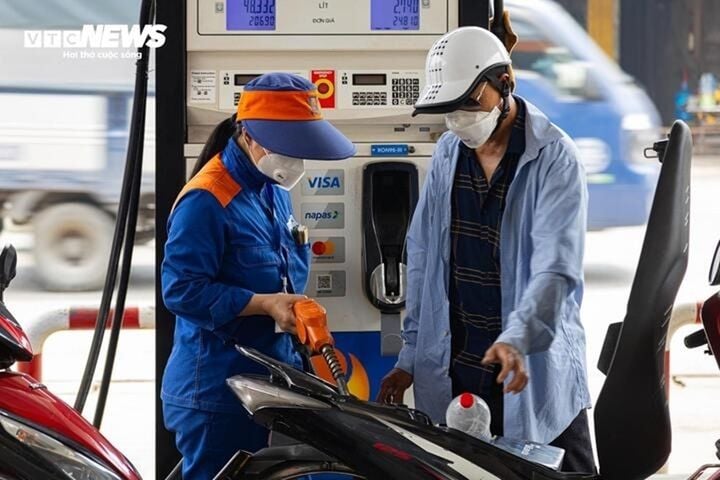
UOB highlighted that a global energy shock is creating significant pressures for economies, including Vietnam. Brent crude remains elevated at around 100–110 USD per barrel, raising transport and logistics costs and affecting manufacturing sectors.
Beyond price effects, supply risks are also a concern. UOB noted that major shipping routes could face disruption. The Middle East is not only a major energy supplier but also provides inputs including petrochemicals, fertilizers, metals, and industrial materials, meaning persistent disruptions could affect global supply chains.
Despite short-term challenges, UOB said Vietnam’s medium- and long-term growth prospects remain positive due to reform efforts and investment. Suan Teck Kin, Director of Global Market and Economic Research at UOB (Singapore), said that in the near term—particularly during 2026–2027—Vietnam still faces challenges in reaching growth of 10% or more.
UOB also assessed that the government has identified infrastructure as one of the biggest bottlenecks to growth. As a result, public investment is being accelerated across areas including transport, logistics, ports and airports, electricity, water, digital infrastructure, healthcare, education, and workforce training.
Administrative reforms in recent years are also viewed as positive steps to improve efficiency and productivity, including provincial and ministry consolidations and the use of English in official business.




Premium gym chains are entering a “golden era” that is ending or already in decline, as rising operating costs collide with shifting consumer preferences toward more flexible, community-based ways to exercise. Long-term memberships are shrinking, margins are pressured by higher rents and facility expenses, and competition from smaller, more personalized…




