•
•
•
•
•
•
•
•
•
•
•
•
•
•
•
•
•
•
•
•
•
•
•
•
•
•
•
•
•
•
•
•
•


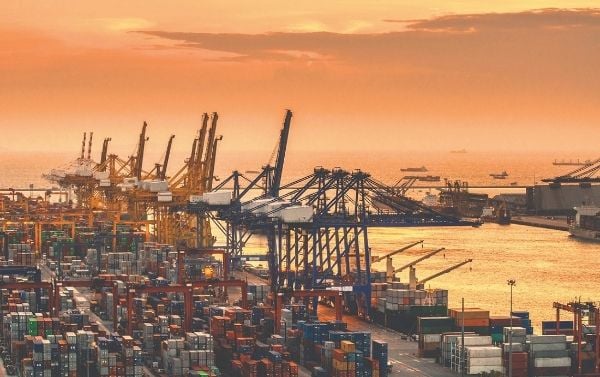
Vietnam’s gross domestic product (GDP) grew 7.83% year-on-year in the first quarter of 2026, according to UOB, supported by manufacturing, construction and services. The bank expects Vietnam’s growth outlook for 2026 to remain broadly stable, though it flagged inflation, energy costs and geopolitical risks as key factors to monitor.
Data from Vietnam’s General Statistics Office show Q1 2026 GDP expanding 7.83% year-on-year. While this was below Q4 2025’s 8.46%, it was above earlier projections of 7.0% (UOB) and 7.60% (Bloomberg). UOB said the pattern is consistent with the typical impact of fewer working days in the first quarter due to the Tet holiday, a trend seen across several Asian economies.
Growth momentum was led by processing/manufacturing, construction and services. In particular, processing and manufacturing output rose 9.73% year-on-year, close to 10.6% in the prior quarter and higher than the same period in 2025, reflecting resilience in the production sector.
International trade continued to grow strongly. Exports reached $122.93 billion, up 19.1%, while imports rose 27.0% to $126.57 billion. This resulted in a trade deficit of $3.64 billion.
UOB noted that imports were largely geared toward production, which it said points to a more constructive outlook for subsequent quarters.
The United States remained Vietnam’s largest export market, taking $33.9 billion, up 24.2%, and accounting for about 28% of total trade—underscoring Vietnam’s role in global supply chains.
Foreign direct investment (FDI) disbursement reached $5.41 billion in Q1 2026, up 9.1%, which UOB cited as evidence of investor confidence and continued supply-chain diversification.
UOB reported that March 2026 consumer price index (CPI) inflation rose 4.65% year-on-year, exceeding the State Bank of Vietnam’s 4.5% target. The first two months of the year averaged 2.94%.
Inflationary pressure was mainly attributed to higher energy prices feeding into consumer prices. The transport group, which represents 9.7% of the CPI basket, rose 10.8%, reversing a prior downtrend. In response, the government used the Fuel Stabilization Fund, while some airlines cut capacity due to fuel shortages.
UOB said Vietnam still faces challenges in 2026–2027 that could limit growth above 10%, including ongoing US tariff risks. It also pointed to the Middle East conflict as a driver of higher energy and input costs, pressuring production and business activity.
UOB expects Brent crude to hover around $100–110 per barrel, which would raise transport and logistics costs. The bank also highlighted supply risks as inventories dwindle and the Hormuz Strait remains a bottleneck.
Beyond energy, the Middle East supplies inputs including petrochemicals, plastics, aluminum, fertilizers, sulfur, helium and steel components. UOB warned that disruption risks to supply chains would intensify if the conflict persists.
Against this backdrop, UOB trimmed its Vietnam 2026 GDP growth forecast to 7% from 7.5%. It also noted that 2025 growth was 8.02%.
UOB expects the toughest period to be Q2 and Q3 2026, when global energy prices are likely to stay high and supply constraints peak, before easing toward the end of 2026.
UOB forecast GDP growth to slow in coming quarters to 6.5% in Q2 2026, 6.8% in Q3 and 7% in Q4. These figures were described as lower than earlier projections of 7.5%, 7.8% and 7.6%, respectively, with high uncertainty and downside risks depending on developments and the timing of easing in Middle East tensions.
Despite the negative factors, UOB said the government has identified infrastructure as a major bottleneck limiting growth. It cited plans to boost public investment across transport, logistics, ports and airports, electricity and water, digital infrastructure, healthcare, education and human resource development.
UOB also pointed to administrative simplification, including merging provinces and ministries and using English in official duties, as steps aimed at improving efficiency and productivity.
Looking ahead, UOB said ensuring stable and reasonably priced energy supply is a top priority to keep factories, businesses, consumers and logistics operating smoothly while maintaining growth and controlling inflation.
It listed measures to reduce disruption risk, including stockpiling fuel reserves for 90 days, suspending fuel and environmental taxes, using the Fuel Stabilization Fund, strengthening energy diplomacy to secure supply from partners such as Japan, aiming to save at least 3% electricity consumption in 2026, accelerating the rollout of ethanol E10 from April 2026, and building another oil reserve in Thanh Hoa province.
The government is also considering allowing fuel retailers to set retail prices within their networks under regulatory oversight, which UOB said is expected to better reflect supply–demand dynamics and product value rather than distortions from subsidies or price controls.
UOB said that if inflation rises and surpasses the 4.5% target, the State Bank of Vietnam’s policy stance will be closely watched. However, because price pressures are mainly supply-driven, UOB does not view monetary tightening as an appropriate solution.
Accordingly, it expects the State Bank is unlikely to adjust policy in the near term, with room to respond mainly through government measures to mitigate input costs and supply disruptions. The reverse repurchase rate is expected to remain at 4.5% in 2026.





Premium gym chains are entering a “golden era” that is ending or already in decline, as rising operating costs collide with shifting consumer preferences toward more flexible, community-based ways to exercise. Long-term memberships are shrinking, margins are pressured by higher rents and facility expenses, and competition from smaller, more personalized…



