•
•
•
•
•
•
•
•
•
•
•
•
•
•
•
•
•
•
•
•
•
•
•
•
•
•
•
•
•
•
•
•
•


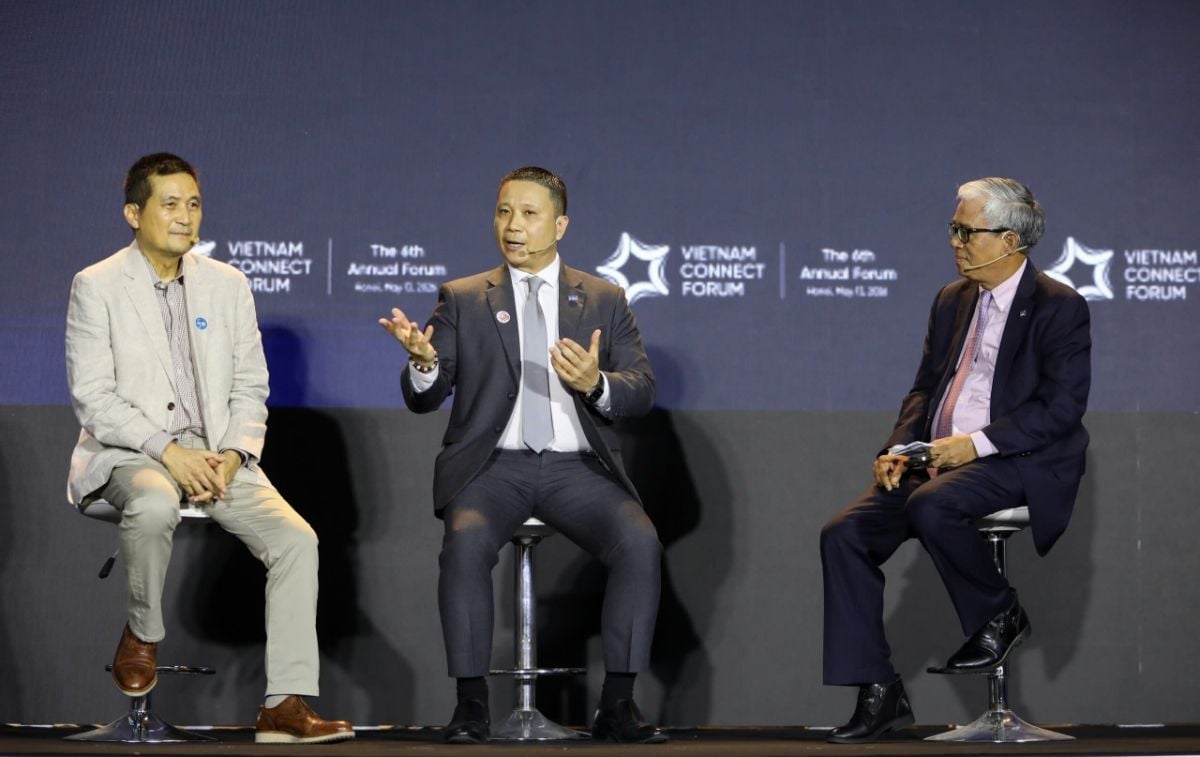
At the Vietnam Connect Forum 2026, Intel’s collaboration with Fab 9 highlighted how Vietnamese enterprises can participate in high-tech global supply chains when they combine determination with the right strategy.
Intel Products Vietnam (IPV) has total investment of up to US$1.5 billion. The facility is described as the world’s largest assembly and test site within the Intel group and as a major economic driver in Ho Chi Minh City.
Since IPV began operations in Vietnam, it has created about 4,800 high-tech jobs and contributed more than US$100 billion to Vietnam’s export value. In the period 2010–2025, the unit accounted for 57% of the export value of Ho Chi Minh City’s High-Tech Park and contributed 11% of Vietnam’s total electronics exports.
Intel has also reported social responsibility spending of US$22 million on education, environmental initiatives, and community activities in the localities where it operates.
Within Intel’s ecosystem of hundreds of thousands of global suppliers, Fab 9—established by a Vietnamese entrepreneur and headquartered in Bình Dương—has become one of Intel’s suppliers in Vietnam.
With about 800 employees, Fab 9 focuses on producing semiconductor wafer and chip testing equipment, a segment that requires high precision and engineering capability.
Fab 9’s CEO, Mr. Việt Trần, said the company initially viewed itself as a “rabbit enterprise,” with limited technical capability and doubts about meeting Intel’s stringent standards. Instead of stepping back, Fab 9 chose to listen, improve, and work toward becoming a strategic partner.
Mr. Trần said the relationship was strengthened as both sides found common ground in building a local ecosystem.
Intel’s Vice President and General Manager of Intel Products Vietnam, Mr. Kenneth Tse, said Intel’s approach is not only to seek existing suppliers, but also to be willing to enhance the competitiveness of domestic firms.
According to the article, Intel supported Fab 9 by sending engineers to the United States to study and access new technology. Intel also visited Fab 9’s Bình Dương plant to train and upgrade technical capabilities, and encouraged the company to invest in modern equipment to meet semiconductor standards.
With Intel’s support, Fab 9 grew from a smaller unit to about 800 employees and continued modernizing its production line. The article states that Fab 9 became one of a few suppliers—out of hundreds of thousands globally—to receive Intel’s “Outstanding Supplier” award, described as a certificate of reliability and superior quality.
For a domestic company to sustain growth in global supply chains, the article highlights that technical capability is necessary but not sufficient. Fab 9’s representative emphasized transparency and security as two key factors.
In the semiconductor industry, intellectual property is described as a “lifeline.” Intel and Fab 9 reportedly built a mechanism for regular, transparent information exchange.
Mr. Việt Trần said that if issues arise or work does not progress as expected, both sides are willing to be open to achieve shared goals, adding that trust deepens the relationship.
From Fab 9’s experience, Mr. Việt Trần said enterprises should not fear partnering with large corporations. He emphasized that if a company lacks capacity or expertise today, but has aspiration and determination, large groups can support it—provided the company is ready to invest, ready to change, and has a global mindset.
The article also notes that the Vietnamese government and the Ministry of Science and Technology are actively supporting efforts to connect domestic suppliers with foreign direct investment groups such as Intel through annual supplier conferences. These events are described as opportunities for Vietnamese firms to understand market needs, learn from experience, and gradually improve their position in the global value chain.

Premium gym chains are entering a “golden era” that is ending or already in decline, as rising operating costs collide with shifting consumer preferences toward more flexible, community-based ways to exercise. Long-term memberships are shrinking, margins are pressured by higher rents and facility expenses, and competition from smaller, more personalized…