•
•
•
•
•
•
•
•
•
•
•
•
•
•
•
•
•
•
•
•
•
•
•
•
•
•
•
•
•
•
•
•
•


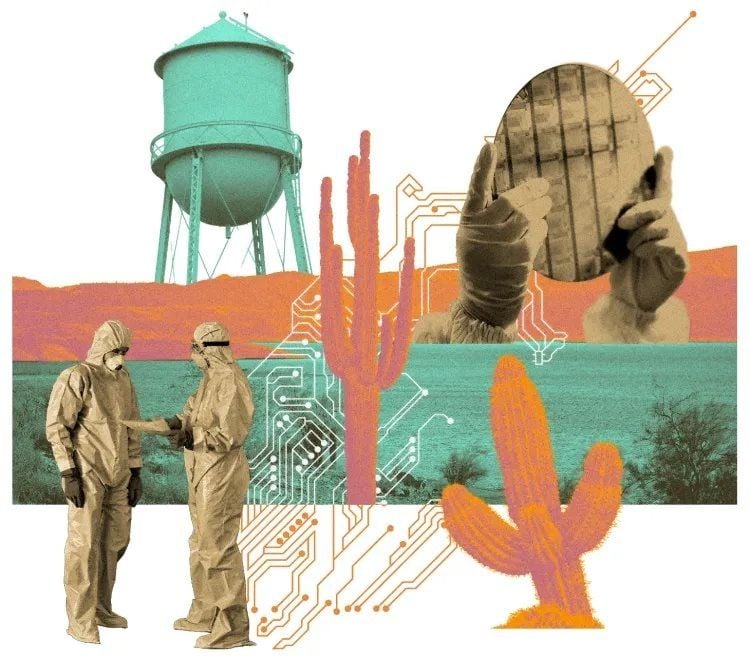
Arizona is positioning itself as the United States’ next semiconductor hub as the AI boom accelerates. The state has drawn more than $200 billion in semiconductor investment, with 75 chip companies expanding across the Greater Phoenix area and tens of thousands of jobs tied to new manufacturing projects.
Arizona’s economy has long been associated with the “Five Cs” of cotton, cattle, citrus, copper and climate. Increasingly, officials and industry observers describe a “sixth C”: chips. Across Greater Phoenix, semiconductor plants are expanding rapidly, with new developments and roadways taking on names such as “Processor Avenue” and “Transistor Road.”
According to the Greater Phoenix Economic Council (GPEC), Arizona has attracted more than $200 billion in semiconductor investment over the past five years and has brought in more than 75 chip companies, helping Phoenix become one of the country’s most important semiconductor manufacturing regions.
The momentum is also reflected in industry events. Semicon West, historically linked to the San Francisco Bay Area for more than half a century, is moving to Phoenix. SEMI said booth counts rose 45% and registrations increased by 60%, and Arizona is now marketing itself as the “home of the U.S. semiconductor industry.”
Local officials frame the shift as both an economic opportunity and a strategy to reduce dependence on agriculture amid worsening drought conditions linked to climate change. A key driver is the 2022 CHIPS and Science Act.
After the global chip shortage during the COVID-19 pandemic, Washington committed $52.7 billion to bring semiconductor manufacturing back onshore. Arizona quickly became a focal point:
TSMC plans to build six semiconductor plants in Arizona. The company has begun producing Nvidia’s AI Blackwell GPUs in Phoenix this year. Intel has also produced the Panther Lake line for AI computing and gaming at its Ocotillo complex in Chandler.
Sanjay Kumar, former head of the U.S. CHIPS Office and now a vice president at Kearney, said advanced process technologies such as TSMC’s N2 are important because they address capabilities “that is technology China doesn’t have yet,” and are expected to underpin AI for the next generation. In this view, Arizona is not only an industrial hub but also a technology front in competition with Asia.
Despite the upbeat atmosphere around Semicon West, a separate event in Phoenix—“Dark Side of Chips”—drew fewer than 100 attendees. Labor and environmental groups warned that the semiconductor industry could repeat earlier mistakes associated with Silicon Valley, including chemical pollution, labor inequality and pressure on local resources.
The semiconductor industry’s main selling point is employment. The industry in Phoenix currently employs more than 33,000 workers, with about 4,000 new jobs created since 2020. The U.S. Semiconductor Industry Association projects the sector’s workforce will grow by another 115,000 people by 2030.
Arizona universities and colleges have also introduced specialized programs to supply workers for the chip industry. However, some workers say the reality differs from promotional messaging.
Jack, a former Intel employee in Phoenix, said his optimism faded after nearly a decade in the field. He pointed to pay gaps between American technicians and foreign engineers. The article also notes that Intel reportedly paid $5 million in 2019 to settle discrimination claims involving women, African Americans and Hispanics.
Immigrant labor is another flashpoint. The article says Rest of World reported that about half of TSMC’s 2,200 employees in Arizona come from Taiwan. Critics have raised concerns about a demanding work culture, including reported 12–16 hour days and near-constant on-call demands. TSMC is also described as facing a class-action lawsuit alleging discrimination against non-Asian workers and non-Taiwanese citizens.
Environmental concerns center on hazardous chemicals, water use and electricity demand. The semiconductor industry is known for using large quantities of chemicals, and Silicon Valley has legacy pollution issues from early chip production.
Arizona has similar history. The article cites an old Motorola plant that left a roughly seven-mile stretch of polluted land near Sky Harbor after chemicals leaked into soil and groundwater. Pollutants listed include benzene, arsenic, chloroform and lead. Activists argue that chip manufacturing functions like a chemical facility.
The article highlights PFAS, described as “forever chemicals” used in chip production for corrosion resistance and heat resistance. It says PFAS is almost non-biodegradable and has been linked to health issues including cancer, high blood pressure and high cholesterol. At Semicon West, SEMI leaders acknowledged PFAS as a “life-or-death” factor for the industry; CEO Ajit Manocha is quoted saying, “Without PFAS, we could be forced to close.”
Water is described as the biggest issue in Arizona. Phoenix is in a desert, and the article says about 83% of the state has faced severe drought in recent months. Semiconductor production requires large volumes of water to produce ultra-pure water used to rinse wafers and etch chips.
The article states that one gallon of ultra-pure water may require 1,600 gallons of tap water to produce. It also provides plant-level figures:
TSMC says it can recycle up to 65% of the water used and aims to recycle at least 90% by 2028. Intel is also described as having used more than 3.1 billion gallons of water in Arizona in 2024, while returning 2.4 billion gallons to the local system for reuse. Activists argue that the cumulative impact should include the broader chip ecosystem, including suppliers, data centers and surrounding urban areas.
Electricity is another challenge. The article says Phoenix is the fifth-largest data-center market in the United States and that chip plants also require substantial power. It notes that wholesale electricity prices rose from around $16 per MWh in 2020 to around $21 per MWh this year.
Concerns include Arizona’s reliance on natural gas, described as a fossil fuel that intensifies global warming. The article also notes that Phoenix is the hottest major city in the United States, making cooling a necessity.
In response to these concerns, residents have organized protests. A notable example cited is Peoria, a suburb of Phoenix, where residents opposed Amkor’s $7 billion chip-packaging plant over worries about PFAS pollution and strain on water resources. After protests, the company relocated the plant further away from residential areas and schools.
The article frames Arizona as a symbol of the trade-off between technology expansion, job creation and resource pressures. As the United States seeks to regain global chip leadership, Phoenix’s “New Silicon Valley” identity comes with questions about the long-term environmental and resource costs of sustaining the AI-driven semiconductor buildout.
Premium gym chains are entering a “golden era” that is ending or already in decline, as rising operating costs collide with shifting consumer preferences toward more flexible, community-based ways to exercise. Long-term memberships are shrinking, margins are pressured by higher rents and facility expenses, and competition from smaller, more personalized…