•
•
•
•
•
•
•
•
•
•
•
•
•
•
•
•
•
•
•
•
•
•
•
•
•
•
•
•
•
•
•
•
•


Green transformation is an essential requirement in Vietnam's growth model reform, aligned with the goal of achieving net-zero emissions by 2050 and strengthening the economy's resilience to climate change.
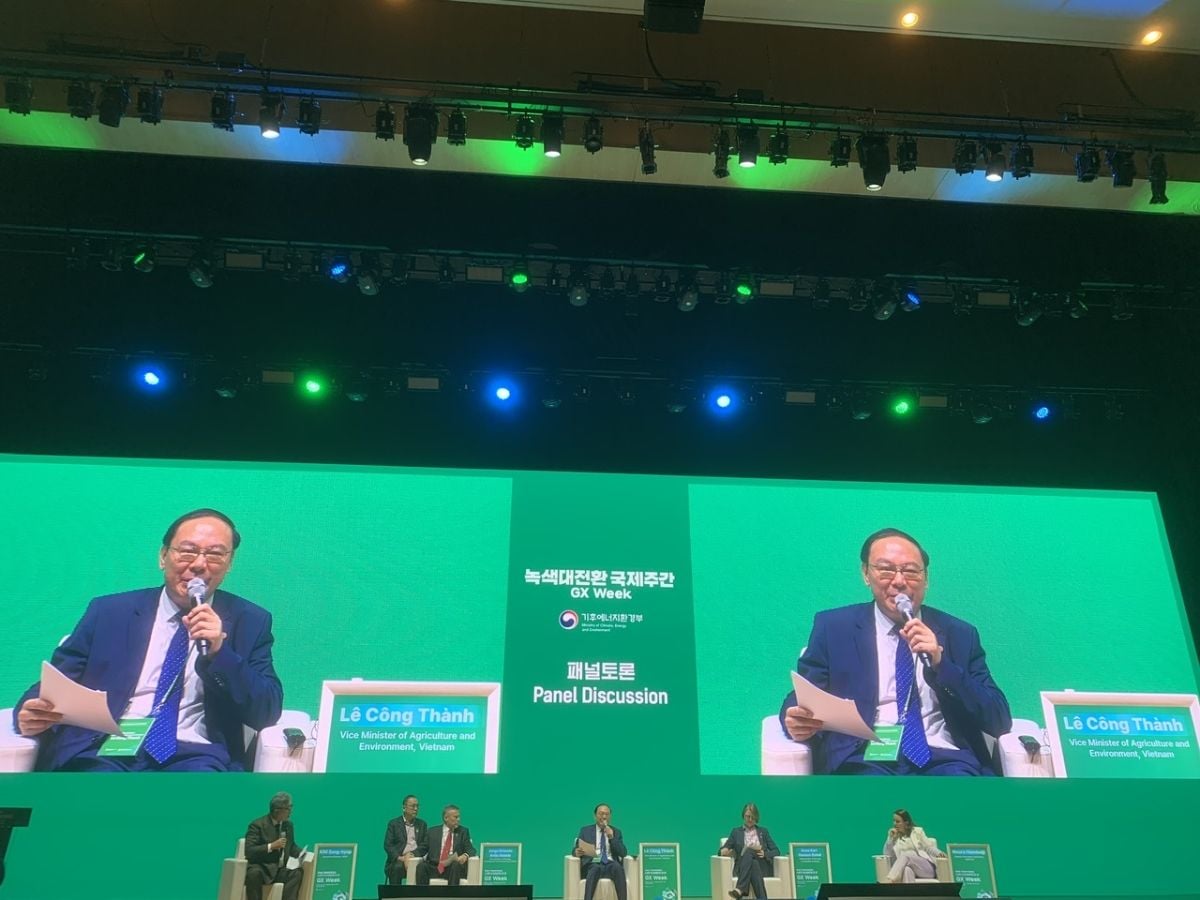
From April 18–21, 2026, a delegation from the Vietnamese Ministry of Agriculture and Environment led by Deputy Minister Le Cong Thanh attended Green Transformation Week (GX Week) in Yeosu, South Korea.
At GX Week 2026, Deputy Minister Le Cong Thanh delivered remarks at the High-Level Policy Dialogue on Energy Transition, outlining Vietnam's directions and policies to promote green transformation, including ecological agriculture, circular economy, resource management and environmental protection.
He said green transformation is a necessary requirement in Vietnam's growth-model reform, tied to achieving net-zero emissions by 2050 and strengthening the resilience of the economy against climate change.
Vietnam prioritizes pushing energy transformation toward clean and sustainable directions, considers energy efficiency the “first energy source,” and also promotes forest protection and sustainable development of the circular economy while gradually building a domestic carbon market.
The Deputy Minister added that Vietnam is developing low-emission agriculture built on ecosystems and mobilizing green finance, technology and human resources for the transformation.
He also emphasized that international cooperation is crucial for sharing technology, experience and resources to support a fairer, more inclusive and more effective global green transformation.
During the event, the delegation participated in discussions on climate change, clean energy, industrial transformation and sustainable finance, while exchanging experiences and updating trends, models and advanced technology solutions in environmental and sustainable development fields.
On the sidelines, Deputy Minister Le Cong Thanh visited the Busan Resource Circulation Center (BRC) to study waste management and circular economy models in the city.
The delegation received an overview of the Center’s operations, including a data-driven system for coordinating, collecting and analyzing waste, linking recycling facilities, processing facilities and related enterprises across the circular resource chain. The BRC model is built on the mindset that “waste is a resource,” with waste classified, recycled and transformed into materials or energy for urban development.
Beyond technical operations, the delegation also learned about community education programs, awareness campaigns, experiential activities and green-lifestyle initiatives for youths, described as key to changing social behavior and integrating the circular economy into daily life in Busan.
Through GX Week, Vietnam’s delegation said it helped raise Vietnam’s profile at international forums on green transformation, while expanding international cooperation and mobilizing resources to support sustainable development, climate adaptation and a transition to a green, low-emission economy.
Deputy Minister Le Cong Thanh later met Kim Young Ki, Acting Director of KEITI (Korean Institute of Environmental Technology and Industry). The two sides affirmed an increasingly close partnership, citing ongoing high-level exchanges.
The Deputy Minister said he highly valued KEITI’s role in technical support and in helping Vietnam complete institutional frameworks, share policy experience and promote concrete environmental projects.
Key cooperation outcomes include:
The two sides agreed to continue implementing the 2023 Memorandum of Understanding, particularly in circular economy, climate change and waste management.
Vietnam proposed that KEITI continue sharing experience to improve the amended Environmental Protection Law and pursue key projects such as recycling industrial parks, energy from waste and other emission-reduction initiatives led by Korean-invested enterprises in Vietnam.
On water resources, both sides emphasized water security, basin management and the application of a digital data system.
They also proposed directions for projects related to ocean waste management and the management of electronic waste and EV batteries—issues described as urgent and of mutual interest. The working session ended with a commitment to deepen substantive cooperation toward sustainable development for both nations.
During the visit, the delegation attended exhibitions, showcased green technologies and solutions, and sought to strengthen connections between Vietnamese management agencies, enterprises and international partners.
GX Week is described as a global cooperation forum to promote green transformation and sustainable development, bringing together government leaders, international organizations, businesses and stakeholders to discuss solutions to climate change, environmental protection and growth-model transformation.
The Agriculture and Environment Ministry also implements 12 national and specialized databases.




Premium gym chains are entering a “golden era” that is ending or already in decline, as rising operating costs collide with shifting consumer preferences toward more flexible, community-based ways to exercise. Long-term memberships are shrinking, margins are pressured by higher rents and facility expenses, and competition from smaller, more personalized…




