•
•
•
•
•
•
•
•
•
•
•
•
•
•
•
•
•
•
•
•
•
•
•
•
•
•
•
•
•
•
•
•
•


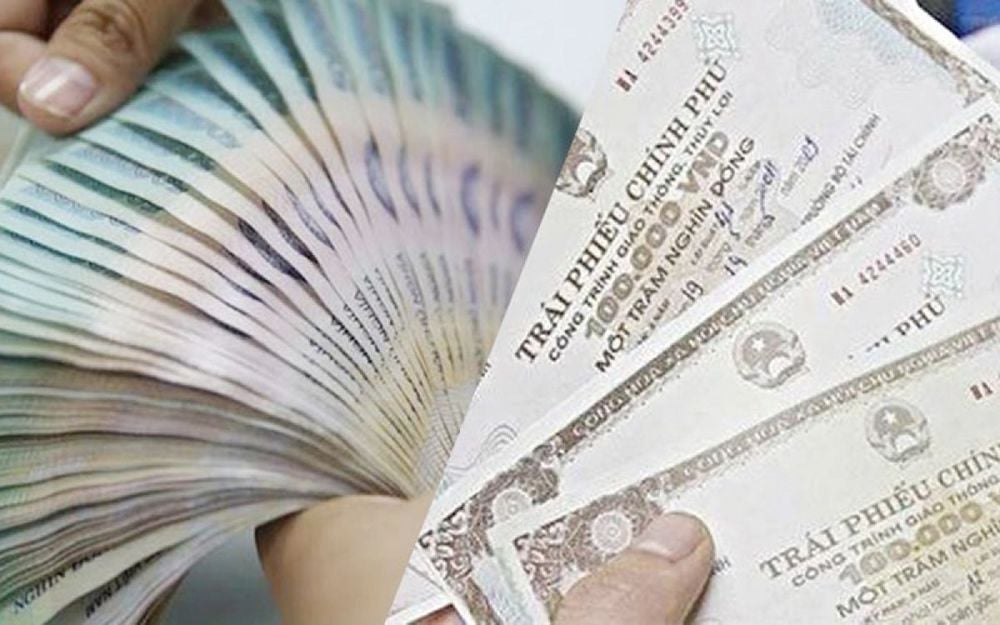
After the shock in 2022, the corporate bond market recovered slowly and remained markedly smaller than before the crisis. Meanwhile, government bonds began to lose appeal from the end of last year as yields rose again. The result is that the funding burden on the economy continues to rely heavily on banks, which are under increasing pressure from capital adequacy indicators and tightening credit room.
Liquidity in the government bond market has weakened from late 2025 to date.
Between 2022 and 2026, the government bond market (TPCP) went through volatile cycles, reflecting the sensitivity of capital flows to macro variables. At the end of 2022, liquidity froze when yields rose to a record 4.75% per year, an indirect consequence of the Fed’s aggressive rate hikes and high demand for capital in the post-pandemic period.
In 2023, four successive policy rate cuts by the State Bank contributed to improving system liquidity and enabling cash flows to move more actively on the market. In this context, the open market rate (OMO) was lowered to 4% per year and maintained from June 2023 to the end of April 2024, cooling the interbank-rate environment. The cost of funds for holding debt securities consequently fell, helping push yields down and improve liquidity in government bonds.
The exchange-rate pressure forced the State Bank to reverse policy on the OMO channel. Within a month, the OMO rate rose from 4% to 4.25% and then to 4.5% per year. Nevertheless, government bond yields did not react strongly, mainly fluctuating sideways. This pattern indicates that cautious sentiment still dominates investors despite tightening signals from the policy maker.
In the latter half of 2025 and early 2026, liquidity nearly disappeared. The core reason was a misalignment between funding costs and investment yields: the OMO rate remained at 4.5% (the floor in this period), higher than bid yields on the most liquid tenors such as 10-year or 15-year maturities.
The “negative carry” effect—where the cost of capital to maintain bonds is higher than the investment yields—eroded banks’ incentives to do business. Banks increasingly bought government bonds mainly to meet liquidity and safety indicators rather than to profit from price moves. With yields around 4% while capital costs were too high, the government bond market fell into a deadlock state, requiring more flexible regulatory mechanisms or a stronger policy push to unlock capital for large-scale public investment projects.
In the past two years, the State Treasury aimed to issue around 500 trillion dong per year, but winning bids did not meet this level. The target was considered large given still-high outstanding bonds, limited maturities, and yields lower than funding costs. Most successful bidders in Q1 2026 were insurers, posing a major challenge for both the primary and secondary markets for the State Treasury and the government.
Domestic market difficulties were amplified by the global rate environment, with the US market dominating. The US Treasury market was volatile due to its own supply and geopolitical risk characteristics. From 2022 to early 2024, the market absorbed a large number of new issues as yields rose. The peak was in October 2023 when the 10-year UST yield reached 5% as the Fed kept its policy rate at 5.25–5.5% for three consecutive meetings while shrinking its balance sheet to curb inflation.
From the start of 2025 to present, US yields remained high though less volatile. The Fed’s cautious approach to monetary easing—partly due to inflationary pressures after the March 2026 US–Iran conflict—reduced expectations for a rapid easing cycle. In addition, a weaker dollar (as reflected by the DXY index) triggered selling of Treasuries by international investors amid tariff policies from the Trump administration. The combination of geopolitical risk and protectionist trade policies kept borrowing costs in the US high for more than a year, posing a major challenge for debt management.
In Vietnam, corporate bonds have partially recovered since 2022 but have not returned to their 2021 peaks. According to VBMA, primary corporate bond issuance reached about 630 trillion dong (+33.5% year-on-year) and secondary-market trading reached 1.4 quadrillion dong in 2025. Delays in principal and interest payments are gradually being resolved, largely through extensions.
The structure of Vietnam’s corporate-bond market shows a pronounced misalignment with two dominant sectors: Banking (65%) and Real Estate (23%). In contrast, in the United States, the financial sector remains leading with a 41.9% share, but the deeper and more diversified market spreads risk more widely across manufacturing, technology and services, helping better absorb systemic shocks than the Vietnam model.
The scale gap is large. With 2025 primary issuance totaling US$1.252 trillion (per SEC), the US corporate-bond market plays a major role as a backbone of capital supply for the economy. By comparison, Vietnam’s corporate-bond market remains a limited substitute channel.
After market discipline following the crisis, there is a growing call for a fresh liquidity-support mechanism. The government and SBV should issue breakthrough decrees and circulars to improve liquidity and encourage other industries to participate in bond issuance. Only when structural barriers are removed can the corporate bond market become a genuinely sustainable growth driver for the economy.
As of today, the Vietnamese bond market (government and corporate) is facing liquidity challenges. There is a need for policy stimulus from the Government, SBV, and the State Treasury, such as simplifying bond-issuing procedures and promoting the formation of professional bond funds, to unlock financing and reduce overreliance on banks.
ADB warns that the corporate bond market is overly dependent on banks. Several government-bond maturities have been frozen. The corporate-bond market is constrained by structural mispricing and price-discovery bottlenecks. The scale of corporate-bond issuance in the US versus Vietnam is described as striking.
Premium gym chains are entering a “golden era” that is ending or already in decline, as rising operating costs collide with shifting consumer preferences toward more flexible, community-based ways to exercise. Long-term memberships are shrinking, margins are pressured by higher rents and facility expenses, and competition from smaller, more personalized…