•
•
•
•
•
•
•
•
•
•
•
•
•
•
•
•
•
•
•
•
•
•
•
•
•
•
•
•
•
•
•
•
•


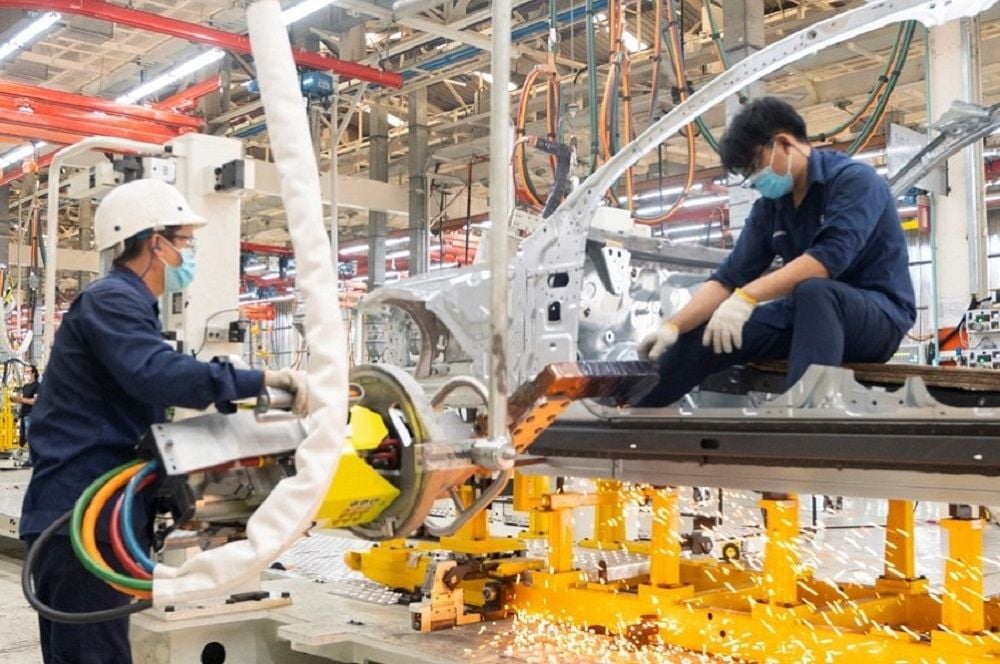
Inflation pressures and the widening Middle East conflict pushed input costs to the fastest pace in 15 years, while new orders fell for the first time in eight months. In response, Vietnamese manufacturers cut jobs as business sentiment slid to its lowest level since September 2025.
Concerns about spillover effects from the Middle East war continued to weigh on manufacturers’ confidence. PMI survey results showed that weaker new orders led companies to reduce hiring, procurement activity, and inventory levels. Although output still increased, the pace of growth slowed to the lowest in ten months.
Vietnam’s manufacturing PMI fell to 50.5 in April 2026, from 51.2 in March 2026. The reading indicated that operating conditions improved for the tenth consecutive month, but only modestly.
A key contributor to the expansion was output, which rose for the twelfth consecutive month, reflecting the implementation of existing projects and underlying demand. However, growth was the slowest since June 2025, amid inflation pressures, tight supply, and market uncertainty tied to the Middle East conflict.
According to the S&P Global report, the number of new orders fell for the first time in eight months as higher prices reduced the ability to secure new business. The report said the impact was even more evident in new export orders, which were also affected by higher transport costs. New orders from abroad fell noticeably for the second consecutive month.
The report said fuel, oil, and freight costs rose in April 2026, driving input costs up at the fastest pace in 15 years. More than half of respondents reported higher input prices. To offset this, output prices increased strongly, at the fastest rate since April 2011.
With new orders declining, producers reduced headcount and cut both staff numbers and working hours. Some firms also reported staff resignations. Job losses marked the second consecutive month. Backlogs declined for the fourth time in five months, at the fastest rate since September 2025.
Firms also reduced purchasing and inventory at the start of Q2 2026. While input buying fell broadly in line with weaker new orders, some manufacturers built up input stocks to mitigate price and supply pressures, keeping the rate of purchasing decline softer than in March 2026. However, the rate of stock and finished goods depletion accelerated.
Freight and supply-related issues, along with material shortages, contributed to longer supplier delivery times in April 2026. Supplier performance deteriorated at the sharpest pace in four and a half years.
Concerns about the Middle East war continued to dampen optimism. Business confidence fell to the lowest since seven months, below its historical average. Still, firms remained confident that output would rise over the coming year, supported by expectations of a rebound in new orders and a more stable market environment.
Andrew Harker, Economics Director at S&P Global Market Intelligence, said prices and supply disruptions linked to the Middle East conflict continued to weigh on Vietnam’s manufacturing growth in April 2026. He noted that while output rose, the pace of growth slowed to a modest rate, and with new orders moving back into contraction, output is likely to fall in the months ahead unless price and supply conditions improve soon.






Premium gym chains are entering a “golden era” that is ending or already in decline, as rising operating costs collide with shifting consumer preferences toward more flexible, community-based ways to exercise. Long-term memberships are shrinking, margins are pressured by higher rents and facility expenses, and competition from smaller, more personalized…